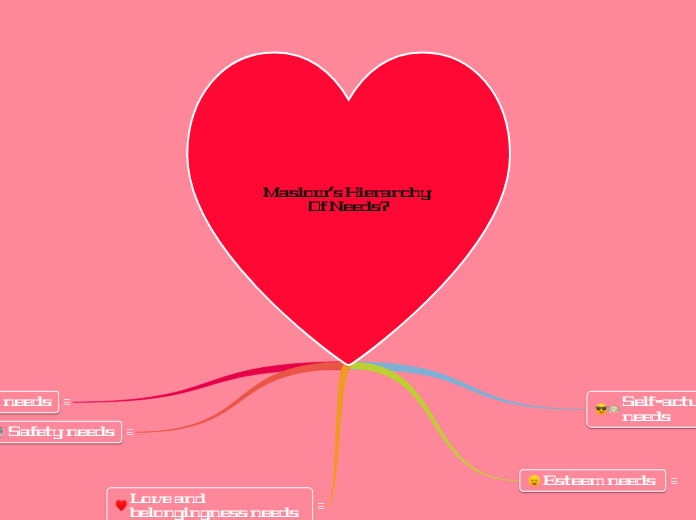
Maslow’s Hierarchy Of Needs?
Self-actualization needs
Self-actualization needs are the highest level in Maslow’s hierarchy, and refer to the realization of a person’s potential, self-fulfillment, seeking personal growth, and peak experiences.This level of need refers to what a person’s full potential is and the realization of that potential. Maslow describes this level as the desire to accomplish everything that one can, and “to become everything one is capable of becoming”.Individuals may perceive or focus on this need very specifically. For example, one individual may have a strong desire to become an ideal parent.In another, the desire may be expressed athletically. For others, it may be expressed in paintings, pictures, or inventions.
Esteem needs
Esteem needs are the fourth level in Maslow’s hierarchy and include self-worth, accomplishment, and respect.Maslow classified esteem needs into two categories: (i) esteem for oneself (dignity, achievement, mastery, independence) and (ii) the desire for reputation or respect from others (e.g., status, prestige).Esteem presents the typical human desire to be accepted and valued by others. People often engage in a profession or hobby to gain recognition. These activities give the person a sense of contribution or value.Low self-esteem or an inferiority complex may result from imbalances during this level in the hierarchy.Maslow indicated that the need for respect or reputation is most important for children and adolescents and precedes real self-esteem or dignity.
Physiological needs
Physiological needs are biological requirements for human survival, e.g., air, food, drink, shelter, clothing, warmth, sex, and sleep.Our most basic need is for physical survival, and this will be the first thing that motivates our behavior. Once that level is fulfilled, the next level up is what motivates us, and so on.The human body cannot function optimally if physiological needs are not satisfied. Maslow considered physiological needs the most important as all the other needs become secondary until these needs are met.Once an individual’s physiological needs are satisfied, the need for security and safety becomes salient.
Safety needs
Safety needs – people want to experience order, predictability, and control in their lives.Safety needs can be fulfilled by the family and society (e.g., police, schools, business, and medical care).For example, emotional security, financial security (e.g., employment, social welfare), law and order, freedom from fear, social stability, property, health, and wellbeing (e.g., safety against accidents and injury).After physiological and safety needs have been fulfilled, the third level of human needs is social and involves feelings of belongingness.
Love and belongingness needs
Love and belongingness needs refers to a human emotional need for interpersonal relationships, affiliating, connectedness, and being part of a group.Examples of belongingness needs include friendship, intimacy, trust, acceptance, receiving and giving affection, and love.This need is especially strong in childhood and can override the need for safety, as witnessed in children who cling to abusive parents.