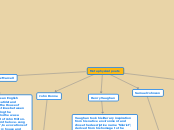
Metaphysical poets
John Donne
He is considered the pre-eminent representative of the metaphysical poets. His works are noted for their strong, sensual style and include sonnets, love poems, religious poems, Latin translations, epigrams, elegies, songs, satires and sermons. His poetry is noted for its vibrancy of language and inventiveness of metaphor, especially compared to that of his contemporaries. Donne's style is characterised by abrupt openings and various paradoxes, ironies and dislocations. These features, along with his frequent dramatic or everyday speech rhythms, his tense syntax and his tough eloquence, were both a reaction against the smoothness of conventional Elizabethan poetry and an adaptation into English of European baroque and mannerist techniques. His early career was marked by poetry that bore immense knowledge of English society and he met that knowledge with sharp criticism. Another important theme in Donne's poetry is the idea of true religion, something that he spent much time considering and about which he often theorized. He wrote secular poems as well as erotic and love poems. He is particularly famous for his mastery of metaphysical conceit
Henry Vaughan
Vaughan took his literary inspiration from his native environment and chose the descriptive name "Silurist", derived from his homage to the Silures, a Celtic tribe of pre-Roman south Wales that strongly resisted the Romans. This name is a reflection of the deep love Vaughan felt for the Welsh mountains of his home in what is now part of the Brecon Beacons National Park and the River Usk valley, where he spent most of his early life and professional life.
Andrew Marvell
Andrew Marvell was an English metaphysical poet, satirist and politician who sat in the House of Commons at various times between 1659 and 1678. During the Commonwealth period he was a colleague and friend of John Milton. His poems range from the love-song "To His Coy Mistress", to evocations of an aristocratic country house and garden in "Upon Appleton House" and "The Garden", the political address "An Horatian Ode upon Cromwell's Return from Ireland", and the later personal and political satires "Flecknoe" and "The Character of Holland"
John Dryden
Dryden was the dominant literary figure and influence of his age. He established the heroic couplet as a standard form of English poetry by writing successful satires, religious pieces, fables, epigrams, compliments, prologues, and plays with it; he also introduced the alexandrine and triplet into the form. In his poems, translations, and criticism, he established a poetic diction appropriate to the heroic couplet—Auden referred to him as "the master of the middle style"
Samuel Johnson
The term metaphysical poets was coined by the critic Samuel Johnson to describe a loose group of 17th-century English poets whose work was characterized by the inventive use of conceits, and by a greater emphasis on the spoken rather than lyrical quality of their verse. These poets were not formally affiliated and few were highly regarded until 20th century attention established their importance. Given the lack of coherence as a movement, and the diversity of style between poets, it has been suggested that calling them Baroque poets after their era might be more useful. Once the Metaphysical style was established, however, it was occasionally adopted by other and especially younger poets to fit appropriate circumstances.