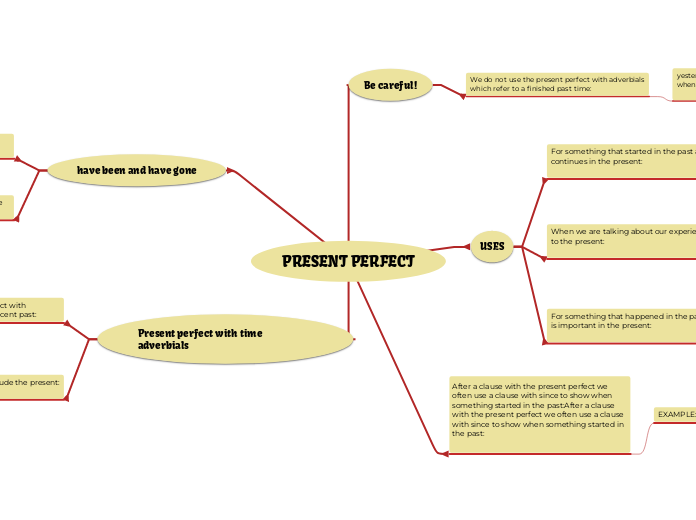
We do not use the present perfect with adverbials which refer to a finished past time:
yesterday last week/month/year in 2017 when I was younger etc.
EXAMPLE:
I have seen that film yesterday.
We have just bought a new car last week.
When we were children we have been to California.
For something that started in the past and continues in the present:
EXAMPLE: They've been married for nearly fifty years.
EXAMPLE: She has lived in Liverpool all her life.
When we are talking about our experience up to the present:
EXAMPLE: I've played the guitar ever since I was a teenager.
EXAMPLE: He has written three books and he is working on another one.
For something that happened in the past but is important in the present:
EXAMPLE: I can't get in the house. I've lost my keys.
EXAMPLE: Teresa isn't at home. I think she has gone shopping.
EXAMPLE:
I've worked here since I left school.
I've been watching that programme every week since it started.
We use have/has been when someone has gone to a place and returned:
EXAMPLE:
A: Where have you been?
B: I've just been out to the supermarket.
EXAMPLE: A: Have you ever been to San Francisco?
B: No, but I've been to Los Angeles.
^
But when someone has not returned, we use have/has gone:
EXAMPLE: A: Where's Maria? I haven't seen her for weeks.
B: She's gone to Paris for a week. She'll be back tomorrow.
We often use the present perfect with adverbials which refer to the recent past:
recently
EXAMPLE: Scientists have recently discovered a new breed of monkey.
just
We have just got back from our holidays.
only just
or adverbials which include the present:
so far until now up to now
ever (in questions)
yet (in questions and negatives)
EXAMPLE:
Have you ever seen a ghost?
Where have you been up to now?
A: Have you finished your homework yet?
B: No, so far I've only done my history.