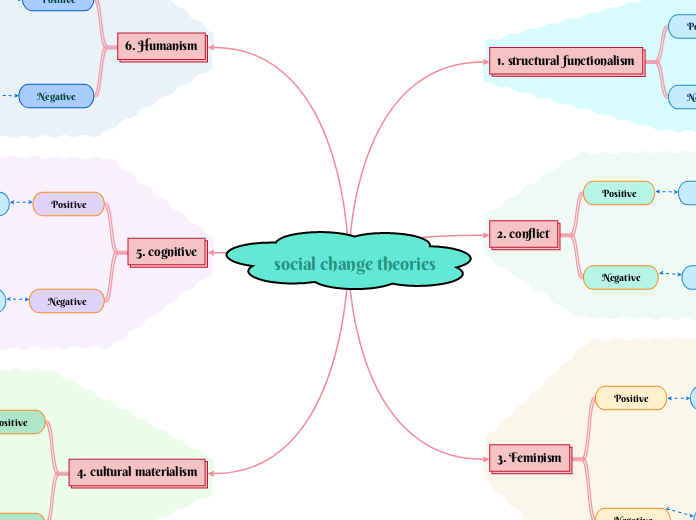
Positive
Adaptation:
Social systems adapt to external pressures for stability and growth.
Negative
Role Dysfunction
Structural functionalist theories suggest social systems are interconnected, causing resistance to change.
Positive
Critiquing Dominant Ideologies
highlighting power dynamics and promoting transformative change by deconstructing narratives and promoting alternative perspectives.
Negative
Threat to Privileged Positions
Conflict theories suggest power-holders resist change, maintaining order and preventing resource redistribution to maintain their status.
Positive
Intersectionality
Feminist theories emphasize intersectionality, recognizing gender, race, class, sexuality, and ability as social categories, promoting inclusive, intersectional approaches to change and advocating for marginalized groups' rights.
Negative
Patriarchal Ideologies
Feminist theories reveal how patriarchal ideologies perpetuate gender inequalities, maintaining traditional roles and resisting change. They reveal the resistance to change stemming from deeply embedded beliefs and socialization processes.
Positive
Personal Development
Humanism theories, like Maslow and Rogers', emphasize self-actualization and personal growth, urging individuals to embrace change, challenge themselves, and pursue new experiences for self-fulfillment.
Negative
Emotional Attachments
Humanist theories suggest emotional attachments to familiar patterns, beliefs, and traditions cause fear, anxiety, and resistance in change.
Positive
Cognitive Dissonance Theory
Psychological discomfort arises from conflicting beliefs or attitudes, leading to cognitive dissonance and motivation to embrace change and align thoughts and behaviors.
Negative
Loss Aversion Theory
Individuals are more sensitive to losses than gains, focusing on potential losses and negative outcomes in change, leading to resistance and maintaining the status quo.
Positive
Encouraging Change
Cultural materialism posits that cultural practices and beliefs are influenced by societal material conditions, driven by economic and ecological factors, and adapt to new environmental challenges or technological advancements.
Negative
Explaining Resistance to Change
Cultural materialism highlights societies' resistance to change due to cultural practices and beliefs serving specific functions and adapted to ecological and economic conditions.