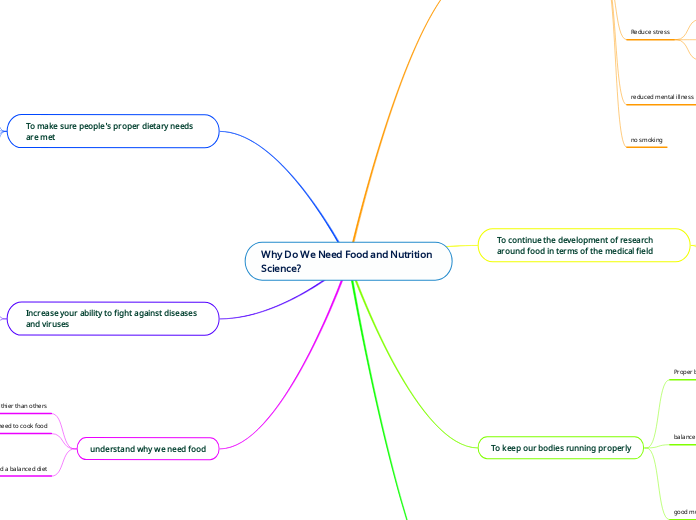
Drink water
the recommended 2 liters per day
Exercise regularly
sports
volleyball
dance
running
swimming
hockey
do a workout
yoga
go on a walk/hike
Get enough sleep
the recommended 8 hours per night
Reduce stress
practice meditiation
manage screen time
go for a walk
reduced mental illness
happier
Less stress
stabilized emotional state
no smoking
How what we eat affects our development
foods can help with brain development and health
eggs
Blueberries
fatty fish
avocados
Lack of iron leads to fatigue
links between certain foods and illnesses
How specific diets and avoidance of specific foods can help people suffering from certain illnesses
gluten intolerance for celiac disease
Avoidance of seeds for diverticulitis
Proper brain functions
ability to concentrate in school
improved alertness throughout the day
improved memory
balanced hormone levels
reduces risk of illness
emotional balance
reduces premature aging
good muscle mass
functioning metabolism
reduces stress
stronger immune system
improved energy
Less health issues
less cardiac problems
less cancers
less susceptible to having a stroke
decreased stress on the health care system
better hospital care
longer lifespan
Better mental health
less crime
lower sucide rates
better quality life
Allergies
eggs
soy
peanuts
Food sensitivities
gluten intolerance
Lactose intolerance
people who intentionally choose dietary restrictions
Vegans
vegetarians
religious reasons
high level athletes
increase performance
good results when training
proper functioning organs
healthy heart
healthy brain
better immune system
stronger muscle mass
more vitamins and minerals
helps cells function properly
cell diviision
cellular respiration
proper growth and development
why certain foods are healthier than others
why we need to cook food
to ensure we do not develop food poisoning
why we need a balanced diet
maintain healthy blood sugar levels
maintain cholesterol levels
maintain a healthy weight