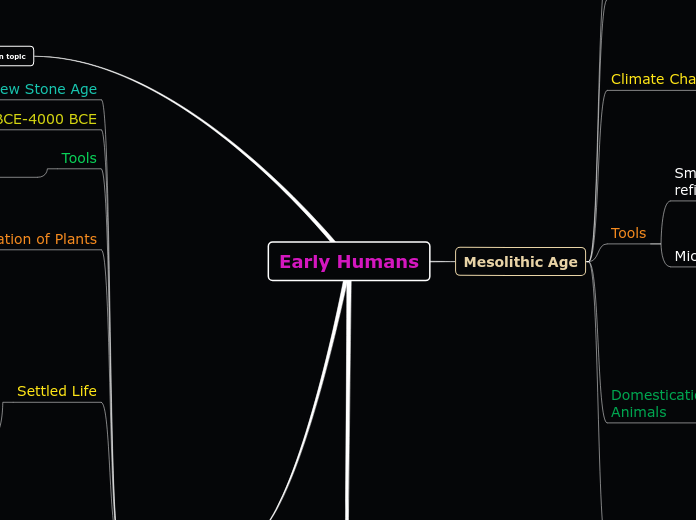
Middle Stone Age
12000 BCE-10000 BCE
Climate Change
Warmer
Increase in number of animals such as deer
Early humans had a wider range of wild animals that they could hunt and wild grains and fruit that could be gathered
Increase in grasslands
Tools
Small, sharper and refined
Microliths
Made of animal bones and horns
Stone was also used to make tools
Spearheads, arrow heads, fishing hooks
Domestication of Animals
Gentler breeds that were less likely to fall ill
Dogs, Cattle, Sheep
Archaeologists can make a distinction between wild animals and domesticated ones based on for example size of teeth and horn
Domesticated animals become less aggressive and loose physical features which are meant to protect them such as pointed big horns or sharp teeth
Pottery
Crude hand made pottery
Thick walls and large in size
Not suitable for storing liquid
Sundried
New Stone Age
10,000 BCE-4000 BCE
Tools
Polished stone tools made of Granite
Use of mortar and pestle to grand grains
Domestication of Plants
By observing how wild grains grow humans choose the ones that were hardy, had long stalk and would give more grains
One of the first to be domesticated were wheat and barley
Settled Life
Due to domestication of plants and animals early humans could no longer move from place to place
Pit house
Burzahom, Kashmir
Division of labour
Early humans started farming, making pots, weaving coarse cloth, herding animals
Work began to be divided between men and women
Discovery of wheel
Gradually led to the creation of carts etc that made transportation easy
Potters wheel
Better pottery was made of different kinds and types with thinner walls
They were fired\baked, As a result they became more durable and able to now store liquids as well
Spinning Yarn
Coarse cloth was weaved
Mehrgarh
Located on the Bolan Pass
Archaeological Evidence
Bones of wild animals such as deer and goat have been found
Bones of domesticated animals such a sheep and goat found
Rectangular Houses
Three to four compartments\rooms
Burials found within the house
4000-2000 BCE
Copper stone age
Humans continued to use stone tools as they learnt how to work with metals
Human societies began to develop at different rates
Those who discovered metal early on were able to use it to make weapons ctc