Basic Principles
Is universal, but variable regarding amount and type of inequality
Involves inequality and beliefs of fairness
A trait of society, not just individual differences
Social mobility
From lower to higher
From higher to lower
Between to positions at the same level
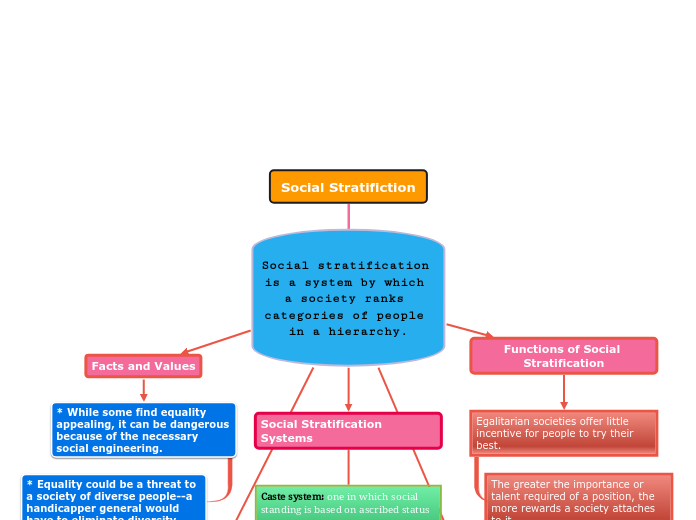
Facts and Values
* While some find equality appealing, it can be dangerous because of the necessary social engineering.
* Equality could be a threat to a society of diverse people--a handicapper general would have to eliminate diversity.
* Marx condemned inequality as a product of greed and wanted equal sharing of resources.
Dimentions of Social Stratification
Wealth and Income
Inequality and Power
Inequalities of Prestige
Social Stratification Systems
Caste system: one in which social standing is based on ascribed status or birth.
Class system: a society's categorization of its people into rankings of socioeconomic tiers based on factors like wealth, income, race, education, and power.
Estate system: a three-tiered system composed of the nobility, the clergy, and the commoners.
Slavery system: one person owns another, as he or she would own property, and exploits the slave's labor for economic gain.
Functions of Social Stratification
Egalitarian societies offer little incentive for people to try their best.
The greater the importance or talent required of a position, the more rewards a society attaches to it.
Social stratifications has beneficial consequences for the operation of a society (Davis-Moore thesis).
Meritocracy: system of stratification based on personal merit.