Definition
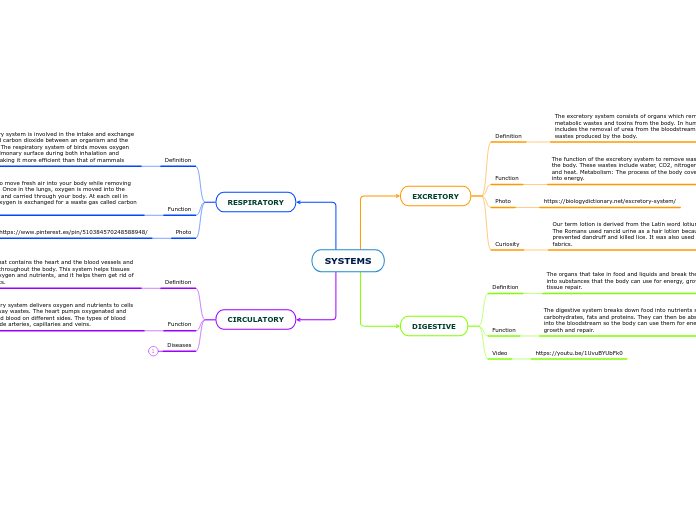
The excretory system consists of organs which remove metabolic wastes and toxins from the body. In humans, this includes the removal of urea from the bloodstream and other wastes produced by the body.
Function
The function of the excretory system to remove wastes from the body. These wastes include water, CO2, nitrogen, salts, and heat. Metabolism: The process of the body coverting food into energy.
Photo
Curiosity
Our term lotion is derived from the Latin word lotium, wash. The Romans used rancid urine as a hair lotion because it prevented dandruff and killed lice. It was also used in dyeing fabrics.
Definition
The organs that take in food and liquids and break them down into substances that the body can use for energy, growth, and tissue repair.
Function
The digestive system breaks down food into nutrients such as carbohydrates, fats and proteins. They can then be absorbed into the bloodstream so the body can use them for energy, growth and repair.
Video
Definition
The respiratory system is involved in the intake and exchange of oxygen and carbon dioxide between an organism and the environment. The respiratory system of birds moves oxygen across the pulmonary surface during both inhalation and exhalation, making it more efficient than that of mammals
Function
main job is to move fresh air into your body while removing waste gases. Once in the lungs, oxygen is moved into the bloodstream and carried through your body. At each cell in your body, oxygen is exchanged for a waste gas called carbon dioxide
Photo
Definition
The system that contains the heart and the blood vessels and moves blood throughout the body. This system helps tissues get enough oxygen and nutrients, and it helps them get rid of waste products.
Function
The circulatory system delivers oxygen and nutrients to cells and takes away wastes. The heart pumps oxygenated and deoxygenated blood on different sides. The types of blood vessels include arteries, capillaries and veins.
Diseases