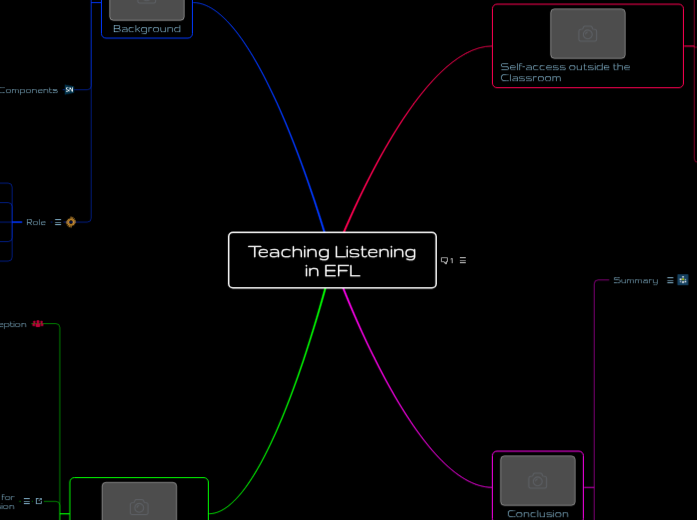
Teaching Listening in EFL

Self-access outside the Classroom
Exposure
Strategies
Conclusion
Identifying learning objectives
Selecting appropriate materials and tasks
Implementing effective procedures and techniques
Assessing and evaluating learners’ progress
Providing feedback and guidance
Predicting
Guessing
Vocabulary Preparation

Videos

Podcasts
News

Songs
Bottom-up Processing
Top-down Processing
Metacognitive awareness
Self-regulatioin
Modeling
Explaining
Practice
Integrate listening with other skills
Speaking
Reading
Writing
Grammar
Vocabulary
Culture
Background
Advantages
Identify learning objectives and outcomes for listening development
Select appropriate materials and tasks that match the learners’ needs and levels
Implement effective procedures and techniques to facilitate listening comprehension
Assess and evaluate learners’ listening progress and performance
Provide feedback and guidance to learners to enhance their listening skills
Challenges
Finding suitable and authentic listening materials that reflect real-life situations
Balancing the use of bottom-up and top-down processing in listening activities
Developing learners’ metacognitive awareness and strategies for listening
Integrating listening with other language skills and content areas
Motivating and engaging learners to listen actively and critically
The ability to understand spoken language at the discourse level, which involves extracting and constructing meaning from conversations, stories, and informational oral texts.
Recognizing speech sounds and words
Understanding the syntax and prosody of sentences
Making relevant inferences based on context and background knowledge
Keeping track of casual relationships within the discourse
Using linguistic and cognitive skills strategies and expectations to decode the message
Role
Active Process
Preparation for Speaking
Internalizing Language Rules
Listening for the Right Information
Continous Improvement
The Listening Process
Sensory Store
Short-term memory
Long-term memory
Schema theory and its implications for listening comprehension
Implications for Listening Comprehension
Active Listeners
Interactive Process
Teaching Mode
Improving Listening Competence
Accents & Diaects
Speed of Speech
Vocabulary
Cultural References
Active Listening Activities
Use of Authentic Materials
Listening for Gist & Details
Note-taking Skills