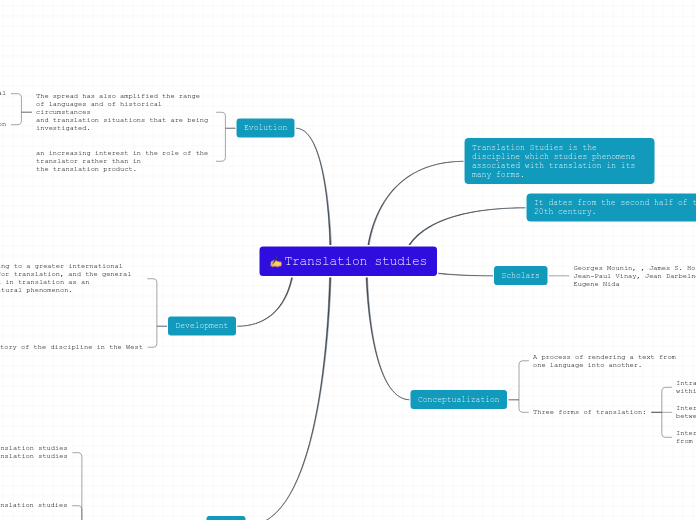
Georges Mounin, , James S. Holmes,
Jean-Paul Vinay, Jean Darbelnet,
Eugene Nida
A process of rendering a text from
one language into another.
Three forms of translation:
Intralingual:
within the same language.
Interlingual:
between different languages.
Intersemiotic:
from verbal signs to nonvebal siigns.
The spread has also amplified the range of languages and of historical circumstances
and translation situations that are being investigated.
Technological
the use of translation memory systems and other computer-aided translation tools.
audiovisual translation
dubbing and subtitling
video games
an increasing interest in the role of the translator rather than in
the translation product.
Responding to a greater international demand for translation, and the general interest in translation as an intercultural phenomenon.
A history of the discipline in the West
1. Linguistic translation theory
2. Functionalist approaches
3. Polysystem theory
4. The ‘cultural turn’ heralded
5. Philosophical questions related to literary hermeneutics* and to ethics
Empirical discipline
- Descriptive translation studies
- Theoretical translation studies
“to describe the phenomena
of translating and translation(s) as they manifest themselves in the world of our experience, and [...] to establish general principles by means of which these phenomena can
be explained and predicted
Applied translation studies
The findings of the pure research are applied “in actual
translation situations, in translation training, and in translation criticism."
Process (understanding the cognitive, decision-making capacities of
the translator),
Product (what are the features of a translated text or genre, what are the
characteristics of translated language.
Phenomenon (what is
understood as translation by different cultures,different historical and geographical points, a specific translation or group of translations
received in the target culture, etc.)