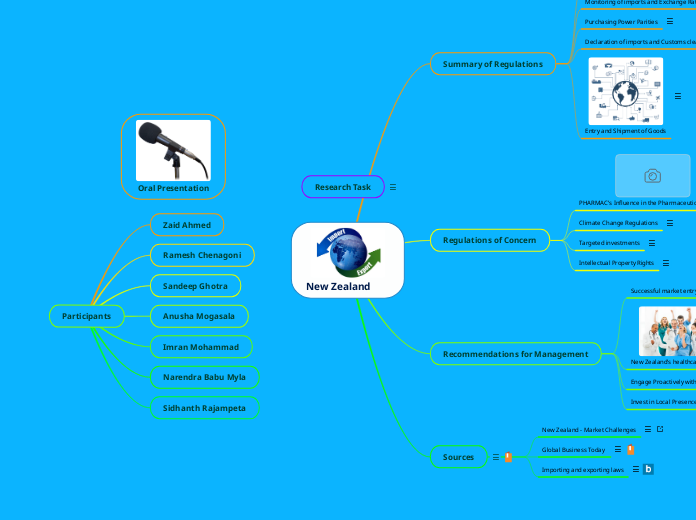

New Zealand
Summary of Regulations
Regulation of Medical Supply
Medsafe New Zealand regulates products used for a therapeutic purpose. These include medicines, related products, and medical devices (New Zealand - Market Challenges, 2022).
Monitoring of imports and Exchange Rates
U.S. exporters are advised to monitor exchange rates and shipping rates which can be relatively high.
Purchasing Power Parities
The decline of New Zealand’s dollar against the U.S. dollar means imports are more expensive to purchase locally. This can cause some U.S. products to be less competitive for similar products against domestic and/or other foreign suppliers (Hill, 2021). Imports Become More Expensive: When the NZD is weaker against the USD, it means that New Zealanders will need more of their local currency to buy the same amount of U.S. goods. This makes U.S. products more expensive in New Zealand in terms of NZD.U.S. Products Less Competitive: If U.S. products become more expensive due to the currency exchange rate, then local New Zealand products or products from other countries might become more attractive in terms of price. This can make U.S. products less competitive in the New Zealand market.
Declaration of imports and Customs clearances
All business or commercial goods coming into New Zealand need to be declared. You’ll need to lodge the details of your imports through the import entry clearance process with Customs, no later than 20 days after the goods arrive.You can lodge your details in advance – this is often preferred (and sometimes required) by MPI. You won’t be able to pick up your goods until Customs has verified your import entry clearance, confirmed the duties and charges and any other conditions that might apply, for example, biosecurity clearances from MPI.All import entry clearances are required to be lodged electronically either through: Customs' online declaration website (TSW), or by using Electronic Data Interchange (EDI) software from a private provider. You will need a Customs Client Code to be registered with Customs and, if you are importing food, registered with MPI.

Entry and Shipment of Goods
The type of entry you need to lodge depends on the value of the goods you’re importing.No import entry is required for goods valued at less than $1,000.All suppliers importing into New Zealand require a supplier code.Once the shipment is cleared an electronic release message is sent to the Customs warehouse where the goods are held.All imported goods are subject to duties, GST and other possible charges. They may also be subject to preferential tariffs from New Zealand’s external trade agreements with select countries.Some items are also prohibited from import.
Regulations of Concern

PHARMAC’s Influence in the Pharmaceutical industry
The U.S. pharmaceutical industry has voiced strong concerns over access to New Zealand’s pharmaceutical market, in which the government of New Zealand is the primary purchaser of pharmaceuticals in the country. Some U.S. pharmaceutical companies have left the market or substantially scaled back operations since the Pharmaceutical Management Agency (PHARMAC) was created in 1993. PHARMAC administers the Pharmaceutical Schedule of over 2,000 medicines, which lists medicines that are entitled to subsidies from the New Zealand Government. It also manages the Exceptional Circumstance program (medical funding for people with rare conditions). PHARMAC’s role includes purchasing hospital drugs and some medical equipment. Within the budget, which is set by the Minister of Health, PHARMAC essentially decides what medicines to fund, negotiates prices with pharmaceutical companies, and sets the subsidy levels and conditions.
Climate Change Regulations
New Zealand is required by law to be carbon neutral by 2050 (Zero Carbon Act). This means the construction of new public buildings (including hospitals) must plan to reduce emissions as well as plan for climate changes and outcomes such as an increase in infectious diseases, chronic diseases, mental health, injuries, and deaths. The healthcare sector is a high user of disposable items and energy including transport e.g., ambulances.
Targeted investments
Increased investment for people with physical, intellectual, or sensory impairments is targeted by the government as part of its well-being mandate. Mental health awareness is extremely topical and offers opportunities in helping lower New Zealand’s suicides.
Intellectual Property Rights
It is vital that companies understand that intellectual property is primarily a private right and that the U.S. government cannot enforce rights for private individuals in New Zealand. It is the responsibility of the rights’ holders to register, protect, and enforce their rights where relevant, retaining their own counsel and advisors.
Recommendations for Management
Successful market entry
Successful market entry is a combination of knowing the New Zealand market, selecting the right business partner, and providing ongoing support to the local partner. New Zealand businesses value a strong working relationship with their U.S. partners. Rapport, trust, and clear communication are important to bridge the geographical distance. Representatives of U.S. companies should visit New Zealand to meet prospective partners as this is the common practice of competitors, many of which are just across the Tasman Sea in Australia.

New Zealand’s healthcare sector
New Zealand’s healthcare sector is very receptive to U.S. technologies and is constantly seeking new solutions that can add value to a healthcare system under constant pressure to minimize costs while delivering rising standards of excellence.In general, New Zealand’s healthcare sector is receptive to new solutions that can add value to a healthcare system under pressure to minimize costs and deliver rising standards of excellence for its aging population.
Engage Proactively with Regulatory Bodies
Given the influence of PHARMAC in the pharmaceutical industry, it's crucial to establish a strong relationship with this entity. Engage in proactive negotiations and understand the criteria PHARMAC uses to decide on subsidies. This will help in positioning products effectively in the market.Stay updated with New Zealand's climate change regulations, especially if involved in the construction of healthcare facilities or the production of medical equipment. Consider investing in eco-friendly technologies and practices to align with New Zealand's carbon-neutral goals.
Invest in Local Presence and Relationships
As highlighted, New Zealand businesses value strong relationships with their U.S. partners. Consider establishing a local office or representation in New Zealand to foster these relationships. Regular visits by U.S. representatives can also help in building trust and rapport.Given the emphasis on mental health and the well-being mandate, explore opportunities to invest in or partner with local initiatives that address these concerns. This not only positions the company as a socially responsible entity but also taps into a growing market segment.
Sources
List your sources here - minimum of 3 with 1 coming from your textbook.New Zealand - Market Challenges. (2022, July 31). International Trade Administration | Trade.gov. https://www.trade.gov/country-commercial-guides/new-zealand-market-challengesHill, C.W. L. (2021). Global Business Today (12th ed.). McGraw-Hill Higher Education (US). https://online.vitalsource.com/books/9781264209620
aNew Zealand - Market Challenges
New Zealand - Market Challenges. (2022, July 31). International Trade Administration | Trade.gov. https://www.trade.gov/country-commercial-guides/new-zealand-market-challenges
aGlobal Business Today
Hill, C.W. L. (2021). Global Business Today (12th ed.). McGraw-Hill Higher Education (US). https://online.vitalsource.com/books/9781264209620
Importing and exporting laws
Importing and exporting laws. (n.d.). Importing and Exporting Laws. https://www.business.govt.nz/risks-and-operations/manufacturing/importing-and-exporting-laws/
Research Task
You work for a pharmaceutical company that hopes to provide products and services in New Zealand. Yet management's current knowledge of this country's trade policies and barriers is limited. After researching a resource that summarizes the import and export regulations, outline the most important foreign trade barriers your firm's managers must keep in mind while developing a strategy for entry into New Zealand's pharmaceutical market.
