These two systems communicate and work together to keep us healthy and safe every day.
Internal defenses
lymphocytes
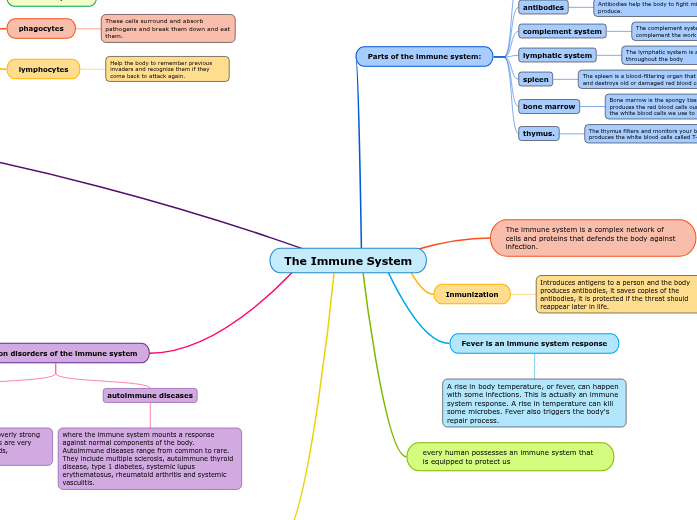
Help the body to remember previous invaders and recognize them if they come back to attack again.
phagocytes
These cells surround and absorb pathogens and break them down and eat them.
antimicrobial proteins
The Immune System
Healthy ways to strengthen your immune system
-Don't smoke.
-Eat a diet high in fruits and vegetables.
-Exercise regularly.
-Maintain a healthy weight.
-If you drink alcohol, drink only in moderation.
-Get adequate sleep.
Common disorders of the immune system
autoimmune diseases
where the immune system mounts a response against normal components of the body. Autoimmune diseases range from common to rare. They include multiple sclerosis, autoimmune thyroid disease, type 1 diabetes, systemic lupus erythematosus, rheumatoid arthritis and systemic vasculitis.
allergic diseases
where the immune system makes an overly strong response to allergens. Allergic diseases are very common. They include allergies to foods, medications or stinging insects
The immune system can be split up into two parts.
innate defense system
External memebers
These are effective at blocking pathogens from entering the body.
Ephitelial cells are keratinized, so if it gets broken it separates so it is easily to get infections if we get cut
Body cavities are lined with mucosae
Microorganismes get stuck in mucus
Lysozymes destroy bacteria
They are acidic, so it inhibits bacterial grow.
Skin
Mucous membranes
the adaptive defense system.
Part of inmune system that can learn about any foreign substance it gets in contact with
Its memory is because antybodies
specif response for specific type of invader
Antibody
Antibodies are part of a large family of chemicals called immunoglobulins,
Antibodies lock onto the antigen, but they do not kill it, only mark it for death. The killing is the job of other cells, such as phagocytes.
Classes of antibodies
IgE
IgG
IgD
Monomer
IgA
Dimer
IgM
Pentamer
It recognise strange substances in the body and protect the body of any disease
They ciculate in blood and lymph
Y shaped proteins produced by lymphocytes
Adapative inmuno response
Cellular
B- Cells
T- Cells
Have the ability to kill cells of the body that have been infected by any virus or bacteria
CD8
Glycoproteins, act as surface receptors, they differ from antigen receptors. They interact with other cells
CD4
Activate B cells, T cells and macrophages, while CD8 destroy foreign cells
Humoral
every human possesses an immune system that is equipped to protect us
Fever is an immune system response
A rise in body temperature, or fever, can happen with some infections. This is actually an immune system response. A rise in temperature can kill some microbes. Fever also triggers the body's repair process.
Inmunization
Introduces antigens to a person and the body produces antibodies, it saves copies of the antibodies, it is protected if the threat should reappear later in life.
The immune system is a complex network of cells and proteins that defends the body against infection.
Parts of the immune system:
thymus.
The thymus filters and monitors your blood content. It produces the white blood cells called T-lymphocytes
bone marrow
Bone marrow is the spongy tissue found inside your bones. It produces the red blood cells our bodies need to carry oxygen, the white blood cells we use to fight infection
spleen
The spleen is a blood-filtering organ that removes microbes and destroys old or damaged red blood cells.
lymphatic system
The lymphatic system is a network of delicate tubes throughout the body
complement system
The complement system is made up of proteins whose actions complement the work done by antibodies.
antibodies
Antibodies help the body to fight microbes or the toxins they produce.
white blood cells
White blood cells are the key players in your immune system. They are made in your bone marrow and are part of the lymphatic system.