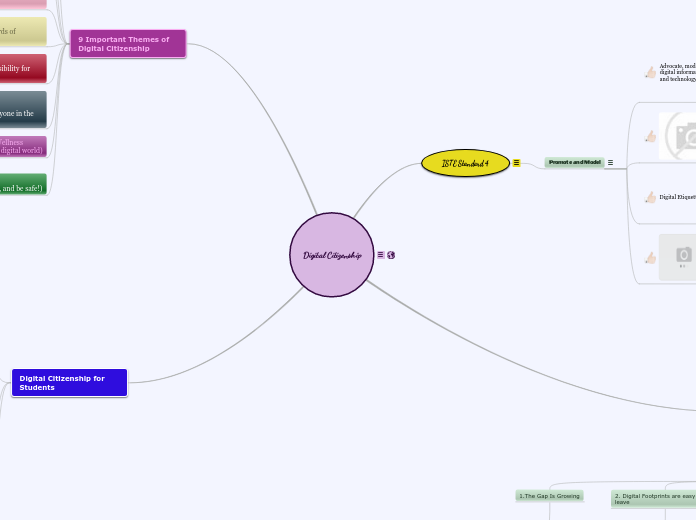
Digital Citizenship
ISTE Standard 4
Promote and Model
Advocate, model, and teach safe use of digital information
and technology.

Address the diverse needs of all learners by
providing access to learner-centered strategies.
Digital Etiquette (Netiquette)

Model cultural understanding and awareness
by engaging others using technology.
Why Teach Digital Citizenship?
5 Reasons to Teach Digital Citizenship (article attached)
1.The Gap Is Growing
The gap between what students do with their
phones on their own time and what they could do is striking in schools, so it must be addressed.
2. Digital Footprints are easy to leave
Future employers or colleges can look
on the internet and observe a student's
digital footprint, aka BE CAREFUL.
It's "Real Life"
You can connect with the 'real
world' using technology, aka
we should take advantage.
There is a culture of Multitasking
It is important to embrace this
culture so that students will thrive
in our world of technology, rather
than being distracted and unproductive.
Content Curation is an Emerging Literacy
Because of technology we have the
opportunity to access information
anytime, anywhere, etc. Educate
so that students can benefit.
9 Important Themes of Digital Citizenship
Digital Access
(full electronic participation)
Digital Commerce
(electronic buying and selling of goods)
Digital Communication
(electronic exchange of information)
Digital Literacy
(teaching and learning about technology)
Digital Etiquette
(electronic standards of conduct)
Digital Law
(electronic responsibility for actions)
Digital Rights and Responsibilities
(freedoms for everyone in the digital world)
Digital Health & Wellness
(well-being in this digital world)
Digital Security
(protect yourself, and be safe!)
It is important to remind students that
what they put on the internet is there
forever, so be SMART.
Digital Citizenship for Students
Good Visual To Have in a Classroom:
These are the people who are learning
about this digital world, so if the teacher does
job, they will be able to successfully navigate
the world of technology.
There are plenty of websites with advice and tips
to educate students on Digital Citizenship, here is just one to help begin the process.