Common Forms
herbal
hashish
hash oil
How it's used
smoked
edibles
vape pens
Classification
Schedule 1 Drug
Regulation
Some states allow for recreational and medial use
In Oregon, you have to be 21
How it works
THC is rapidly absorbed
goes directly to the brain first then the rest of the body
mood- altering and cardiovascular effects begin
Effects
increase in heartrate
redness of the eyes
euphoria
slowed cognitive processing
disrupted short term memory
loss of concentration
disrupted inhibitory control
Concerns
Short term
memory problems
paranoia
psychosis
Long term
Decline in IQ
impaired thinking
possible addiction
Common Forms
crystal meth
chemically meth
How it is used
casual
Social
classification
Stimulant
How it works
floods the brain with the chemical dopamine
flooding of reward chemicals adds to the extreme addiction risk
dopamine receptors become overloaded and fail to function properly after prolonged use
effects
Short term
increased wakefulness and physical activity
decreased appetite
faster breathing
rapid and/or irregular heart beat
increased blood pressure and body temperature
long term
extreme weight loss
addiction
Anxiety
severe dental problems
confusion
intense itching, leading to skin sores from scratching
change in brain structure and function
memory loss
sleeping problems
violent behavior
paranoia
hallucinations
routes of administration
smoked
swallowed (pill)
snorted (crushed into powder)
injected (after being dissolved in water or alcohol)
Other "street names"
crank
speed
chalk
Scooby snax
Common Forms
natural
opium
diluted opium
morphine
codeine
thebaine
semi-synthetic
diacetylmorphine (heroin)
Hydrocodone
Hydromorphine
Oxycodone
Synthetic
Buprenorphine
Levomethadyl
Methadone
Tramadol
Butorphanol
Levorphanol
Fentanyl
Oxymorphone
How it is used
social
casual
medical
classification
opioid
regulation
only allowed to be sold if it is a prescription
not taking multiple prescriptions
opioids are to be prescribed appropriately for the condition
How it works
bind to our natural pain receptors to reduce pain
continued use of consumption makes the receptors go into hyperdrive sending massive amounts of sensory signals to the brain that the body is in pain
effects
injections can cause veins to collapse
heavy use can cause sedation
slowing of the digestive system can cause constipation
chronic use can create a sensitivity to pain
heart lining can become infected from contaminated drugs
ensuing respiratory depression can lead to slowed
sharing needles can lead to hepatitis
vulnerability and infection can occur due to reduced immune response
concerns
short term
headaches
itches
drowsiness
mental fog
constipation
dry mouth
long term
addiction
increased pain
hormonal problems
severe abdominal pain
irregular heart beat
weak bones
depression
increased risk of heart attack
routes of administration
oral: most opioids are misused prescription pills at first
as addictions increase, more commonly used as intravenous, intramuscular, and powder form
used to cut other drugs
Common Forms
Beer
Wine
Distilled Spirits (whiskey, vodka, gin)
How it's used
People use it for social events and for their own escape
Classification
Depressant
Regulation
In 1988, all states changed the legal drinking age to 21 years old
How it works
goes into all bodily fluids
liver responds by increasing the activity of metabolic enzymes
small intestine is responsible for most absorption
Effects
inhibitions can be reduced
experience euphoria
reduction of anxieties
Concerns
Short term
bad decision making
lower motor skill ability
hangover the next day
Long term
brain damage
liver disorders
heart disease
cancer
Effects the immune system
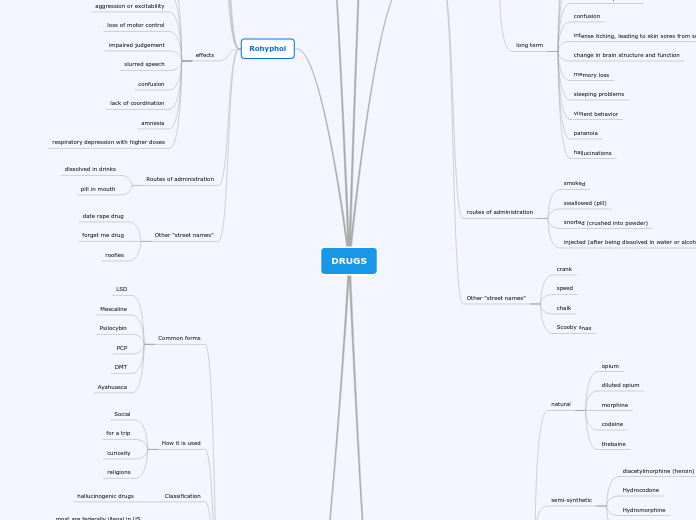
Common forms
pill
How it is used
medically ( other countries)
medically (illegally in US)
aids sexual assault
classification
depressant
regulation
illegal in the US
effects
drowsiness
decreased reaction time
aggression or excitability
loss of motor control
impaired judgement
slurred speech
confusion
lack of coordination
amnesia
respiratory depression with higher doses
Routes of administration
dissolved in drinks
pill in mouth
Other "street names"
date rape drug
forget me drug
roofies
Common forms
LSD
Mescaline
Psilocybin
PCP
DMT
Ayahuasca
How it is used
Social
for a trip
curiosity
religions
Classification
hallucinogenic drugs
Regulation
most are federally illegal in US
results can lead to arrest, ;legal fees and/or jail time
how it works
affects the temporal lobe
activation in hippocampus
affect neural circuits in the brain involving serotonin
primarily disrupting the actions of the brain's glutamate system
Psilocybin- Psilocin- brain similar chemical structure to serotonin, LSD can bind and stimulate receptors in brain
brain rearranges itself, harder to determine reality (can last 3-8 hours but feels longer because it alters sense of time)
Effects
causes psychological, auditory, and visually altered states
Concerns
short term
increased blood pressure
dizziness nap sleeplessness
increased body temperature
dry mouth
impulsiveness
sweating
rapid emotional shifts
loss of appetite
long term
visual disturbances
disorganized thinking
paranoia
mood disturbances
other visual disturbances ( seeing halos or trails attached to moving objects)
similar to neurological disorders (stroke, brain tumor)
common in patients with history of psychological problems
Routes of Administration
under the tongue (sublingual administration)
held in the cheek
oral injestion
snorted
smoked (mixed with tobacco or cannabis)