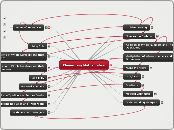
Elementary Mathematics
Problem Solving
Steps of Problem Solving1. Identify the Problem2. Devise a Plan3. Use a Plan4. Reflect on Answer
Numeration Systems
Numeration Systemthe counting of numbers has been created since the beginning of time and our main counting system is the Hindu-Arabic (Base 10).the base ten could be categorized in Dienes blocks with place values of thousands,hundreds,tens, and ones and the blocks are cubes, flats, longs, and units.
Addition of Whole Numbers and Their Operations
Addition2 basic models-Discrete and ContinuousDiscrete model characterized by combining two sets of discrete objectsContinuous model characterized by combining two continuous quantitiesProperties of AdditionClosure Property- ex. the sum of any two whole numbers is another whole numberCommutative Property-If there are two sets of objects one containing A objects and the other B objectsthen the new set has A&B number of objects it doesnt change the numbers in the sets just the placement. Associative Property- If there are three sets of objects containing a,b,c, number of objects respectively when the sets are combined the number of objects in the new set will be the sum of a,b,c regardles of the order in which they are addedIdentity Property-If there are two sets of objects one containing A objects and the other containing an empty set when he sets are combined the new set contains A objects
Multipliction of Whole Numbers and Their Operations
MultiplicationModels/context1. Repeated Addition- discrete characterized by repeating adding a quantitiy of descrete objects a specified number of times.ex. Sammy's brother and sister both gave him two cars for his birthday. How many cars did he get? 2=2=2x2=42. Repeated Addition-continuous characterized by repeatedly adding continuous quantities a specified number of times.ex. During the week, Monday through Friday, sandra practiced the piano 30 minutes a day. How long did she practice this week? 30+30+30+30+30=150, 30x5=1503. Array(Area) Model- Characterized as a product of two numbers representing the sides of a rectangular region such that the product produces unit sized squares.ex.TOm is tiling his bathroom floor that measures 10ft by 15ft. To purchase the tile he needs to find the area of the bathroom floor. What is the area of the bathroom floor? 150ft^24. Cartisean Product- characterized by finding all possible pairings between two or more sets of objectsex. Sarah has 4 jackets and 3 scarves. How many different jacket and scarf out fits can she wear? Multiplication Properties1. Closure Property- If AEW and BEW then (axb)EW? yesex. axb can be interpreted as adding b copies of a. Since addition is closed over the whole numbers we can conclude that multiplication is also closed over whole numbers2. Commutative Propety- If AEW and BEW then axb=bxa? No. a=5,b=7. 5x7=35 Sq. units 7x5=35 sq. units but same number different shapeCounter-example: axb can be interpreted as a rectangle with a rows and b columns. the area of that rectangle is (ab) sq units. bxa is a rectangle with b rows and a columns. the area of that rectangle is also(ab) sq. units. Since the areas of the two rectangles is tha same we know that axb has the same value as bxa.
Number Theory
Number Theroy:Even Number: is a number that can be written as 2NOdd Number: is a number that can be written as 2n+1ex: 33 five2/33=14 33 five is even because 33 five [2(14)] which is a multiple of two and satisfies the definition of even numbers
GCF/LCM
GCF/LCMGCF: to find two of the same greatest common factors in two numbersLCM: to find the least common multiple in two numbersex: GCF(4,6) 4: 2, 4 6: 2, 3, 6 the answer is 2 LCM (4,6) 4:4, 8, 12,16,20,24... 6: 6, 12, 18, 24, 30... the answer is 12
Fractions
Fractionsthese set of notes were used with pattern blocks to help establish the use of finding the value or dividend of each number or fraction.ex. If Hexagon=1 then, trapezoid=1/2, this trapezoid divides the hexagon into two equal parts and we are only talking about one partrhombus=1/3, the rhombus divides the hexagon into three equal parts and we are only talking about one parttriangle=1/6, the triangle divides the hexagon into six equal parts and we are only talking about one part
Modular Arithmetic
Modular ArithmeticIt is used to help find time throughout any kind of time clock such as 12 hour, 24 hour, 60 minutes, 7 days a week, etc. and it has the real life connection of helping people decide and keep track of deadlines, vacation time, work schedules, etc.Addition and SubtractionProperties-Addition onlyClosure propertyCommunative propertyIdentity propertyInverse propertyex: Addition- 6+8 (mod5)=4 To find 6+8 on a 5-hour clock, we must count clockwise 14 times starting at 0 Subtraction- 6-8 (mod 4)=2 T find 6-8 we locate 6 on the 4-hour clock (which is equivalent to 2) and count counter clock wise 8.Multiplication and DivisionPropeties-Multiplication onlyClosure propertyCommunative propertyIdentity propertyInverse properyex: Multiplication- 4 X 10 (mod 6)=4 or 10+10+10+10 (mod 6)=4Division- 4/5 (mod 5)=No solution
Understanding Integers
Understanding Integersthe three steps in solving understanding Integers problemsI. The Opposite of an IntegerII. Absolute ValueIII. Ordering IntegersI. The Opposite of an IntegersThe opposite of an number is better known as the additive inverse; that is, the opposite of the number A is the number which must be added to A to produce the additive identity 0: A+??=0. This quantity is often referred to as opposite of A and is written -A. We look at two ways of investigating the opposite of an integer1. Number Line ApproachA number line is one method of visualing the integers. To investigate the opposite of an integer graph both the given integer and its' opposite on the number line2. Chip MethodAnother method for visualizing integers is to use colored chips. Typically the chips are red on one side and another color (yellow or white) on the other side which permits representing positive numbers with white or yellow chips and negative numbers ith red chips. The idea of opposite seems rather natural when using these manipulatives since there are only two colors. To find the opposite of a number all that is necessary is to turn each chip to the opposite side.II. Absolute ValueMost students when asked what the absolute value of a number is reply with what they perceive as the definition of absolute value: The absolute value of a positive number is the number itself and the absolute value of a negative number is the negative numbers' opposite. In reality, the absolute value of a number is its magnitude. It is the case of real numbers the method mentioned does in fact produce the magnitude of the number but masks what is meant by finding the absolute value of a number. We look at two ways of investigating absolute value.1. Number line approachA number line is one method of visualizing the integers. In lookmagnitude in this context, absolute value is the distance of the given number to zero.2. Chip methodIn looking at magnitude in this context, absolute value is the quantitiy of chips present. Red chips=negative, white/yellow chips=positive.III. Ordering IntegersBy convention, he number line is structured so that numbers increase from left to right. This means that numbers to the left of -3 are less then (<) -3, ex: -4,-5 while numbers to the right of -3 are greater than (>) -3, ex: -1,1,3.
Types of Sequences
Types of SequencesA sequence is an ordered list of objects,events,or numbers which may be referred to as elements of the sequence, members of the sequence of the sequence.
Normal Sequencing
Mathematics sequencing could be used of eiher shapes or numbers to find a pattern by establishing rules to find them.example: 1,2,3,4,5,6,7,8,9,10 1,-1,1,-1,1,-1,1,-1,1,-1rule: an=1(-1)n-1
Arithmetic Sequencing
Arithmetic SequencesSequences are sequences of numbers with a common difference; that is, if you subtract any two consecutive terms in the sequence the difference is the same.example: -3,-1-1-3-5 all have a common difference of 2formula: a1=a1 a2=a1+d a3=a2+d=(a1+d)=d a4=a3+d=(a2+d+a1+d)+d ........ an=a1+(n-1)danswer: an=-3+(n-1)(2)
Geometric Sequencing
Geometric SequenceSequences of numbers with a common ratio; that is, if you form the ratio of any two consecutive terms in the sequence the ratio is the same.example: 8,-4,2,-1 this sequence has a common ratio of -1/2.formula: a1=a1 a2=r a1 a3=r a2= r(r a1) a4=r a3=r (r a2 r a1) ...... an= a1*r n-1answer: an=8 * (-1/2) n-1 an=a10 a10= -1/64
Recurrence Relationship Sequencing
Recurrence Relationship Sequencesa sequence in which the current term is dependent on previous term(s) example: b1=-1 b2=3 bn=2*bn-1+bn-2 the rule states that each term depends on the value of the two previous terms. to find the third and fourth terms in the sequence we do the following: b3=2* b3-1 = b3-2= 2* b2-b1=2(3)+(-1)=5 b4= 2* b4-1+ b4-2= 2* b3+ b2=2(5)+(3)= 13
Using Sets
Setsa set can contain a group of elements or individual members that can be used to categorize a particular object or problem. It can be contained in a Universal set with many distinctions such as empty sets, subset, proper subset and a complement of a set.Operationsby combining the use of sets and it's other counterparts along with Venn Diagrams, many problems can be solved through effective ease.
Subtractions of Whole Numbers and their Operations
Subtractionmodels sames1. Take Away- Characterized by starting with an initial quantity and removing(or taking away) a specified amount.ex. Vince came to class with five pieces of candy. How many pieces of candy does Vince have?2. Comparison-characterized by a comparison of the relative sizes of two quantites to determine how much larger or how much smaller one of the quantities is smaller than the other quality.ex. Emily read 5 books and Jim read 3 books. how many more books did Emily read than Jim?3. Missing-Addend-characterized by the need to determine what quantity must be added to a specified amount to reach some target quantity -+?=_ex. Kelsie has 6 blocks. She wants 10 blocks. How many more blocks does Kelsie need? 6+?=10Subtraction PropertiesClosure Property- If AEW,BEW can we say (a-b) E W? NoCounter-example: a=5,b=7 (5-7)=-2, -2=/WCommutative Property- If AEW,BEW can we say a-b=b-a? NoCounter-example: a=5,b=7 (5-7)=-2 (7-5)=2, -2=/2Associative Property- If AEW,BEW,CEW can we say (a-b)-c=a-(b-c)? NoCounter-example: a=5,b=4,c=3. (5-4)-3= -2 5-(4-3)=4 -2=/4Identity Property- If AEW then a-0=a? Yes 0-a=a? NoCounter-example: a=4. 4-0=4, 0-4=-4, 4=/-4
Division of Whole Numbers and their Operations
DivisionModles/context1. Partition(sharing)- characterized by distributing a specified quantity among a specified quantity among a specified number of partitions (groups) and determing the size (amount) in each partition (group).ex. Billy comes to school wih 10 pencils. He decides to share the pencils with 4 friends. How many pencils does each friend get?2. Measurement( Repeated Subtraction)- characterized by using a specified quantity to create groups (or partitions) of a specified size (amount) and determining the number of partitions (groups) that can be formedex. Sally has 8 eggs and a recipe for brownies that requires 2 eggs. How many batches of brownies can Sally make?
Divisibility
Divisibilitya/b= a divided by baIb=a divides bex: 15/3 3I15 (no 15I3)use factor equivalent statementsex: 3 is a factor of 15= 15=3 X 5 15 is a multiple of 3= 3X5=15 3 is a divisor of 15= 15/3=5 15 is divisible by 3= 3/15 = 5
Rational Numbers
Rational NumberRational number is a number that can be written as the ratio of two integers: a/b where both a and b are integers. Rational numbers are often refered to as fractions but not all fractions are rational numbers.ex. 2/3 . two thirds of '1' . two divided by three . In decimal form, this is a repeating decimal not a whole number . 'missing' 1/3 from a whole numbera/b part-to-whole: the whole is partioned into b equal parts of which a of those parts are selected ex. 2/3 2= discrete set, 3= whole setQuotientInterepreting the fraction as a division problemex. 2/3, 3/2.000=.666= 0.6RatioUsed to compare two separate things ex. 3 oranges for $1 3oranges/$1
Products/Quotients of Pattern Blocks
Products using pattern blocksexample: 1/3X1/4=> one of three equal parts of 1/4 where the whole is two hexagons. we would shade 1/4 of the whole ( hint: the shaded region should be a trapezoid) then we outline 1/4 of the whle and divide the 1/4 into three equal parts (hint: think green triangles) shade one of the three equal parts (again think green triangles) Now you should have one triangle shaded which represents 1/12 of the whole. thus 1/3X1/4=1/12Quotients using pattern blocksexample: 1/3 / 1/6=> How many groups of 1/6 are in 1/3? (where the whole is two hexagons) set up the division problem how many groups of 1/6 are in 1/3? there are 2 groups of 1/6 in 1/3. 1/3 / 1/6= 2
Understanding Ratios and Proportions
Generally a proportion is a statement about the equality of two ratios ex: A/B=C/DA proportion can also be thought of as an analogy Analogy: A nest is to bird as a den is to a foxExample problem: 1. Alisa is painting her living room. she can paint the entire living room in 4 hours. Assuming that Karen can complete the job in the same amount of time as Alisa, how long will it take Karen and Alisa to paint the living room?Think about it this way: 1person/4hours=2people/xhours=2people/4hours=2hoursOr: To understand this problem you can see it as a visual concept: Status BarA [1/4][][][]K[1/4][][][][A][K][A][K]Alisa worked 1/4 per hour as Karen also worked 1/4 per hour and together they worked 1/2 per hourSo, with Alisa and Karen working 1/2 per hour together and when the room is into 4 parts the problem would equal 1/2+1/2+1/2+1/2=2hours to complete the living room
Arithmetic with Integers
Aritthmetic with integersAdditionex: -4+7*=positive@=negative@@@@+******* remove zeroes-@@@@&*******=3Subtractionex: 7-4*******-**** take away four *******=3Multiplicationex:3X4Add 3 times pos. 4 chips************=************=12DivisionPartition Methodex: 12/4Distribute 12 pos. chips among four groups=the answer is the number of chips in each group**** ******** ****=3Repeated-Subtraction Methodex: -12/-4use 4 negative chips to make each group. the answer is the number 4 groups we can form@@@@ @@@@ @@@@=3