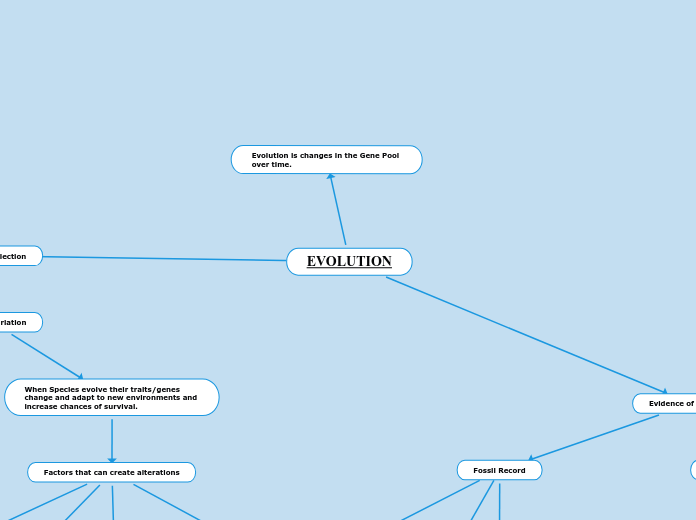
Genetic Variation
Specific traits that come up over time help species survive
This traits can determine whether a species survives or goes extinct
When Species evolve their traits/genes change and adapt to new environments and increase chances of survival.
Factors that can create alterations
Predators
Predators also leave marks on their prey's fossils, this can reveal predator-prey interactions between species.
Climate
Climate can affect species in many ways. For example, if a species lives somewhere really hot and sunny over generations their skin will produce more melanin to protect itself from the sun and uv rays. But if it's a cold climate with little sun, over generations their skin will decrease in melanin for them to be able to absorb as much light as possible since there isn't much of it. Using comparative anatomy, and studying different species's bones they can find which species lived in what climate. They can find traces of a species melanin on it's bones and use it to figure out it's skin color and with that what climate it lived in and with that roughly figure out where a extinct species lived.
Terrain
Food source location
Fossil Record
Fossil Record is evidence of how much a species have evolve over time. With slight differences over time we can see species evolving and material proof of their existence. Scientists study fossils from the same species but from different time periods, this way they can see exact traits that changed in the species over time.
Embryo Evolution
Embryo Evolution is evidence that every species on Earth came from the same ancestor and over time evolved into different species.
Comparative Anatomy
Comparative anatomy is just another piece of evidence of how much species have evolved over time and adapted to new enviroments in order to survive.
In comparative anatomy
the purpose is to compare
the anatomical bone structures of two different species from two different time periods or the same time period and compare them and see how they have evolved and changed over time.
Scientist often link special changes to historical events to understand better the WHY of the evolution.