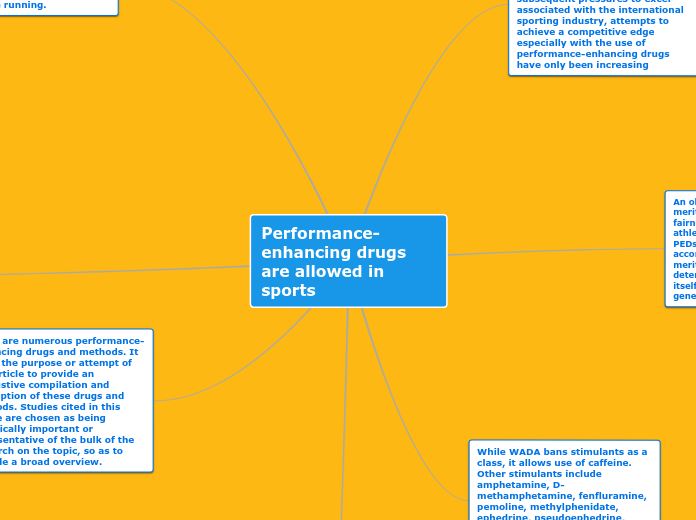
For as long as sporting events have existed, the desire to gain a competitive edge has been present as well. With the huge financial incentives and the subsequent pressures to excel associated with the international sporting industry, attempts to achieve a competitive edge especially with the use of performance-enhancing drugs have only been increasing
An objection to the athletic meritocracy argument questions the fairness of the conception of athletic meritocracy that rules out PEDs. The skill that should, according to proponents of athletic meritocracy, be a major determinant of athletic success is itself at least in part a result of genetic gifts
While WADA bans stimulants as a class, it allows use of caffeine. Other stimulants include amphetamine, D-methamphetamine, fenfluramine, pemoline, methylphenidate, ephedrine, pseudoephedrine, dimethylamylamine, cocaine, selegiline, sibutramine, strychnine, and modafinil
Many athletes currently using steroids and other dangerous PEDs are prob- ably unaware of the full extent of the medical risks that they are running.
Even if we could somehow, contrary to reality, eliminate inequalities resulting from unequal access to PEDs and unequal physiological responses to PEDs, a more fundamental meritocratic objection remains.
There are numerous performance-enhancing drugs and methods. It is not the purpose or attempt of this article to provide an exhaustive compilation and description of these drugs and methods. Studies cited in this article are chosen as being historically important or representative of the bulk of the research on the topic, so as to provide a broad overview.