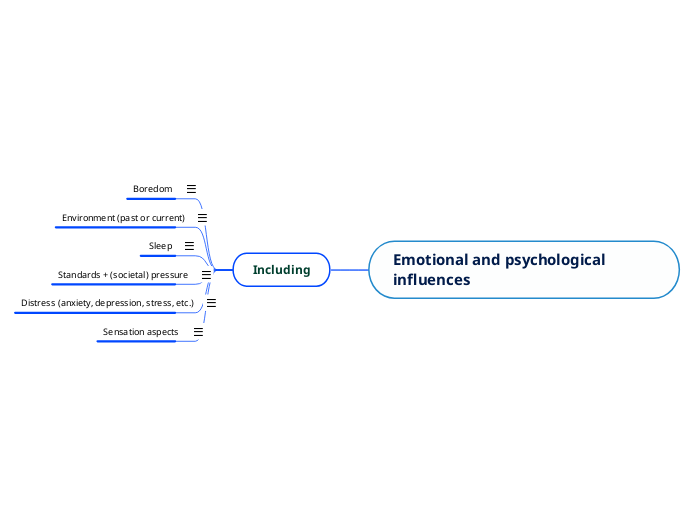
Boredom
Boredom often leads people to eat unnecessarily, even if they aren't hungry.
Environment (past or current)
Someone's environment can have many psychological impacts on their food choices. Such as subconscious biases, poor experience with certain food, ect.
Sleep
"Lack of sleep may affect hunger-regulating hormones, which can lead to eating more food more often." — Gunderson Health System
Standards + (societal) pressure
The beauty standards surrounding a person largely affects their food choices based on their understanding of health and self image.
Distress (anxiety, depression, stress, etc.)
"Unusual meals--e.g. too small, unhealthy--may negatively affect mood. Sweetness, and sensory cues to high energy density, such as fatty texture, can improve mood and mitigate effects of stress via brain opioidergic and dopaminergic neurotransmission” -PubMed
Sensation aspects
Food offers stimulation through smell, appearance, and texture. Personal liking to different stimulation affects a persons' food choice.