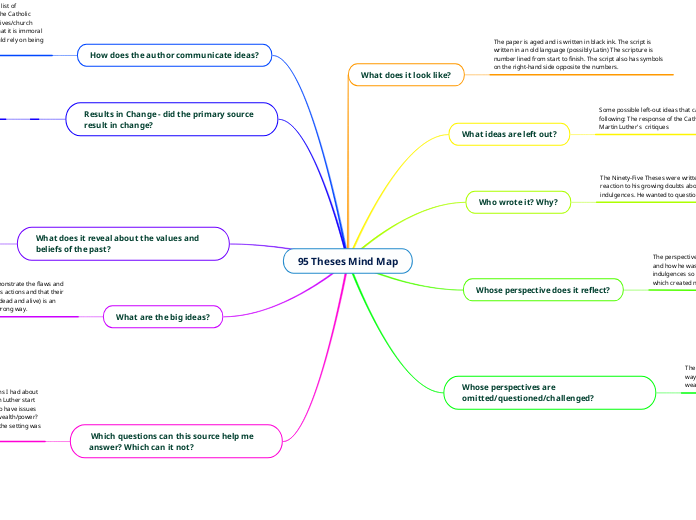
The paper is aged and is written in black ink. The script is written in an old language (possibly Latin) The scripture is number lined from start to finish. The script also has symbols on the right-hand side opposite the numbers.
Some possible left-out ideas that can be noted are the following: The response of the Catholic Church to clarify/justify Martin Luther's critiques
The Ninety-Five Theses were written by Martin Luther in reaction to his growing doubts about the practice of selling indulgences. He wanted to question the Churches ways.
The perspective clearly reflects Martin Luther's perspective and how he was unsatisfied with the church's sale of indulgences so he decided to start the protestant reformation which created new branches of religion. (Lutherans)
The church's perspective of selling indulgences to people as a way to gain incentives to benefit their church and create wealth is being questioned and challenged by Martin Luther.
The author communicates ideas by creating a list of expectations/critiques of the current ways of the Catholic Church. Martin Luther says that buying incentives/church donations will not get them into heaven and that it is immoral to do so. He emphasizes that the people should rely on being faithful to the lord.
This primary source did result in change. The Protestant Reformation was created and this movement led to new religions that people could become apart of besides Christianity.
This source reveals that the Churches values and beliefs of the past were more focused on themselves and their benefit of wealth and power vs the focus on their followers. (Using donations for personal gain and telling people that if they donate they will go to heaven)
The big idea in this script was to demonstrate the flaws and disagreement of the catholic church's actions and that their offering to clear people's sins (Both dead and alive) is an example of morals being used in a wrong way.
This source can help me answer certain questions I had about this specific timeline in history. 1) Why did Martin Luther start the protestant reformation 2) Did the people also have issues with the Catholic Church and their ways to gain wealth/power? A question this source did not answer was what the setting was like between both parties during this time?