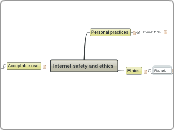
Internet safety and ethics
Personal practices
The Internet can be a useful tool, but used the wrong way, can cause harm personally and/or professionally. Do not provide personal information online you would not want others to have access to. Remember that once it's out there, it is hard to take it back.
Internet tools
Make sure that if you use a shared computer that all information given online is deleted before logging off the computer.Some computers use "clean slate" software to wipe the hard drive clean, but take your own precautions.Set social networking sites to private, but be in the habit of not posting anything you wouldn't want others to see.Remember that employers have access to work email, be approriate in time and use.
Ethics
Use the Internet for brainstorming ideas but not copying whole works.Don't plagiarize a presentation especially when using it to teach copyright and plagiarism.
Plagiarism
Create an honor code in your classroomUse examples of plagiarism to teach how not to plagiarizeTeach students how to form their own thoughts and cite the ideas of others.
Acceptable use
Teach students about safety and ethics by example. Use work equipment and email appropriately.Some schools filter sites, but there are ways around. Be aware of your students while on the Internet.Use technology as an aid not a crutch.
School district's policy
Students are required to have a signed permission slip on file for independent Internet use.Electronic media devices are suseptable to search to protect system integrity and acceptable use.Parents are responsible for setting the standard of ethics.