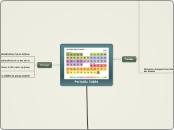
Periodic Table
Periods
Runs horizontally from left to right
Numbered from 1-7
Number of electron shells is the same as period number
Elements changes from Metals to Non-Metals Across the Period
METALS
Transition Metals (E.g. Cr, Mn, Fe, Cu)
Found between Group II and III
Properties
Transition Metals have high melting and boiling points and high densities
Transition Metals have variable oxidation states
Transition Metals form coloured compounds
Colours of the compounds of a transition metal are different at different oxidation state
Colour of hydrated compounds may differ from anhydrous compound
Compounds of transition metals are used in dyes, pigments and paints to produce different colours
Transition metals and their compounds are good catalysts
Iron - Haber process for the manufacture of ammonia
Nickel - Manufacture of margarine from vegetable oil
Group I Metals - Alkali Metals (E.g. Li, Na, K, Rb)
Properties
Physical Properties
Soft, easily cut
Shiny and Slivery when freshly cut
Good conductors of heat and electricity
Low melting and boiling points
Low densities
Trends in physical properties
Melting and boiling points decrease down the group
Densities increase down the group
Chemical Properties
Alkali metals are very reactive
Sodium tarnishes easily in air to form an oxide
Stored in oil to prevent reaction with air and moisture
Reacts with cold water to form alkali and hydrogen gas
Reactivity increases down the group
Alkali Metals are good reducing agents
Each alkali metal loses its valence electron easily to attain a noble gas structure
Group I Elements
React with water to form alkalis
Also known as alkali metals
Contain one electron each in their valence shells
NON-METALS
Group VII (Halogens)
Physical Properties
Low melting and boiling points
Coloured
Melting and boiling points increases down the group
colour intensity increases down the group
Chemical Properties
Have 7 electrons in their valence shell
Reactive with a high tendency to attract one more electron
To attain stable octet configuration
Exist as covalent, diatomic molecules
Halogens react with most metals to form halides
Halogens are powerful oxidising agents
Each halogen atom only needs to gain 1 addictional electron to attain a noble gas structure, forming a negative ion
Halogens undergo displacement reactions
Chlorine, the most reactive halogen displaces bromine from sodium bromide solution
As it goes down group VII, reactivity and oxidising power decreases
About Group VII Elements
Non-metals
React with metals to form salts
Known as Halogens
Have 7 electrons each in their valence shells
Group 0
Physical Properties
Colourless and Odourless at Room Temperature
Very low melting and boiling points
Insoluble in water
Chemical Properties
Chemically unreactive
do not gain, lose or share electrons
do not form compounds
exists as monatomic gases
About
Non-metals
Form 1% of the Earth's Atmosphere
Also known as noble or inert gases
Elements arranged in order of increasing proton number
Groups
Run vertically from top to bottom
Numbered from I to VII and O
Number of valence electrons is the same as group number
Charge of ion is related to group number