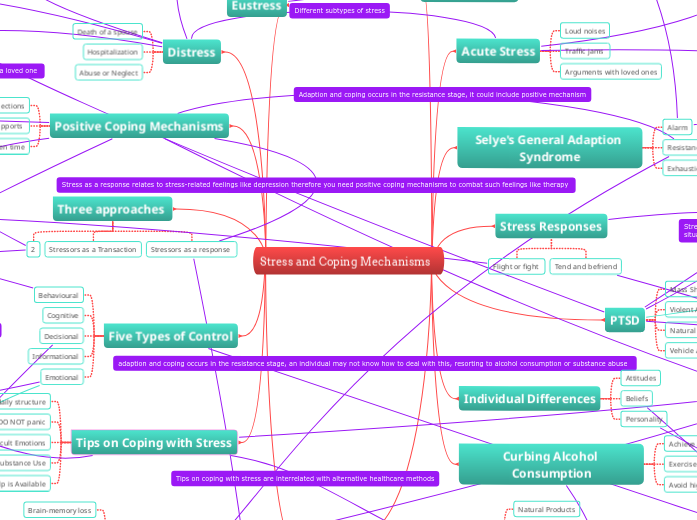
Stress as a response relates to stress-related feelings like depression therefore you need positive coping mechanisms to combat such feelings like therapy
Some people are more optimistic than others, those who are mot optimistic tend to take on a problem mechanism of coping and are more productive
Stress as a response such as depression or hopelessness can lead someone to begin using substances such as alcohol
Stressors of stimuli can include some of these things that can lead to distress such as death of a loved one
Different subtypes of stress
Adaption and coping occurs in the resistance stage, it could include positive mechanism
Different subtypes of stress
Different subtypes of stress
Tips on coping with stress are interrelated with alternative healthcare methods
More in-depth coping strategies that go hand in hand with positive coping mechanism
Alarm stage is where the nervous system is activated which could positive stress such as public speaking or starting a new job
adaption and coping occurs in the resistance stage, an individual may not know how to deal with this, resorting to alcohol consumption or substance abuse
The Health Effects that can occur if alcohol consumption is not managed properly
Exhaustion is where coping mechanisms and resources are used & depleted, which can lead to damaged organs
Exhaustion phase can lead to PTSD
Flight or fight response is a response to stressors of stimuli
Those suffering from PTSD must use various coping mechanism and tips to deal with everyday life events
Females turn to others in a tend and befriend response (such as social supports)
Different subtypes of stress
Different subtypes of stress
nervous system is activated, could include acute levels of stress such as traffic jams
People's belief systems play a role in how they manage stress, some people's spiritual beliefs are considered to be alternative methods of healthcare or other ways of coping
Cognitive behaviour focuses on emotion-based coping which has said to decrease levels of stress, as is considered a positive coping mechanism
Alternative methods to reducing effects of alcohol consumption
Chronic stress can lead to PTSD
Emotional
Behavioural control includes problem focused coping which include positive coping mechanisms rather than avoidance
Stress responses to how you may react to situations when you have PTSD
Too much distress can lead to PTSD
decisional means make the most informed decisions, aka alternative methods to make you feel better