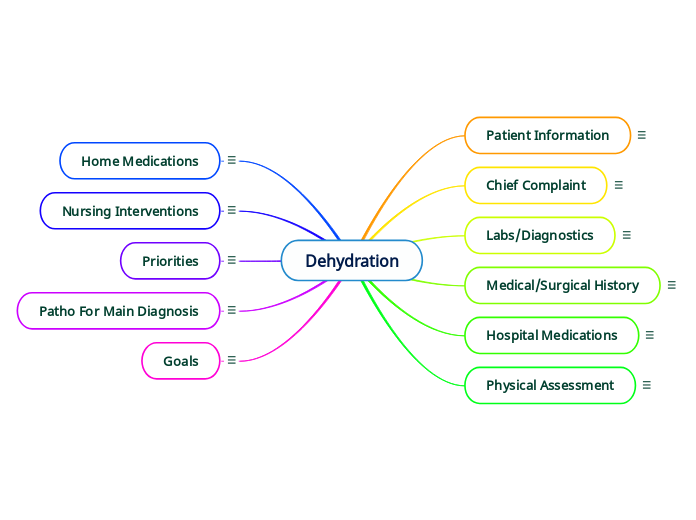
Age: 4Sex: MaleAdmit Date: 10/08/2021Date of Care: 10/08/2021Allergies/BMI: No know allergies/ 14.1
The chief complaint of the patient was vomiting and diarrhea for 2 days.
The two labs that are abnormal are sodium and potassium. Sodium: 136mEq/LPotassium: 2.9mEq/Our patient is dehydrated. The excessive vomiting and diarrhea has caused a loss in water. Sodium follows water. When vomitus and diarrhea are present, the expulsion of waste causes water loss. Sodium and potassium follow suit, therefore leaving a lack of both. The significance of this finding is that if potassium drops below a certain level, it can cause confusion, muscle cramps and weakness within the patient. Hyponatremia can cause confusion, lethargy, seizures, coma, and death.
This patient has no previous hospitalizations. He is up to date on vaccinations.
200mL IV bolus of 0.9% sodium chloride to be administered over 90min. This fluid is used to rehydrate the patient as well as provide additional sodium. 1000mL dextrose 5% in 0.45% sodium chloride IV 50mL/hr continuous This is to rehydrate the patient as well as add sodium and provide carbohydrates Promethazine hydrochloride (Phenergan) 7mg IM every 6hr PRN nausea and vomiting. 0.25-1mg/kg is the safe range for pediatrics. It is an antiemetic.The dosage is safe. It is being administered to relieve nausea and vomiting.Potassium Chloride 5mEq in 1000mL 0.9% sodium chloride by intermittent IV bolus X1 This is to raise his potassium level. It is important to raise his potassium level because we want to prevent muscle spasms and abnormal heart rhythms. The dosage is safe. Acetaminophen (Tylenol) 160mg oral every 4 hours for fever over 101.5%This is to help with abdominal pain and fever. This is a safe dose. Clotrimazole (Lotrimin) 1% topical cream; apply to diaper area twice a day. This is for the rash that developed in the diaper/buttocks area.
Neuro: Alert/ responsive. Can follow commands. Pain 3/10.Integumentary: Skin is dry. Rash in diaper areaHEENT: Eyes slightly sunkenMucous membranes are pink yet secretions are thick. Respiratory: Clear and equal in all lobes. No cough noted.Cardiac: Normal rate and rhythm. No murmur noted. GI: Bowel Sounds are hyperactive in all 4q. Non-tender during palpation. Sometimes reports abdominal pain open palpation. VSTemperature- 38.0/ 100.4 (slightly elevated) Heart Rate- 124/minRR- 30/min (Elevated) BP- 100/62O2 Saturation- 95% on RA
No home medications indicated
What priority interventions will you implement today for this patient: Rehydration with 200mL IV bolus 0.9% sodium chloride, 1000mL dextrose 5% in 0.45% sodium chloride IV 50mL continuous.Increase the patients potassium levels by implementing Potassium chloride 5mEq in 100mL 0.9% sodium chloride by intermittent IV bolus X1. Education/Teaching needed: Continue to drink 1760mL of water per fluid maintenance formula. Ensure that the child is eating plenty of foods that contain potassium such as potatoes, dried fruits, spinach, and broccoli. Watch for s/s of low potassium such as lethargy, muscle spasms, and headache. Ensure the child is drinking enough fluid when engaging in strenuous activities.
Top 2 priorities for this patient: Balancing electrolytes such as potassium and sodium. Rehydrating the patient.
What am I?Dehydration is the process of taking in few fluids or losing a lot of fluids quickly before replenishment is met. What Causes me? Vomiting, diarrhea, not taking in the recommended daily fluids, high RR, excessive muscle use without fluid replenishment, excessive sweating. What are the s/s? Dark, smelly urine, increased hr, lethargy, low sodium, dry skin, dry mucous membranes, sticky eye sclera/conjunctiva, excessive thirst, sunken eyes, nausea and vomiting. What are the possible complications of me?Urinary damage, urinary tract infection, kidney infection, seizures, low blood sodium levels, rapid heartbeat, decreased kidney function.
Goal 1: Patient will stop vomiting after food consumption/ water consumption within 2 hours of start of care.Elevate the head of the bed to 45 degrees.Dim the lights in the roomProvide a calm environment.Provide the patient a toy for distraction. Promethazine hydrochloride (Phenergan) 7mg IM every 6hr PRN nausea and vomiting. Goal 2: Patient will show a temperature within normal limits within 6 hours.Provide the patient with a calm environment Acetaminophen (Tylenol) 160mg oral every 4 hours for fever over 101.5%Rehydrate the patient with 1000mL dextrose 5% in 0.45% sodium chloride IV 50mL/hr continuous Rehydrate the patient with 200mL IV bolus of 0.9% sodium chloride to be administered over 90min. Provide a cooling blanket if the temperature exceeds 101.5F.