Reflection *
Positive behavior and support & using functional assessment and a positive behavior support plan
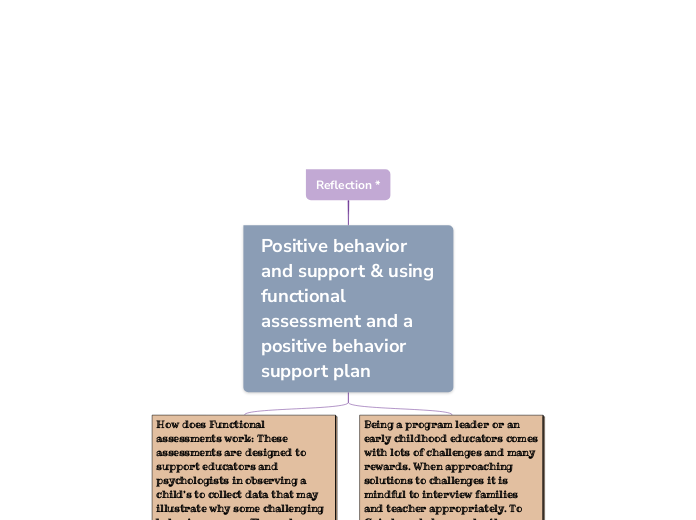
How does Functional assessments work: These assessments are designed to support educators and psychologists in observing a child’s to collect data that may illustrate why some challenging behaviors occur. Through carefully observations and assessments a child may be presented with solutions to eliminate challenging behaviors.
Through a time of psychologist, educators, administrators, and child/family support these assessments will empower solutions and plans that meets the child’s needs. By observing children with challenging behaviors, reports and data can determine whether an environment is appropriate for the child and others around them. Positive behavior support will enhance the ability of the team to effectively alter the behaviors of negative behaviors in children. The team working to identify consequences and strategies often need a hypothesis, a possible explanation for the behavior. This will become the bases of the assesment, ultimately becoming the reason for the behaviors and the start of many solutions.
Support plan: The plan includes ways to replace the negative behaviors with positive behaviors, ways to respond, and what should happen next. To prevent behaviors the conductors must understand how the environment affects the child. Curriculum, routines, and actives are examples of environmental factors that can determine the behavior of a child. By controlling these facts in a productive manner, will typically lead to few outburst of unwanted behaviors. Replacing negative behaviors with appropriate behaviors allows the child to create goals that are easy to manage and document for progression quickly.
Conclusion: Children may have negative behaviors, but that doesn’t make them a challenging student. By supporting them in areas that they may lack confidence in creates a postive experience for the educator and the child. Listening carefully to the wants and needs of your child will eliminate negative feelings towards class environments and significantly increase their abilities to succeed.
Being a program leader or an early childhood educators comes with lots of challenges and many rewards. When approaching solutions to challenges it is mindful to interview families and teacher appropriately. To Gain knowledge on why they want to educator and what are some of their expectations for the program This will ensure that all parties of the program are progressive and wiling to embark on a steady path for successful learning.
Conclusion: Providing opportunities and consequences for positive behaviors involves heavy planning to prevent challenges within the classroom. Collecting data that supports the investigation of trigger and situations that may cause anxiety is a beneficial way to protect the child from regressing to inappropriate behaviors. While conduction functional assessments its important to remember the goals, and response set in place to proper measure the outcome of the assessment.