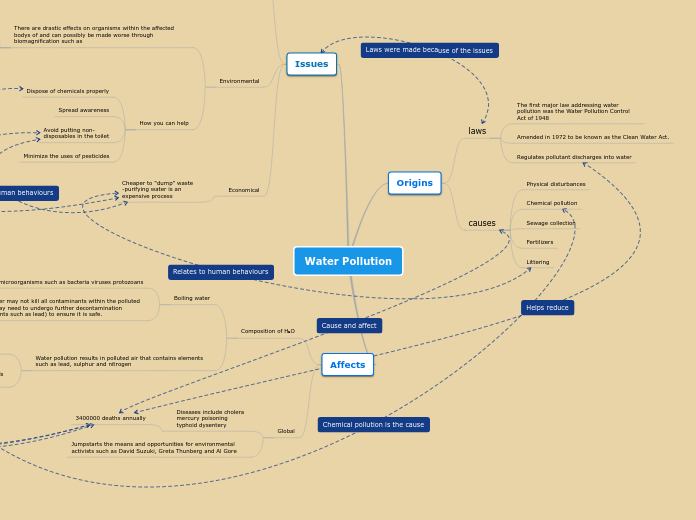
laws
The first major law addressing water pollution was the Water Pollution Control Act of 1948
Amended in 1972 to be known as the Clean Water Act.
Regulates pollutant discharges into water
causes
Physical disturbances
Chemical pollution
Sewage collection
Fertilizers
Littering
Social
Organisations created to focus solely on this matter
Political issues involving actions to take
Awareness spreading through social media
Environmental
There are drastic effects on organisms within the affected bodys of and can possibly be made worse through biomagnification such as
Death
Disruption of food chains
Diseases
Destruction of natural ecosystems
How you can help
Dispose of chemicals properly
Spread awareness
Avoid putting non-
disposables in the toilet
Minimize the uses of pesticides
Economical
Cheaper to “dump” waste
-purifying water is an expensive process
Composition of H₂O
Boiling water
kills microorganisms such as bacteria viruses protozoans
Boiling water may not kill all contaminants within the polluted water. It may need to undergo further decontamination (contaminants such as lead) to ensure it is safe.
Water pollution results in polluted air that contains elements such as lead, sulphur and nitrogen
This causes acid rain which then puts compounds such as sulfuric acid and nitric acid in the water again
Single displacement reactions occur between the compounds mate and metals in the water such as lead to form compounds such as lead nitrate (Pb+HNO₃⟶PbNO₃+H)
Global
Diseases include cholera
mercury poisoning
typhoid dysentery
3400000 deaths annually
Jumpstarts the means and opportunities for environmental activists such as David Suzuki, Greta Thunberg and Al Gore