blood plasma
Blood plasma is a light amber liquid component of blood that is freed from blood cells, but holds proteins and other constituents of whole blood in suspension. It makes up about 55% of the body's total blood volume. It is the intravascular part of extracellular fluid
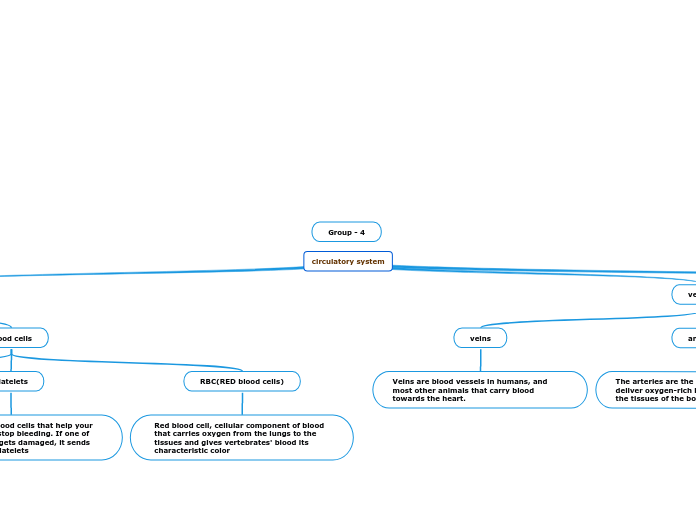
blood cells
WBC(white blood cells)
White blood cells (WBCs) are a part of the immune system. They help fight infection and defend the body against other foreign materials
platelets
Platelets are tiny blood cells that help your body form clots to stop bleeding. If one of your blood vessels gets damaged, it sends out signals to the platelets
RBC(RED blood cells)
Red blood cell, cellular component of blood that carries oxygen from the lungs to the tissues and gives vertebrates' blood its characteristic color
veins
Veins are blood vessels in humans, and most other animals that carry blood towards the heart.
arteries
The arteries are the blood vessels that deliver oxygen-rich blood from the heart to the tissues of the body.
Capillaries
Capillaries, the smallest and most numerous of the blood vessels, form the connection between the vessels that carry blood away from the heart (arteries) and the vessels that return blood to the heart (veins)
The heart is a muscular organ in most animals, which pumps blood through the blood vessels of the circulatory system