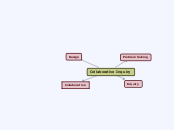
Collaborative Inquiry
Collaboration
Working together to solve a problem and /or further investigate a topic or question.
- share knowledge and experience
- bring different expertise
Use each other as resources/become a resource
You can all work together toward finding a solution as a group, or you can all work together and find individual solutions to the same problem using shared resources and expertise
Important to collaborate with teachers, parents and students (Allen & Graden 2002)
Two kinds of performance measures: process and outcome. (Turbin, E., Liang, T., Wu, S. 2011)
Performance
Is the group decision process more efficient and are the members satisfied with the process.
Outcome
Did the new product decision result in success?
Knowledge building and creating (Scardamalia, M., & Bereiter, C. 2006).
Knowledge advancement: improvement of an idea; a community achievement; knowledge of vs knowledge about; discourse rather than argumentation in collaborative problem solving; focus is not persuasion or evidence as they don't generate progress toward solution of shared problem of understanding. Scardamalia, M., & Bereiter, C. (2006).
Inquiry
Problem based learning
Asking questions, finding solutions
Collecting evidence
Research
Experts
Anecdotal
Connecting evidence to knowledge gained
Can be individual or collaborative
Problem Solving
Different kinds of problems. (Two main categories) (Jonassen, D. H. 2000)
Well-defined
Less complex. Typical in school, but not common outside of school. EXAMPLE: word problems in math.
easy to assess, but too easy to solve. Not the most beneficial for real problem solving experience.
Can be complex and well-stuctured. Ex: a muscle is complex but still well structured. (Spiro, R. J., & DeSchryver, M. 2009)
Ill-defined
More complex
Typical in real-world situations. There is not always a "right" answer. EXAMPLE: Deciding best course of action for issues like climate change.
More ambiguity and less defined solutions
Need to focus on teaching these types of problems
Gives true experience to help build problem solving skills that will contribute to a child thriving in life
Many different possible solutions
Need open-ended learning environments, goal-based scenarios, and problem-based learning ((Jonassen, D. H. 2000)
Can solve problem as a group or find information as a group/ use each other as resources/share resources to solve individual problems. IE- a shared topic, such as diversification in the classroom, applied individually based on the needs of your own students
4 phases: problem identification, problem analysis, plan development and implementation, plan evaluation (Allen & Graden 2002)
Important for professionals (Jonassen, D. H. 2000)
Must create mental model of the problem = mental space ((Jonassen, D. H. 2000)
Design
Thoughtful planning to meet identified learning needs all students
Learning space/environment
Problems/projects/lessons
Creating ways to apply knowledge and skills to solve problems
Face to face?
Can build morale
Good real time conversations
Some may be more comfortable this way
Online?
Find an effective way that all can and will participate in
Organized and easy to follow
Easy to contribute to
Works with everyone's schedule
Engaging
Technology
Students
Edmodo - like a private and controlled FB!!
Teamie
Let students give considered responses
Kid Blog
SeeSaw
Think Binder
Professionals (Teachers)
IBM Innovation Jam!!
GoToMeeting
GAFE
Office365
WikiSpaces
Intelligence phase - identify the problem and collect relevant information. Then evaluate the problem to see if it is important enough. (Turbin, E., Liang, T., Wu, S. 2011)
Make sure technology fits and is viable (Turbin, E., Liang, T., Wu, S. 2011)
A way to connect to the world to lean and to share knowledge from knowledge building process Scardamalia, M., & Bereiter, C. 2006).
Allow freedom, but make sure it's not so unstructured that it is overwhelming or student's don't know what to do or where to start.
Make expectations very clear! (maybe include milestones?)
Problem design will vary based on the needs of the group and problem
Online
Face-to-face
The flow of activities
Example (Valkenburg, Dorst 1998)
Name relevant issues
Frame problem
Move toward solution
Reflect on moves
Not necessarily linear
Can be fluid/changing. EX- Reflective practice of design = reflect and change during and/or after process
Physical design
Inviting
Calm
Small but not overcrowded
Private spaces and Group spaces defined
Design spaces that encourage collaboration
Design situation-specific strategies for situation specific needs (Allen & Graden 2002)
Burning Question
How can we most effectively teach such a multifaceted concept and process to students, particularly to students who feel easily overwhelmed by ambiguous concepts?
Clear expectations
Maybe create some type of guide for students similar to the facilitators guide to collaboration?
Can't have direct instructional guidance because it would interfere with conceptual mastery (Spiro, R. J., & DeSchryver, M. 2009)
Problem solver must use related knowledge and experience to infer a procedure to fit the situation at hand (Spiro, R. J., & DeSchryver, M. 2009)
Facilitators guide by Learning Forward Ontario is a great start
Frame the problem
Collect evidence
Analyze evidence
Share
All concepts can work in tandem
All concepts are essential skills students need to build to thrive in their lives
Need to work collaboratively as professionals
Must give students opportunities to practice authentic collaboration and build these skills... NEED TO FOCUS ON AUTHENTIC COLLABORATION AND ENGAGING STUDENTS IN THE PROBLEM.