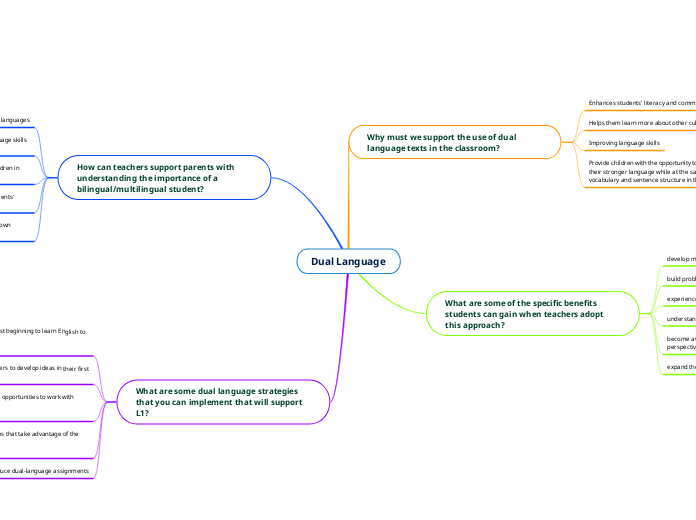
Enhances students' literacy and communication skills
Helps them learn more about other culture
Improving language skills
Provide children with the opportunity to read and be read to in their stronger language while at the same time learning vocabulary and sentence structure in the second language
develop mental flexibility
build problem-solving skills
experience a sense of cultural stability and continuity
understand their own cultural and family values
become aware of the value of cultural diversity and multiple
perspective
expand their career opportunities
Post information in multiple languages
Discuss with parents the value of strong native language skills and being bilingual
Encourage parents to read or tell stories to their children in their native language
Offer parent sessions, workshops, and classes in parents' native languages
Inform parents that they are welcome to bring their own interpreter to a school meeting
Encourage students who are just beginning to learn English to write
in their own language
example: initial journal responses
Invite English language learners to develop ideas in their first
language
example: mind mapping
Give English language learners opportunities to work with same-
language partner
example: think, pair, share in first language
Develop some learning activities that take advantage of the first
languages spoken in the class
example: compare numbers in
various languages
Invite students to produce dual-language assignments
example: create dual-language books