approximately 87% of people in extreme poverty live in countries that are fragile and/or are environmentally vulnerable
in many impacted regions reliant on farming, such as sub-Saharan Africa, communities struggle to recover from periods of extreme rainfall followed by extreme drought
extreme patterns that are becoming more common as a result of climate change
countries that lack the infrastructure to sustain resilient economies and health systems are far more susceptible to instability and conflict
global poverty has an impact on land degradation because much of the land is not being used to grow crops or is very poorly nourished due to the living conditions
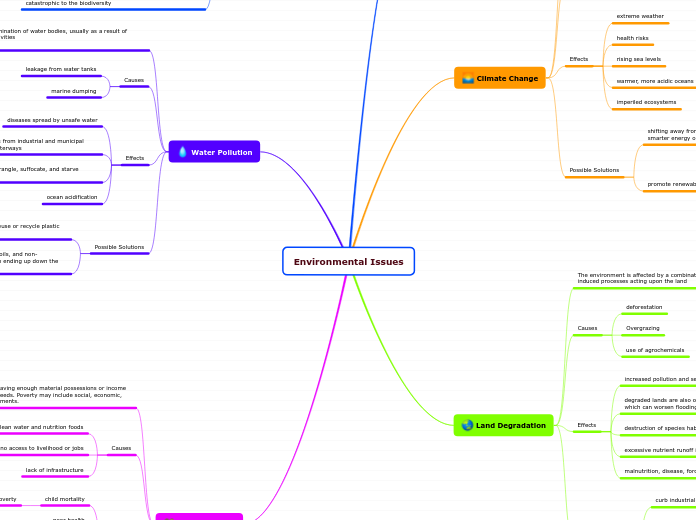
climate change contributes to water pollution because if there is a storm, for example, the runoff into bodies of water can be catastrophic to the biodiversity
Rising average temperature of Earth's climate system
Causes
burning fossil fuels
converting land from forests to agriculture
Effects
extreme weather
health risks
rising sea levels
warmer, more acidic oceans
imperiled ecosystems
Possible Solutions
shifting away from dirty fossil fuels and toward cleaner, smarter energy options
promote renewable energy sources
hydroelectric
solar energy
wind energy
The environment is affected by a combination of human induced processes acting upon the land
Causes
deforestation
Overgrazing
use of agrochemicals
Effects
increased pollution and sedimentation in streams and rivers
degraded lands are also often less able to hold onto water, which can worsen flooding
destruction of species habitat and biodiversity
excessive nutrient runoff into lakes
malnutrition, disease, forced migration
Possible Solutions
curb industrial farming
responsible regulation of land and agriculture
plant and tree cover
sustainable forest management efforts and reforestation schemes are key
Paraguay reduced the rate of deforestation in their country by 65-85% in the years just following enactment of its 2004 Zero Deforestation Law
The contamination of water bodies, usually as a result of human activities
2
Causes
leakage from water tanks
marine dumping
Effects
diseases spread by unsafe water
chemicals and heavy metals from industrial and municipal wastewater contaminate waterways
marine debris, which can strangle, suffocate, and starve animals
ocean acidification
Possible Solutions
reduce your plastic consumption and reuse or recycle plastic when you can
properly dispose of chemical cleaners, oils, and non-biodegradable items to keep them from ending up down the drain
Poverty is not having enough material possessions or income for a person's needs. Poverty may include social, economic, and political elements.
Causes
inadequate access to clean water and nutrition foods
little or no access to livelihood or jobs
lack of infrastructure
Effects
child mortality
around 22,000 children die each day due to poverty
poor health
crime
lack of education
Possible Solutions
bring education to the extremely poor to enable them to have better jobs
give them healthcare to improve their physical conditions and make them more competitive
give people living without electricity access to renewable energy