Four Strategies
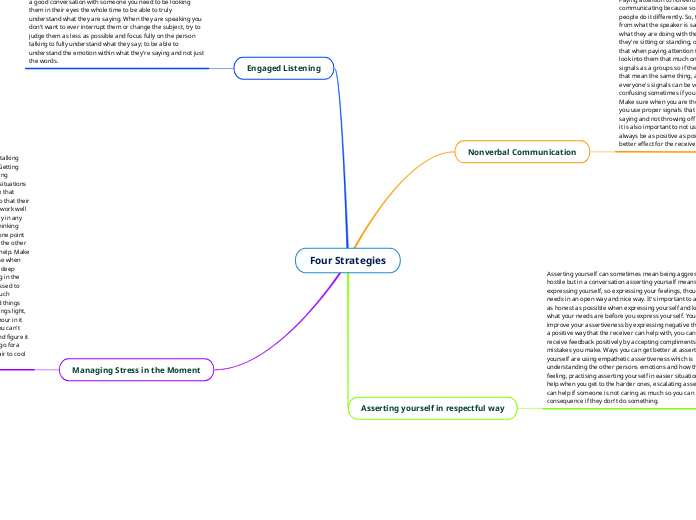
Nonverbal Communication
Paying attention to nonverbal signals is very important while communicating because so many people do it and so many people do it differently. So, to truly understand the meaning from what the speaker is saying you have to pay attention to what they are doing with their arms, hands, body, face, how they're sitting or standing, or their body language. Make sure that when paying attention to nonverbal signals that you don't look into them that much on their own, pay attention to the signals as a groups so if they do multiple that are similar or that mean the same thing, also make sure you know everyone's signals can be very different which can be confusing sometimes if you think one thing means another. Make sure when you are the one using nonverbal signals that you use proper signals that make sense with what you're saying and not throwing off the receiver of them, as a speaker it is also important to not use negative body language and always be as positive as positive as possible as it will have a better effect for the receiver.
Asserting yourself in respectful way
Asserting yourself can sometimes mean being aggressive or hostile but in a conversation asserting yourself means expressing yourself, so expressing your feelings, thoughts, or needs in an open way and nice way. It's important to always be as honest as possible when expressing yourself and knowing what your needs are before you express yourself. You can improve your assertiveness by expressing negative thoughts in a positive way that the receiver can help with, you can also receive feedback positively by accepting compliments and mistakes you make. Ways you can get better at asserting yourself are using empathetic assertiveness which is understanding the other persons emotions and how they're feeling, practising asserting yourself in easier situations can help when you get to the harder ones, escalating assertiveness can help if someone is not caring as much so you can add a consequence if they don't do something.
Engaged Listening
In a conversation being the receiver isn't just about sitting there and listening to the person, it's about hearing what their really trying to say, not just the meaning of the words. It's not something that can be done without really trying. When having a good conversation with someone you need to be looking them in their eyes the whole time to be able to truly understand what they are saying. When they are speaking you don't want to ever interrupt them or change the subject, try to judge them as less as possible and focus fully on the person talking to fully understand what they say; to be able to understand the emotion within what they're saying and not just the words.
Managing Stress in the Moment
Keeping stress in check can be very important when talking with friends, family, or people who you are close to. Getting into an argument is bad but losing your cool and saying something that you regret later on isn't good. Other situations like job interviews or more serious conversations like that where it can be stressful you need to stay calm. To do that their are a few different things you can do: stalling tactics work well because it gives you time to breath and think properly in any stressful situation, if it silent it means you guys are thinking which will help the conversation. Making more than one point and rambling on can get annoying and confusing for the other person so just one point that is delivered clearly will help. Make sure that when you do get stressed you can recognise when you get stressed so you can just stop and take some deep breaths or take a moment or break before continuing in the conversation. A good way to avoid getting more stressed to use your sense, so move a little, smell something, touch something, maybe eat or drink something. In the end things can get really serious but it's always good to keep things light, so to bring up the mood you can try and find the humour in it all. If the argument is going on for a long time and you can't find a solution you need to be able to compromise and figure it out together. If you can't do that you can always just go fora walk outside to clear your head and get some fresh air to cool down.