MORPHOLOGICAL ANALYSIS
We analyse the shape, size, colour and basic physical characteristics of the object.
FUNCTIONAL ANALYSIS
We study how the obect works, its ultility, how its used and the potential risks of its uses.
TECHNICAL ANALYSIS
We evaluate how the object was made.
ECONOMIC ANALYSIS
We analyse thge finantial cost of manufacturing the product and its selling price.
SOCIAL ANALYSIS
We study the opbject from the oint of view of its social impact and analyse the human needs that it meets.
AESTHETIC ANALYSIS
Subtopic
HISTORICAL ANALYSIS
Subtopic
1. DETECT THE PROBLEM OR NEED
We need to think about the problem
2. INFORMATIONAND RESEARCH
We collate, study, and select the information
3. SEARCH FOR POSSIBLE RESULTS
We think of the different options that could solve our problem. We study and asses each option to see which is viable
4. CHOOSE THE SOLUTION
We choose the best soplution based on the criteria we used and after analysing advantages and disadvantages
1. DESIGN
Prepare drawings and diagrams of our chosen solution.
2. PREPARE AND PLAN THE WORK
We choose the materials, techniques and tools that we are going to need.
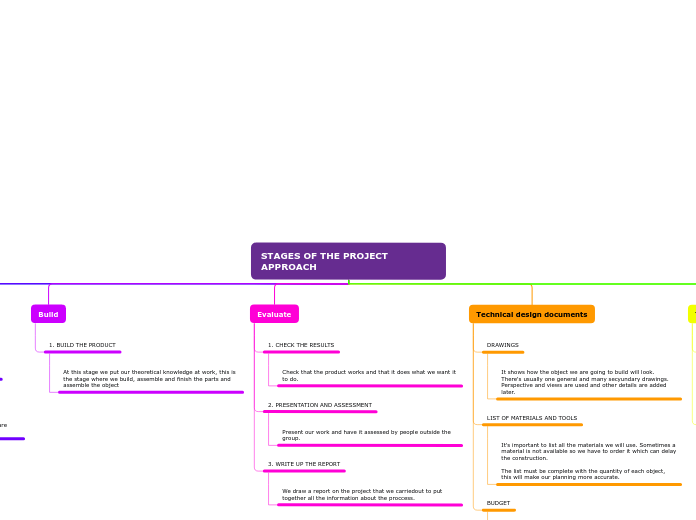
1. BUILD THE PRODUCT
At this stage we put our theoretical knowledge at work, this is the stage where we build, assemble and finish the parts and assemble the object
1. CHECK THE RESULTS
Check that the product works and that it does what we want it to do.
2. PRESENTATION AND ASSESSMENT
Present our work and have it assessed by people outside the group.
3. WRITE UP THE REPORT
We draw a report on the project that we carriedout to put together all the information about the proccess.
DRAWINGS
It shows how the object we are going to build will look. There's usually one general and many secyundary drawings. Perspective and views are used and other details are added later.
LIST OF MATERIALS AND TOOLS
It's important to list all the materials we will use. Sometimes a material is not available so we have to order it which can delay the construction.
The list must be complete with the quantity of each object, this will make our planning more accurate.
BUDGET
It's the document we use to evaluate the final cost. For us this may not be so important as for bigger companies which expense is much higher.
Spreadsheets are a very useful tool in this enviroment. In this we must include the real cost and all the taxes.
PROCESS SHEET. (Building stage)
We can use this document to record the progress of the stages of our work each day. It is used to describe the .completed tasks and the names of the people in charge of them, changes or modifications and construction log.
REPORT. (Evaluation stage)
This document includes:
-Description of the prototype built.
-List of modifications made.
-Final drawing of the solution.
-Total cost of the project. (Modifications and hours spent on it)
-Environmental impact.
-Your own thoughts about the project.
INNOVATION
It's a modification made to a product to adapt it to new conditions.
OBSOLESCENCE
This means that some products have fallen into disuse because of many different possible reasons, such as, lack of spare parts, market trends, etc.
INFLUENCE OF TECHNOLOGICAL DEVELOPMENT
POSITIVE
- Independent of weather conditions.
- We can communicate with each other.
- We can settle in one place.
NEGATIVE
- More fossil fuels.
- Traffic jams because of overuse of vehicles.
- health problems related to enviroment.
CHANNELS:
-WHOLESALE) The product is supplied to retailers and large costumers.
-RETAIL SALE) The product is directly supplied to the end-user.
-ONLINE SALE) The product is distributed through websites, apps, etc.
-FRANCHISES) The product is sold through a network of stores owned by private individuals who adopt the product as their own.