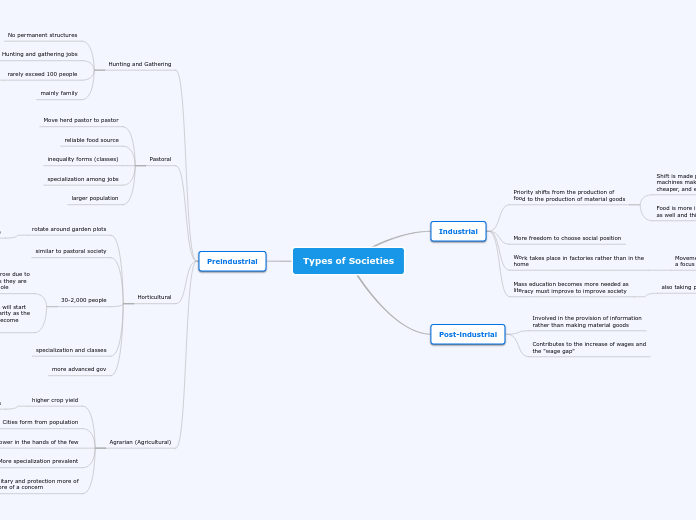
Priority shifts from the production of
food to the production of material goods
Shift is made possible by the production of
machines making material goods quicker,
cheaper, and easier to make
Food is more industrialized and mechanized
as well and this allows for even higher populations
More freedom to choose social position
Work takes place in factories rather than in the
home
Movement towards gesellschaft
a focus less on family values
Mass education becomes more needed as
literacy must improve to improve society
also taking place outside of the home
Involved in the provision of information
rather than making material goods
Contributes to the increase of wages and
the "wage gap"
Hunting and Gathering
No permanent structures
Hunting and gathering jobs
rarely exceed 100 people
gemienschaft
mainly family
Pastoral
Move herd pastor to pastor
reliable food source
inequality forms (classes)
specialization among jobs
larger population
Horticultural
rotate around garden plots
Surplus food breeds trading
and contact between people
similar to pastoral society
30-2,000 people
population allowed to grow due to
mechanical solidarity as they are
united in a common whole
Larger populations than this will start
to give way to organic solidarity as the
connection of each person become
more impersonal
specialization and classes
more advanced gov
Agrarian (Agricultural)
higher crop yield
breeds more trading and
bartering requiring roads
Cities form from population
Power in the hands of the few
More specialization prevalent
give way to a "division of labor"
Military and protection more of
more of a concern