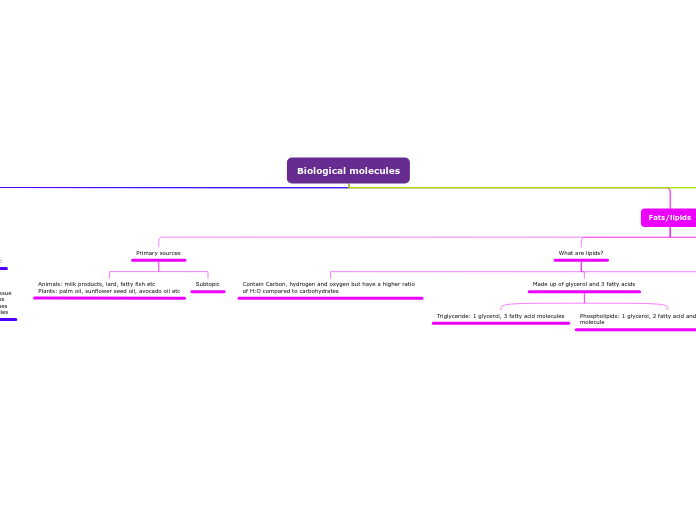
Biological molecules
Carbohydrates
Contents: Carbon, hydrogen and oxygen
Carbohydrates are sugar molecules
Types of carbohydrates
Monosaccharide
glucose, fructose, and galactose.
polysaccharide
Starch, glycogen, cellulose, heparin, and peptidoglycan
Disaccharide
sucrose, lactose, and maltose.
Sources:
Carbohydrates are found in a wide array of both healthy and unhealthy foods—bread, beans, milk, popcorn, potatoes, cookies, spaghetti, soft drinks, corn, and cherry pie. They also come in a variety of forms. The most common and abundant forms are sugars, fibers, and starches.
Test for carbohydrates
Benedict test
Light blue solution will turn into brick red percipitate in presence of reducing sugars
Importance
Immediate source of energy
Proteins:
Contents: Amino acids
Uses:
Makes new cells for growth and repair
Make muscles in the body
Facilitate chemical reactions
Makes hair and nails
Sources:
Animals: lean meat, dairy products, fish and eggs
Plant: what, corn
Test for proteins
Biuret test
Light blue solution will turn purple with presence of proteins
Importance:
Formation of tissue
Making enzymes
Making hormones
Making antibodies
Fats/lipids
Primary sources
Animals: milk products, lard, fatty fish etc
Plants: palm oil, sunflower seed oil, avocado oil etc
Subtopic
What are lipids?
Contain Carbon, hydrogen and oxygen but have a higher ratio of H:O compared to carbohydrates
Made up of glycerol and 3 fatty acids
Triglyceride: 1 glycerol, 3 fatty acid molecules
Phospholipids: 1 glycerol, 2 fatty acid and 1 phosphoric acid molecule
Importance
Formation of cell membrane
Thermal insulation
Highest energy storage per gram(37Kj/g)
Types of lipids
Simple
E.g triglycerides, waxes
Comples
E.g phospholipids, glycolipids
Test for fats
Ethanol emulsion test:
add 1:1 ratio of ethanol to solution and shake, if mixture turns cloudy then fats are present
Water
Required for almost all biological reactions to take place
Vitamins
Vitamin C
Water soluble
For repair of tissues
Catalyst for cell respiration