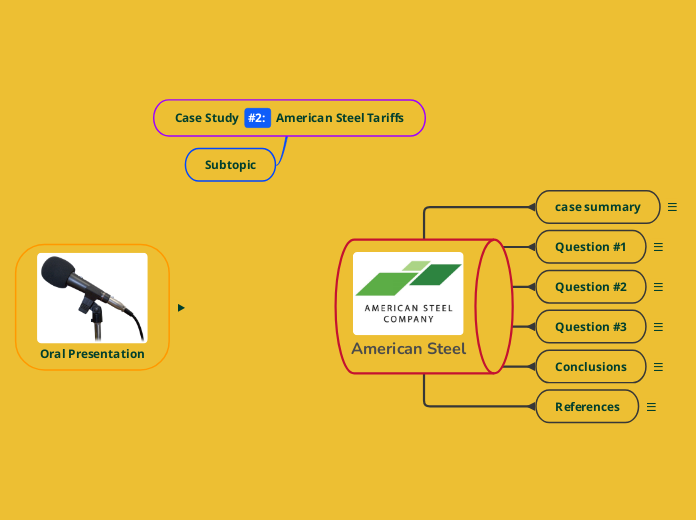

American Steel
case summary
Those working in the United States steel sector are called "American steel" producers. Through the years, it was a driving force behind the expansion of the country's economy and manufacturing base. In summary, despite facing numerous challenges and significant transformations due to global competition and economic shifts, the American steel industry has a long and illustrious history. It has been highly influential in the growth and development of the American economy. Businesses in the construction and industrial industries, which use steel extensively, may see their costs rise due to tariffs, which may prompt retaliation from their trading partners (Galenson, 2018).
Question #1
The steel industry has a long history of asking for, and getting, tariff protection from foreign competitors. Why do you think this is the case?Governments frequently cite the steel industry as a critical component of national security. The region's steel industry ensures a reliable supply for military and public works projects. When seconds count, this is crucial. The steel industry is one of the largest employers in the world. It facilitates thousands of people's direct and indirect employment in the steel industry. The steel industry has benefited from tariffs for a long time, and this may persuade other industries to believe that they will also help. It's essential to remember that taxes could have positive and negative impacts, including the short-term relief of domestic steel manufacturers. Steel tariffs can increase the cost of construction and production. When trading partners retaliate, it can disrupt the market (Rogers, 2017).Tariffs Imports on Foreign SteelTariffs levied on foreign steel imported to the United States are usually paid by the "importer of record," or the American company or person officially recognized by the government as the entity that brought the steel into the country. When entering, the importer must pay the duty to the U.S. Customs and Border Protection (CBP) office. Tariffs are a cost that importers will have to factor into the price of their products, which could lead to price increases for consumers. The company may see increased production expenses if steel is a significant component in manufacturing. If importing businesses were unprepared for the higher costs associated with tariffs, they could see a decline in their financial health. Given the new facts, they may need to re-evaluate their financial plan and budget (Sjostrom, 2019).
Question #2
Who pays the tariffs on imports on foreign steel into the United States? How does the payee deal with the additional costs that the tariffs represent?Several factors played a role in the Trump administration's 2017 decision to impose tariffs on steel imports from other countries. Since steel is utilized in producing infrastructure and military equipment, the administration argued that a thriving domestic steel sector was essential to safeguarding national security. In areas with a large population of steelworkers, tariffs on steel were seen as a political move to fulfill campaign promises and appeal to specific groups. It was especially noticeable in areas where steelworkers constitute a sizable share of the workforce. A common topic of controversy throughout Trump's presidency was the rising trade deficit between the United States and other countries, especially China. Steel tariffs were proposed as a solution to this issue to reduce the quantity of steel imported (Galenson, 2018).
Question #3
What was the motivation of the Trump administration in placing tariffs on imports of foreign steel in 2017? Who benefits from these tariffs? Who loses? In your estimations, are the tariffs and net positive or negative for the American economy?As a result of the tariffs, U.S. steel producers were able to raise their prices and reap the most excellent financial benefits. The Trump administration's move to impose tariffs had the intended effect of protecting and rejuvenating the American steel sector, leading to a rise in both output and earnings. It was widely assumed that tariffs would lead to the preservation of steel industry jobs, which would benefit steelworkers and their communities (Rogers, 2017).LossesIncreases in the cost of steel used in production are a typical response to tariffs. Producers of cars, builders, and consumer goods makers all fall under this category. These costs may cause a decline in competitiveness and the consequent loss of employment opportunities. Products containing steel may increase in price due to tariffs, which may be inconvenient for consumers and taxing on their wallets (Sjostrom, 2019).Positive AspectsTariffs certainly gave a lifeline to the domestic steel industry, helping sustain jobs and stimulating investment in the sector. It worked out well for both parties. Assuring the vitality of the regional steel industry is expected to yield strategic benefits for the sake of national security. These benefits might manifest as a lower probability of an assault on the United States (Galenson, 2018).Negative AspectsTensions in trade with major trading partners were caused by tariffs, leading to retaliatory levies on U.S. exports that hurt industries, including agriculture. Others argue that the taxes did not significantly reduce the amount of steel imported and failed to address the issues that were the fundamental cause of the crisis, such as overcapacity in the steel industry worldwide (Rogers, 2017).
Conclusions
There are many economic, security, and political factors to consider when deciding whether or not to impose tariffs on steel imports, making the decision complex and divisive. Countries are expected to hold a wide range of views on the role of taxes in safeguarding domestic steel production. There have been winners and losers due to the steel tariffs in the United States economy. A decision about their overall impact can only be reached after considering the various factors at play and looking into the possible scenarios.
References
List your references here - minimum of 3 with 1 coming from the textbook.Galenson W. (2018). American steel industry unionization, International Review of Social History, 1(1), 8-40. doi:10.1017/S0020859000000560Rogers RP. (2017). Unobservable transactions pricing and the evaluation of a supply and demand model for the US steel sector, Journal of Business & Economic Statistics, 5(3), 407–415. doi:10.2307/1391616Sjostrom W. (2019). The American Steel Barge Company and Whaleback Ships book reviews, Business History Review, 92(4), 799–801. doi:10.1017/S0007680519000229
Case Study #2: American Steel Tariffs
Subtopic
