break down food inorder for the body to absorb nutrients that is used as the body fuel
the digestive organs are the mouth, esophagus, stomach, small intestine, large intestine, rectum and anus
helping organs are liver, gallbladder and pancreas
controls all your body functions
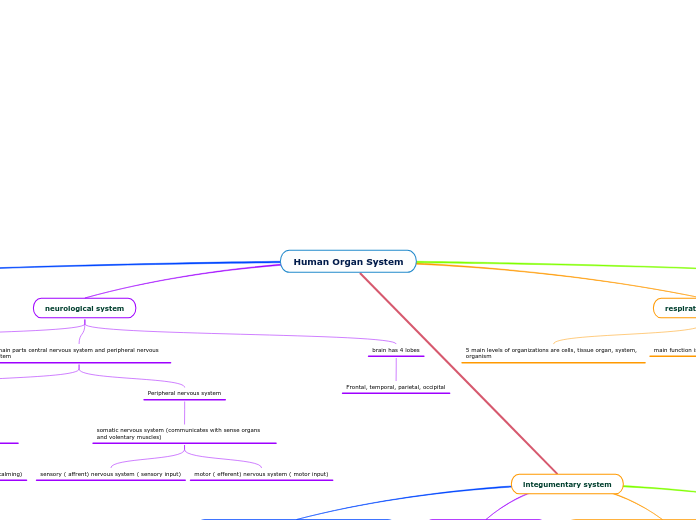
2 main parts central nervous system and peripheral nervous system
central nervous system (brain and spinal cord)
Autonomic nervous system ( communicates with internal organs and glands)
sympathetic division (arousing)
Parasypathetic division ( calming)
Peripheral nervous system
somatic nervous system (communicates with sense organs and volentary muscles)
sensory ( affrent) nervous system ( sensory input)
motor ( efferent) nervous system ( motor input)
brain has 4 lobes
Frontal, temporal, parietal, occipital
5 main levels of organizations are cells, tissue organ, system, organism
main function is to help you breath
aborbs oxygen from the air and cleans waste gases from your blood
main function is to deliver cells with nutrients and remove waste
4 valves
tricuspid valve, mitral valve, pulmonary valve and aortic valve
the heart is located in the medial the thoracic cavity with lungs
the heart is posterior to the sternum
heart contains 4 chambers left atrium, right atrium, left ventricle and right ventricle
epidermis outer layer
dermis middle layer
hypodermis is the bottom layer
protection, sensory perception, Body temperature regulation. Storage, absorption, excretion, prodution of vitamin D and skin colour