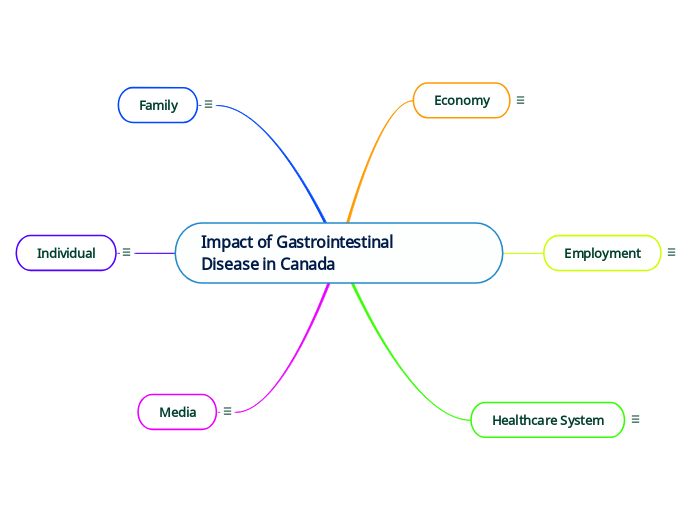
A) Costs of Gastrointestinal Disease and its burden:In 2015, annual health care expenditures for gastrointestinal diseases totaled $135.9 billion. Hepatitis ($23.3 billion), esophageal disorders ($18.1 billion), biliary tract disease ($10.3 billion), abdominal pain ($10.2 billion), and inflammatory bowel disease ($7.2 billion) were the most expensive. Yearly, there were more than 54.4 million ambulatory visits with a primary diagnosis for a GI disease, 3.0 million hospital admissions, and 540,500 all-cause 30-day readmissions. There were 266,600 new cases of GI cancers diagnosed and 144,300 cancer deaths. Each year, there were 97,700 deaths from non-malignant GI diseases. An estimated 11.0 million colonoscopies, 6.1 million upper endoscopies, 313,000 flexible sigmoidoscopies, 178,400 upper endoscopic ultrasound examinations, and 169,500 endoscopic retrograde cholangiopancreatography procedures were performed annually. Among average-risk persons ages 50–75 years who underwent colonoscopy, 34.6% had 1 or more adenomatous polyps, 4.7% had 1 or more advanced adenomatous polyps, and 5.7% had 1 or more serrated polyps removed. ACTIVITY 9-3:The most prevalent diseases were non–food-borne gastroenteritis (135 million cases/year), food-borne illness (76 million), gastroesophageal reflux disease (GERD; 19 million), and irritable bowel syndrome (IBS; 15 million). The disease with the highest annual direct costs in Canada was GERD ($9.3 billion), followed by gallbladder disease ($5.8 billion), colorectal cancer ($4.8 billion), and peptic ulcer disease ($3.1 billion). The estimated direct costs for these 17 diseases in 1998 dollars were $36.0 billion, with estimated indirect costs of $22.8 billion. The estimated direct costs for all digestive diseases were $85.5 billion. Total NIH research expenditures were $676 million in 2000. Conclusions: GI and liver diseases exact heavy economic and social costs in the United States. Understanding the prevalence and costs of these diseases is important to help set priorities to reduce the burden of illness.
aA) Workplace and Gastrointestinal Disease related problems.Work is a daily activity with various conditions, exposures, and habits that may affect health either positively or negatively.Work is a significant daily activity that affects in multiple ways life and health of working populations. It has been previously documented that specific exposures in the occupational setting, such as rotating schedules, occupational stress, change of dietary habits, sedentary job conditions, extreme temperature conditions, exposure to dust and noise may be related, among others, to the occurrence of gastrointestinal diseases; however, literature investigating the relationship between occupational exposure and the occurrence of gastrointestinal diseases is scarce.As previously reported, certain gastrointestinal disorders, namely ulcer, and gastritis, are frequent among shift workers. While there are only a few recent studies investigating the relationship with other types of gastrointestinal disease such as inflammatory bowel disease. Likewise, occupational stress seems to be associated strongly with the occurrence of ulcer and gastritis.Regular long-term physical activity and shorted sedentary work seem to protect against colon cancer and inflammatory bowel disease (IBD).However, these conditions can be associated with higher risk of peptic ulcer. Heavy physical work, poor ergonomics in the workplace, occupational stress, and noise may also affect the incidence of peptic ulcer, gastritis, and inflammatory bowel disease through increased consumption of non-steroidal anti-inflammatory medications for treating related skeletal muscle pain and headache.ACTIVITY 9-3:The following study will show how employment has been impacted by GI conditions, which will lead to affect economic aspects as well, eventually.The study included 86 people who suffered from IBS with constipation, 39 people who had chronic constipation alone, 239 people with gaatrophangeal reflux disease (GERD), and 36 people with functional dyspepsia (recurrent discomfort in the upper abdomen that is often accompanied by bloating, belching, nausea, or heartburn).They all filled out questionnaires asking how often they missed work and how productive they were while on the job every two weeks for a year.Locke says that those who suffered from IBS with constipation, functional dyspepsia, and chronic constipation -- often called the functional GI disorders as they have normal test results despite severe symptoms -- were particularly hard hit. They lost 10.3 hours of work per week, on average, vs. 6.3 hours for people with GERD.Howard Kroop, MD, a gastroenterologist at Thomas Jefferson Medical Center in Philadelphia, tells WebMD that people with functional GI disorders “tend to suffer a lot of anxiety and embarrassment that serve as triggers for more symptoms. That, in turn, weakens their sense of well-being and interferes with their ability to get the job done,” he says.
A) Economic Burden Each year, approximately 20 million people are affected by digestive disorders in Canada . Digestive disorders result in over 18 million sick days, account for 10 per cent of all hospitalizations and cost the Canadian economy $18 billion annually through direct health care costs and lost productivity. However, due to the perceived embarrassment associated with digestive symptoms, there is a lack of understanding of the enormous impact digestive disorders have on Canadians and a profound unwillingness to shed more light on the subject.B) Ontario and Healthcare System Burden For each case of AGI reported in Ontario and British Columbia, an estimated 313 and 347 cases occur in the community, respectively. Additionally, AGI represents an annual per capita cost of $115 CAD related to healthcare and lost productivity, based on the Hamilton study. The largest cost component is missed paid employment by individuals with AGI and their caretakers taking time away from paid employment. If this number is generalized to the entire Canadian population, the estimated annual cost of AGI in Canada would be $3.7 billion CAD.ACTIVITY 9-3:Inflammatory bowel diseases (IBD) – Crohn’s disease (CD) and ulcerative colitis (UC) – significantly impact quality of life and account for substantial costs to the health care system and society.There are approximately 233,000 Canadians living with IBD in 2012 (129,000 individuals with CD and 104,000 with UC), corresponding to a prevalence of 0.67%. Approximately 10,200 incident cases occur annually. IBD can be diagnosed at any age, with typical onset occurring in the second or third decade of life. There are approximately 5900 Canadian children <18 years of age with IBD. The economic costs of IBD are estimated to be $2.8 billion in 2012 (almost $12,000 per IBD patient). Direct medical costs exceed $1.2 billion per annum and are driven by cost of medications ($521 million), hospitalizations ($395 million) and physician visits ($132 million). Indirect costs (society and patient costs) total $1.6 billion and are dominated by long-term work losses of $979 million. Compared with the general population, the quality of life patients experience is low across all dimensions of health.
A) Possibility of inherited GI.Many gastrointestinal (GI) diseases and conditions are inherited, and our understanding of the role our genes play in disease is expanding rapidly with the sequencing of the human genome. Some GI conditions now have genetic testing available.Understanding your family history and potential risks can be important to managing your health, nutrition and lifestyle choices, family planning, and screening recommendations for you and other members of your family.Some of the gastrointestinal diseases that can be inherited are: Inflammatory Bowel Disease (IBD)Celiac DiseaseHereditary HemochromatosisFamilial Adenomatous PolyposisB) Impact on the family dynamicWhen serious illness or disability strikes a person, the family as a whole is affected by the disease process and by the entire health care experience. Patients and families have different needs for education and counselling. Because each person in a family plays a specific role that is part of the family's everyday functioning, the illness of one family member disrupts the whole family. When a family member becomes ill, other family members must alter their lifestyles and take on some of the role functions of the ill person, which in turn affects their normal roll functioning. ACTIVITY 9-3:Tips for families with a family member who's has a gastrointestinal disease:Consider the person with the condition as the expert in charge of his or her condition. Do not be over-watchful or over-protective. Asking, “Are you alright? Are you really ready to leave?” can actually provoke a bit of anxiety in someone with a chronic digestive disorder, which affects the gut and can lead to a sudden onset or worsening in symptoms.Help create more regularity in home life and time management. Avoiding disorganization, over-scheduling, or lack of planning will help the person with the condition feel more internally regulated and balanced and help restore a sense of control.Be flexible. Symptoms may flare up at any time without warning. Understand that plans sometimes will need to be changed.Avoid (sometimes unintentionally) laying blame on the person with the digestive condition. Saying things such as, “You don’t eat right,” or “You worry too much,” grows out of a desire to help, but places blame. It makes the person with the condition feel less in control because she or he knows how often even the best of self-discipline cannot always prevent an outbreak of symptoms.
A) Massive Impact in Individuals The Canadian Digestive Health Foundation Digestive Disorders Prevalence & Impact Study Report highlights the substantial socioeconomic burden that digestive disorders have on Canadian business, healthcare and individuals. All major areas of digestive disorders were examined in the study including gastroesophageal reflux disease (GERD), ulcers, inflammatory bowel disease (IBD), celiac disease, liver disease and colon cancer.Over 20 million Canadians suffer from digestive disorders every year. The Canadian Digestive Health Foundation believes this is unnecessary and unacceptable. We reduce suffering and improve quality of life by empowering Canadians with trusted, up to date, science-based information about digestive health and disease.Study participants' open dialogue and exchange of experiences living with a chronic GI condition provide insight into how these conditions shape day-to-day activities.B)Testimony of a patient with IG condition I decided to add a testimony of a patient with IG, to give an point of view who's actually suffering from the disease.According to a participant in a study about quality of life with IG, getting the diagnosis of IBD or IBS can dramatically change one's life on an existential level, creating reasons to reflect and question, "How did this happen" and "What went wrong?" While striving to be normal, participants also spoke openly about feeling painfully distinguished from others:"I think what makes it so hard is like, when you are sitting down with your family, and you're basically all from the same gene pool, and you see that everybody else at that table can eat all of these other foods, and you are the one that can't. You're like 'What's wrong with me? Why can't I be like my sister or my brother or other family members? Why did I get this one?asking and fate, asking 'Why me?' and, by extension, 'Why this horrid disease?. ACTIVITY 9-3: Tips for individuals with GI conditions:Try to locate areas of conflict in your personal relationships and reduce distress. Research shows that continuing to talk about problem areas, not withdrawing or blaming, results in much less personal stress, no matter how serious the issue.Be specific about the kinds of support you need from your significant others. Others are often misinformed about what is useful in terms of reminders, scheduling, and other restrictions.Explain that having a condition like yours requires you to be a kind of active researcher, always looking for what does and does not help, hurt, and work best for you. Sorting this out takes time and focus, and your efforts should be recognized and admired.Be aware that friends and family members may be projecting their own worries about health issues on to you. Point out where their comments seem not to apply to your health problems.
a) Media and quality of information on IG Among these users are patients seeking disease-related knowledge through the World Wide Web . The type of information sought by such patients is often related to the causes and treatment of illnesses.Although use of the Internet to obtain health information varies with disease type, recent studies (on patients attending gastroenterology clinics report usage rates of between 42% and 92.6%. This trend is likely to continue, with more than 60% of individuals reporting probable future use in one study of patients with irritable bowel syndrome. Only a small proportion of patients have been found to seek this information on the Internet on the advice of their physician. Thus, patients are often seeking Internet resources without knowledge of the accuracy or quality of the information presented on these websites.ACTIVITY 9-3Over the last decade, the rapid growth and influence of social media have permeated academic medicine and changed how we as physicians connect with colleagues, patients, and healthcare organizations. In gastroenterology, social media platforms such as Facebook, Twitter, LinkedIn, YouTube, Instagram, and Pinterest have become widely popular arenas for professional development, networking, disseminating education, and patient engagement.With the rise of social media in academic medicine, several online GI communities (#GITwitter, #LiverTwitter, @MondayNightIBD, @ScopingSundays, #TracingTuesday) have become popular sources of communication and engagement for trainees and junior faculty. Simultaneously, patients seek out ubiquitous online resources for education, advocacy, and peer support via these same social media platforms, online health forums, and advocacy group site. As this virtual space becomes pervasive and inescapable in our professional spheres, it raises questions of if, when, and how we should and can harness social media as a mechanism to conduct rigorous and meaningful research, including in the field of gastroenterology.Given the diverse forms of data, social media data lend itself to various study designs and research methodologies. User demographics (age group, gender, geographic location), volume (number of retweets or views, followers, rates of interaction), and keyword content or hashtags from posts can be collected for retrospective or prospective quantitative analysis to examine social media use and the potential impact of online social support. Extraction of internet and social media data, or web scraping, can be performed manually or via automated tools such as a software program or browser extension. To conduct patient-focused research, various platforms can be used to conveniently deliver and facilitate surveys, online polls, interviews, and focus groups