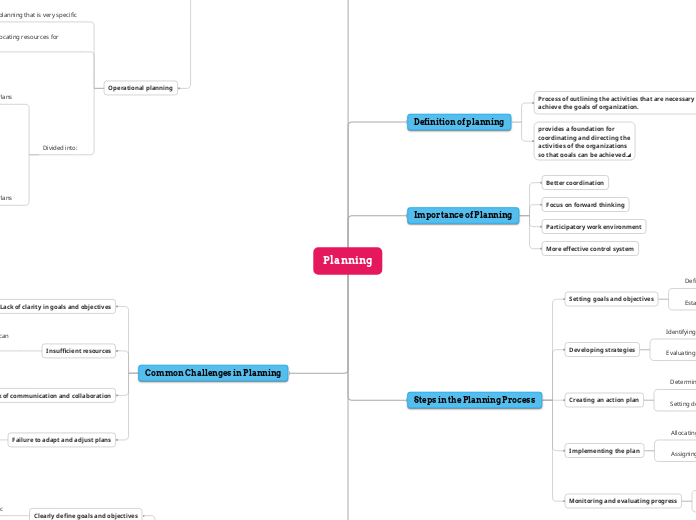
Planning
Definition of planning
Process of outlining the activities that are necessary to
achieve the goals of organization.
Importance of Planning
Better coordination
Focus on forward thinking
Participatory work environment
More effective control system
Steps in the Planning Process
Setting goals and objectives
Defining the desired outcome
Establishing measurable goals
Developing strategies
Identifying potential approaches
Evaluating the pros and cons of each strategy
Creating an action plan
Determining specific tasks and responsibilities
Setting deadlines and milestones
Implementing the plan
Allocating resources
Assigning tasks to individuals or teams
Monitoring and evaluating progress
Tracking milestones and timelines
Assessing the effectiveness of the plan
Types of Planning
Strategic planning
Long-term planning for the overall direction of the organization
Involves setting goals and making decisions that impact the entire organization
5 ways of Strategic planning
Develop the mission
Analyze the environment
Set Objectives
Goals
Objectives
Develop Strategies
Implement and control the strategies
Functional planning
Plans classified by their use or function.
Examples
marketing plans
finance plans
human resource plans
Contigency planning
Alternative plans if significant change in
the plan happen
Operational planning
Short-term planning that is very specific
Involves creating schedules and allocating resources for efficient operations
Divided into:
Standing Operational Plans
Repeated activities in the organization
Uses:
Policies
Procedures
Rules
Single Use Operational Plans
Actions that likely will not be repeated
Uses:
Program
Budget
Project
Common Challenges in Planning
Lack of clarity in goals and objectives
Unclear or vague goals can lead to confusion and ineffective planning
Insufficient resources
Limited budget or lack of necessary tools and equipment can hinder planning efforts
Lack of communication and collaboration
Inadequate communication between team members can result in misalignment and poor coordination
Failure to adapt and adjust plans
External factors or changing circumstances may require modifications to the original plan
Tips for Effective Planning
Clearly define goals and objectives
Ensure they are specific
measurable
attainable
relevant
and time-bound (SMART)
Involve relevant stakeholders
Seek input and feedback from individuals or groups affected by the plan
Regularly review and update the plan
Continuously assess the progress and adjust the plan as needed
Communicate the plan effectively
Ensure all team members understand their roles and responsibilities
Evaluate and learn from the planning process
Reflect on the outcomes and identify areas for improvement