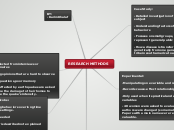
-Focuses on small groups, doesn't represent general public
-How a disease is transferred genetically from one generation of a tribe in south america to another
Experimental:
-Manipulating one variable and recording its effects
-Records cause-effect relationship
-Only used when its practical and ethical to change variables
- 40 women were asked to evaluate papers, names of authors were changed (some males & some females). Papers with a male name were redeemed more valuable.
r
Correlation:
-Determining the relation between 2+ variables
- Doesn't need to manipulate the variables
- Doesn't prove cause-effect relationship
-As the number of preys increased, the number of predators increased.
BY: -Karim Khalaf
Survey:
-Data collected from interviews or questionnaires
-Assessing opinions that are hard to observe
- biased questions, poor memory
-People affected by earthquakes are asked to describe the damage to their homes to determine the quake's intensity.
Naturalistic obs.:
-Recording behaviors over long time in natural settings.
-No labs needed
-Behavior is described not explained
-Kids were asked to do risky activities. Boys were more risk taking than girls.