school
Pros
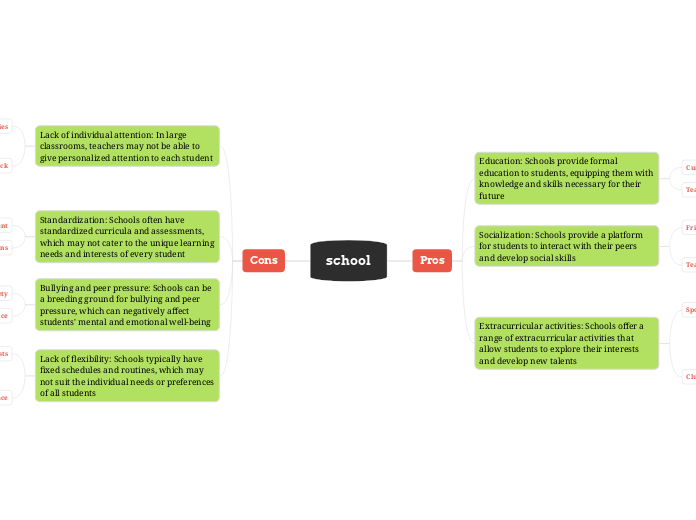
Education: Schools provide formal education to students, equipping them with knowledge and skills necessary for their future
Curriculum
Teachers
Socialization: Schools provide a platform for students to interact with their peers and develop social skills
Friendships
Teamwork
Through group activities and projects
students learn to work collaboratively with others
Extracurricular activities: Schools offer a range of extracurricular activities that allow students to explore their interests and develop new talents
Sports
Clubs and organizations
Students can join clubs and organizations based on their interests
such as music
art
or science
Cons
Lack of individual attention: In large classrooms, teachers may not be able to give personalized attention to each student
Learning difficulties
Limited feedback
Due to time constraints
teachers may not be able to provide detailed feedback on individual student work
Standardization: Schools often have standardized curricula and assessments, which may not cater to the unique learning needs and interests of every student
Boredom or disengagement
Creativity limitations
Bullying and peer pressure: Schools can be a breeding ground for bullying and peer pressure, which can negatively affect students' mental and emotional well-being
Social anxiety
Negative influence
Lack of flexibility: Schools typically have fixed schedules and routines, which may not suit the individual needs or preferences of all students
Limited exploration of interests
Inflexible learning pace
Some students may require more time or a different approach to grasp certain concepts
but schools often follow a set pace