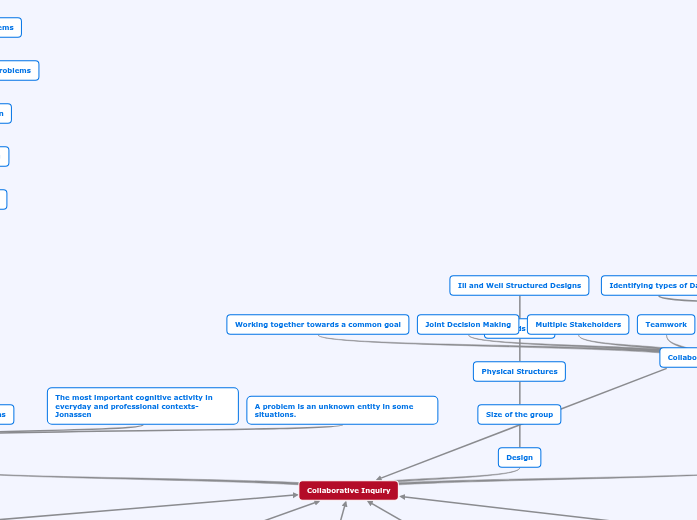
Collaborative Inquiry
Problem Solving
Well-Structured Problems
Present all elements of the problem to the learners.
Require the application of a limited number of regulard and well-structured rules and principles that are organized in predictive and prescriptive ways.
Have knowable, comprehensible solutions where the relationship between decision choices an all problems states is known or probabilistic.
Ill Structured Problems
Possesses problem elements that are unknown or not known with any degree of confidence
Possess multiple solutions, solution paths, or no solutions at all.
Possessed multiple criteria for evaluating solutions, so there is uncertainty about which concepts, rules, and principles are necessary for the solutions and how they are organized.
Types of Probnlems
Logical
Algorithmic
Story
Rule Using
Decision Making
Trouble Shooting
Diagnosis Solution
Strategic Performance Problems
Case Analysis Problems
Design Problems
Dilemnas
The most important cognitive activity in everyday and professional contexts-Jonassen
A problem is an unknown entity in some situations.
Design
Size of the group
Physical Structures
Methods used
Ill and Well Structured Designs
Inquiry
Asking questions
Evaluating concepts for flaws
Investigating probelms
Identifying types of Data
Data Collection Plan
Analyzing Evidence
Four Stage Model
Framing the Problem
Determining Focus
Based on Current Needs
Identifies Problems
Prioritize Focus of the Inquiry
Determining a Shared Vision
Possible Futures
Things that Could happen
Things that Probably Will Happen
Things that you Prefer to Happen
Guide Team Members in Developing a Shared Vision of a Preferred Future
Consider the Top Priority of the First Stage
Sphere of Influence Versus Sphere of Concern
Determine if the Team Has Direct Influence over its Concerns and Priorities by Using the Circular Diagram
Writing a Purpose Statement
Describes the Overall Intent of the Inquiry
Sets the Direction for Data Collection and Reporting
Writing the Statement
Sharing Examples
Developing an Inquiry Question
Use Neutral Exploratory Language
Begin With Words How or What
Specify The Focus for Your Team's INquiry
Formulating a Theory of Action
Formulate Casual Connections to Serve as a Story Line that will Connect Your Team's Preferred Future With Strategies
Identifying Underlying Assumptions
Identify Underlying Assumptions Upon Which The Theory is Based
What do You Assume to be True?
How Have Your Assumptions Influenced Your Thinking?
Collecting Evidence
Identify Types of Data
Learning Data: Data that provides data on each student
Demographic Data: Data about population of people
Perceptual Data: Data on satisfaction of work
Process Data: Data about the current approaches
Where to Collect Evidence
Triangulation: the process of corroborating evidence from different individuals
How the Evidence is Collected
Many different ways such as surveys
When is the Evidence Going to be Be Collected
Analyzing Evidence
Organizing
Organize the Data
Reading
Read and Look Over the Data
Describing
Describe What is Going on With The Data
Classifying
Qualitative V Qualitative
Create a Coding System for the Data
Interpreting
What does the data tell us about the problem?
What are the assumptions we can make?
What are some things we could do to deal with this?
What are the strengths and weaknesses of the data?
Celebrating and Sharing
Return to the Question and Theory Of Action
Was the question answered?
Identify the Audience
Who are we sharing the data with?
Make an Outline
Define what the readers want to learn
Write the Report
Introduction
Context
Method
Findings and Implications
Next Step Recommendations