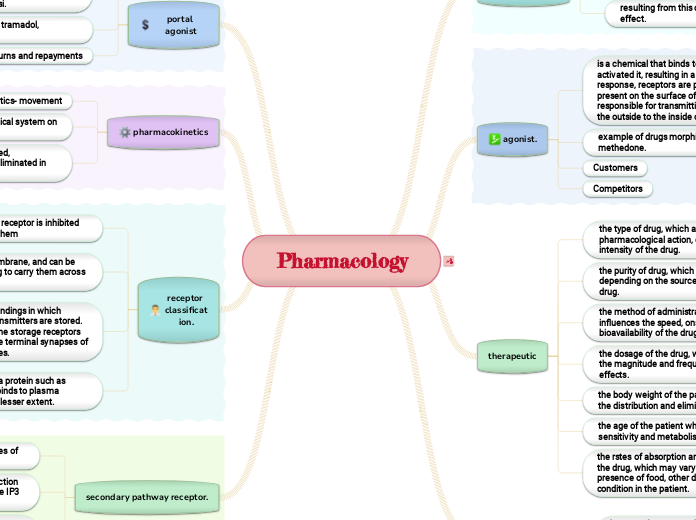
Pharmacology
pharmacodynamics.
drug mechanisms that produce biochemical or physiologic change.
interaction at the cellular level between a
drug and cellular components.
resulting from this drug action is the drug effect.
agonist.
is a chemical that binds to a receptor and activated it, resulting in a biological response, receptors are proteins that are present on the surface of cells and are responsible for transmitting signals from the outside to the inside of the cells.
example of drugs morphine, heroin, and methedone.
Customers
Competitors
therapeutic
the type of drug, which affects the pharmacological action, duration, and intensity of the drug.
the purity of drug, which may vary depending on the source and quality of the drug.
the method of administration which influences the speed, onset, and bioavailability of the drug.
the dosage of the drug, which determines the magnitude and frequency of the drug effects.
the body weight of the patient which affects the distribution and elimination of the drug.
the age of the patient which may alter the sensitivity and metabolism of the drug.
the rstes of absorption and metabolism of the drug, which may vary depending on the presence of food, other drugs, or medical condition in the patient.
beta receptor
A group of receptors that control vasodilation, relaxation of bronchial and uterine smooth muscles, and increase heart rate.therape
portal agonist
is a type of drug that binds to a receptor
and activates it, but with only partial efficacy compared to a full agonisi.
example buprenorphine, tramadol, buspirone
Returns and repayments
pharmacokinetics
kenetics- movement
affect of the biological system on
drug molecules
study of how a drug is absorbed,
distributed metabolised and eliminated in the body.
receptor classification.
the fuction of enzyme receptor is inhibited when a drug binds to them
enzymes receptor.
are carriers in cell membrane, and can be utilised by certain drug to carry them across the cell membrane.
transport carrier receptors.
are present in nerve endings in which endogenous neurotransmitters are stored. ephedriine , binds to the storage receptors of noradrenaline in the terminal synapses of the sympathetic nerves.
storage receptors.
are situated on plasma protein such as albumin. most drugs binds to plasma protein to a greater or lesser extent.
plasma protein receptors.
secondary pathway receptor.
alpha receptor.there are two main types of alpha receptors: alpha1 and alpha 2.
alpha 1. receptor stimulate the contraction of vascular smooth muscle through the IP3 signal transduction pathway.
while some vessels consist of alpha 2 receptor that decrease intracellular cAMP level, causing the contraction of smooth muscle.