realizată de erick nieto 5 ani în urmă
973
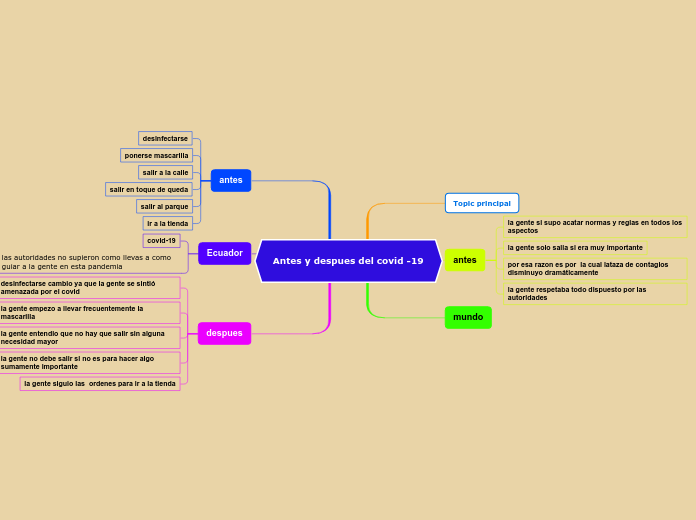
Antes y despues del covid -19
realizată de erick nieto 5 ani în urmă
973
Mai multe ca acesta

creat de angelly rodriguez avila
creat de Mayela aidee GUTIÉRREZ
creat de hilary orellana
creat de israel mones
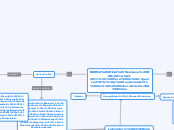
The part of speech is a category to which a word is assigned according to its syntactic functions. In English the main parts of speech are noun, pronoun, adjective, determiner, verb, adverb, preposition, conjunction, and interjection.
A preposition is one of the most exciting parts of grammar. A preposition is used to describe the location of something in relation to something else.
A group of words used with the force of a single preposition is called phrase preposition.
Participle preposition consists of words that end in “ing”.
When a preposition consists of more than one word, it is called double preposition.
Compound preposition consists of two or more words.
When a preposition consists of one word it is called single or simple preposition.
An interjection is used to express emotion in a sentence.
Think of other interjections!
An adverb is used to describe a verb, but it can also describe an adjective or another adverb.
Adverbs normally help paint a fuller picture by describing how something happens.
The intensifiers strengthen adverbs adjectives and adverbs and down- toners make them weaker.
An adjective is a word that's used to describe a specific noun and to provide more detail to the listener.
A verb is an action word or 'doing' word that signifies movement in some way.
A participle is a verb form that can be used as an adjective or to create a verb tense. There are two types of participles: Present participle (ending -ing) and Past participle (usually ending -ed, -d, -t, -en, or -n).
A modal is a type of auxiliary (helping) verb that is used to express: ability, possibility, permission or obligation. The main modal verbs in the English language are: can, could, may, might, must, shall, should, will, would.
A linking verb connects the subject with a word that gives information about the subject, such as a condition or relationship.
A verb with its own meaning: a verb that is not an auxiliary verb.


