av Fer Mora för 5 årar sedan
396
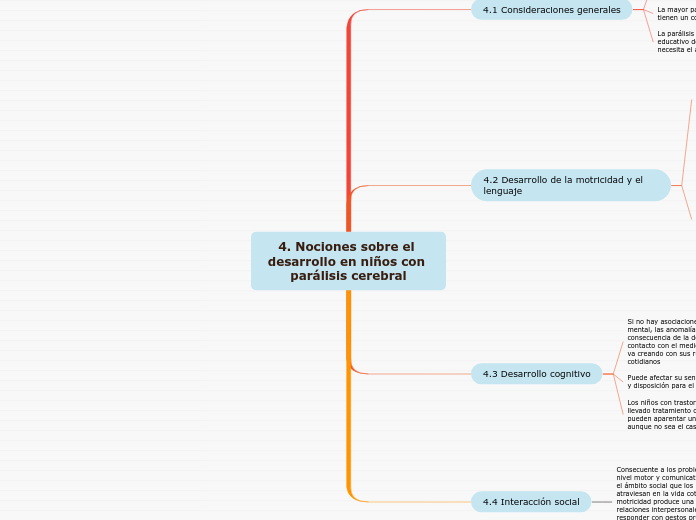
4. Nociones sobre el desarrollo en niños con parálisis cerebral
av Fer Mora för 5 årar sedan
396
Mer av detta

av Paula Andrea Yasno Gomez
av Angie Condori Páez
av Natalia Hernández
av Albeiro Benitez

To name your story, you have to think about the overall message and what you want your audience to understand from the story. Also, make it relevant and easy to remember.
Derivadas de la experiencia repetida de fracaso en objetivos diversos de la interacción social. Provoca frustración y desmotivación. Además si a esto se le suma sobreprotección por las personas e su medio, la situación se vuelve más grave
Falta de expectativas de autoeficacia
La autopercepción de eficacia influye en patrones de pensamiento, acciones y emotividad
Fenómeno de la indefensión aprendida
Acompañado de depresión
Los obstáculos internos creados por la percepción de ineficacia colectiva son más desmoralizadores y autodebilitantes que los impedimentos externos
The ending of a story is essential. We all know that if the ending is weak, what happened before loses its importance. So make it unpredictable, but fair. A resolved ending answers all the questions and ties up any loose threads from the plot.
This is the moment when the main character surpasses the last obstacle and finally faces their greatest challenge.
The climax usually follows one of these patterns:
Type in your answer.
The middle of the story is where you add layers of complications that will lead to the end. Reveal more about the character's journey. Did their personality go through changes? How did they overcome the challenges? And as you build up the story’s central conflict, make it more personal to that character. Also, from the middle act, you have to lead into the final act.
There wouldn't be any tension and excitement in your story if there weren't any obstacles in your character's way.
In the beginning of the story (or the exposition), you will need to introduce the setting and characters. You might also want to introduce the main conflict. This part of the story is important because it gives the reader necessary background information and maybe even a first insight into a character’s personality.
The setting (time & place) of a story can change throughout the plot.
Characters are essential to a good story. Usually, the protagonist(s) is/are the most affected by the plot. Introduce a character by focusing on their actions, interests, and occupation, as the physical appearance doesn't make a difference in most cases.
Type in the name of your character.


