av katty mingo för 4 årar sedan
1541
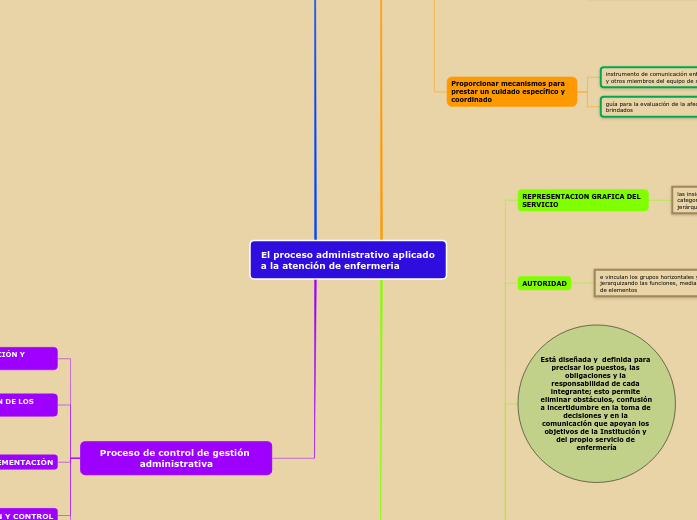
El proceso administrativo aplicado a la atención de enfermeria
av katty mingo för 4 årar sedan
1541
Mer av detta
In linguistics, syntax is the set of rules, principles, and processes that govern the structure of sentences in a given language, usually including word order.
A compound sentence is a sentence that has at least two independent clauses joined by a comma, semicolon or conjunction. An independent clause is a clause that has a subject and verb and forms a complete thought.
When independent clauses are joined with coordinators (also called coordinating conjunctions), commas and semicolons, they do more than just join the clauses. They add meaning and flow to your writing.
A complex sentence is a sentence that contains an independent clause and one or more dependent clauses.
An independent clause can stand alone as a sentence, but a dependent clause even though it has a subject and a verb cannot stand alone.
The subject clause is a dependent clause that acts as a subject.
An appositive clause follows another noun or noun phrase in apposition to it; that is, it provides information that further identifies or defines it.
A predicative clause may be introduced by conjunctions - that, whether, whether... or, as, as if, as though, because, lest, the way - or connectives.
The latter may be conjunctive pronouns - who, whoever, what, whatever, which - or conjunctive adverbs - where, wherever, when, whenever, how, why.
The object clause is a phrase on which a verb performs an action. It falls at the end of a sentence, and is governed by a verb or a preposition.
See the example below and try to create your own simple sentences.
Tim is driving the red car.
See the example below and try to create your own simple sentences.
Tim is driving the car with his mother.
Evaluar la participación del personal durante el proceso de atención proporcionada
Dar una óptima administración a los recursos humanos, acorde al número, tipo de servicios y categorías de personal en un ambiente óptimo, propiciando su propio desarrollo
Intervenir en la determinación de los recursos materiales, su aprovisionamiento, adecuada utilización y control de los mismos
Facilita
Cumplimiento de objetivos
el funcionamiento
Establecer los planes y programas para que el servicio de enfermería brinde una atención optima a la población solicitante
See the example below and try to create your own simple sentences.
Tim is the driver.
See the example below and try to create your own simple sentences.
Tim drives the car.
han de relacionarse a interactuar con la mayor parte de servicios de una unidad médica, para establecer coordinación efectiva
Para que el personal cumpla con eficiencia y eficacia sus funciones
See the example below and try to create your own simple sentences.
Tim drives.
Exige obediencia y cumplimiento
El directivo tiene la facultad de dirigir las acciones de otros para que las realicen y de impedir que efectúen alguna actividad o que acaten una decisión
La jefa de un departamento de enfermería es la responsable de la atención que brinda la enfermera a los pacientes
SE TRATA DE
An adverbial is an individual word (that is, an adverb), a phrase, or a clause that can modify a verb, an adjective, or a complete sentence.
The attribute is defined as a quality or characteristic of a person, place or thing.
Estar actualizados y ser pertinentes con la condición clínica del usuario
Estar disponibles para que el resto del personal los conozca.
Iniciarse al primer contacto con el paciente
Ser escritos por enfermeras profesionales
The predicative is defined as an adjective or noun forming or contained in the predicate.
Its main trait is that it serves to express a property that is assigned to a 'subject'.
For e.g.: The dog is old.
Abarcan múltiples aspectos de la respuesta humana , síntomas, conocimientos, habilidades psicomotrices y los estados emocionales
deben estar centrados en el comportamiento del paciente atendido, ser claros, concisos, observables y medibles
The predicate of a sentence is the part that modifies the subject in some way. Because the subject is the person, place, or thing that a sentence is about, the predicate must contain a verb explaining what the subject does and can also include a modifier.
The subject of a sentence is the person, place, thing, or idea that is doing or being something. You can find the subject of a sentence if you can find the verb.
Ask the question, 'Who or what 'verbs' or 'verbed'?' and the answer to that question is the subject.
se describen en el tiempo
largo plazo
Son los resultados que requieren de un tiempo largo
corto plazo
son adecuados especialmente para establecer la atención inmediata en situaciones de urgencia cuando los pacientes son inestables y los resultados a largo plazo son inciertos.
Son los resultados que pueden lograrse de modo favorable y rápido, en cuestión de horas o días
Medio plazo
son también intermedios, de tal forma que, podamos utilizarlos para reconocer los logros del paciente y mantener la motivación
Traditional grammar defines the object in a sentence as the entity that is acted upon by the subject.
The indirect object identifies the person/thing for whom/which the action of the verb is performed.
The indirect object is usually a person or a thing.
The direct object is the receiver of the action mentioned in the sentence.