How to Use Real-Life Examples in the Classroom:
1. Start with Questions:
Ask students to share personal experiences or observations related to the topic.
2. Bring in Objects or Materials:
Use tangible items that represent real-world contexts.
3. Role-Playing Activities:
Simulate real-life scenarios like buying groceries, planning a trip, or interviewing for a job.
4. Use Current Events:
Incorporate news stories or events relevant to the topic.
5. Field Trips or Virtual Tours:
Take students to places like museums, factories, or online resources to observe real-world applications.
Characteristics of real-life examples
Engaging
Make...
Interactive
Encourage..
Simple
Understand...
Practical
Applied...
Relevant
Related...
Use of Technology
Efficiency in Administration: Administrative tasks within educational institutions have been streamlined through technology. Digital platforms for enrollment, grading, and communication enhance efficiency. The integration of technology in education prepares students with essential skills for the digital age
Technology makes classes more interactive and accessible, helping students develop key skills. Its effective integration requires planning and adaptation to the needs of each learner.
Tools: Computers, projectors, tablets.
Student Participation
Pros: Create a sense of ownership over learning; enhance critical thinking skills.
Cons: Not all students may feel comfortable participating.
Definition: Encouragement of active involvement from students in discussions and activities. Its objective is to engage students actively in their own learning process.
Evaluative: helps you see how you did and where you are.
Appreciative: helps you know you are valued and recognized
Coaching: helps point the way to how you can improve
Is a critical element as it directly impacts student engagement, motivation, and learning outcomes.
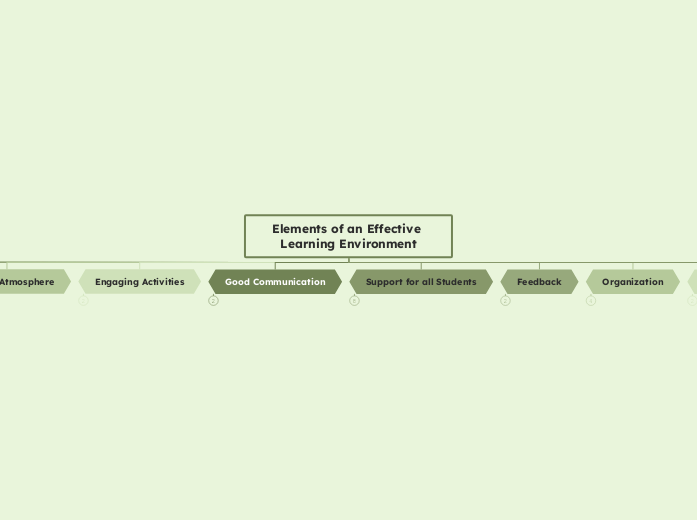
Good communication in the classroom is the effective exchange of ideas and feelings between teachers and students.
Engaging Activities
Ways to keep the class interested and engaged:
• Use positive reinforcement and keep it simple
• Make it visual and incorporate more group work
• Maximize student time outside the classroom
• Allow options and keep it interactive
• Be culturally responsive and create trusting relationships
These activities are designed to capture students' interest and encourage active participation. They are important in building an open and trusting relationship between teacher and student, as it allows for students to get the most out of their learning experience.
Positive Atmosphere
Key elements include:
- Emotional safety: Students feel supported and comfortable.
- Strong relationships: Trust exists between teachers and students.
- Active participation: Students are motivated and engaged in their learning.
- Well-organized space: A tidy and structured classroom minimizes distractions.
A positive atmosphere refers to a space where students feel valued and safe and where teachers foster a supportive and engaging environment. In such an environment, students can experience significant improvements in both behavior and academic success.
Clear objectives provide students with a clear understanding of what they are expected to learn and achieve during a lesson or activity.
Importance
Learning environments play a key role in the cognitive, emotional, and social development of individuals. An appropriate educational environment can stimulate creativity, encourage critical thinking, promote collaboration, and improve students' academic performance.
Definition
Learning environments can be defined as the physical, social and psychological spaces in which the teaching and learning process takes place.