Mind Maps for Personal Development
Turn reflection into action. Set meaningful goals, add dates, track your progress, and share your plan whenever you need feedback.
-
Branch it out
A personal mind map turns a vague wish to "get better at something" into a plan you can actually follow. Start with a single map, like the one above, and branch out into the areas of your life it touches: career, wellbeing, learning, relationships, or whichever matter most to you.
-
Turn it into a task
Turn "improve public speaking" into a course, a practice cadence and a date, and the vague wish becomes a task with a deadline.
-
Switch and share
Switch to Gantt view to see it all on a timeline, then share the branch with a coach or mentor so a check-in like "how did the talk go?" has somewhere to land.
That's the difference between a journal entry and a working plan. In Mindomo, the map you thought it through in is the same file you track from, so nothing gets copied into a separate planner or habit app - so the reflection and the plan live in one place. New to the format? Start with what a mind map is.
Why a Mind Map Works for Personal Growth
- Gaps show up before you commit. Branching a goal shows the parts that are still vague, while there's still time to fix them.
- New habits have to connect to stick. A habit tied to nothing else in your life is easy to drop. Branch it under the goal it actually serves.
- It pushes past wishing. It moves you from listing hopes to defining the actions and dates behind them.
- One structure, every area of life. Career, wellbeing, learning and relationships live on the same map, so trade-offs between them are visible.
- Lifts motivation and follow-through
- A creative way to journal
- A structured way to reflect
- Easier to revisit than a notes app
What belongs on a personal growth map?
There's no one right structure. Start with what you're trying to change, then add the things that influence it. For most goals, a few branches are enough.
Where I am now
What's working? What keeps getting in the way?
Where I want to get
An outcome, not necessarily a fully-defined SMART goal yet.
What needs to change
Skills, habits, decisions, routines, or circumstances.
What I'll actually do
Courses, conversations, practice, applications, reading, exercise - concrete actions, not intentions.
When I'll check in
A review date, not just a completion deadline.
Reflect with mind maps
See the whole picture before you commit to anything.
See how your goals connect
A vague feeling becomes a structure, and the parts still unclear are easy to spot.
Come back to it anytime
Short branches and labels bring the whole plan back faster than rereading a journal entry.
Run a personal SWOT
Map your strengths, weaknesses, opportunities and threats before a big decision.
Attach the evidence
Notes, links and past attempts sit on the goal they belong to, so nothing is just a hope.
Plan with mind maps
Build it once, run it from the same map.
Branch the goal once
Break it into the actions under it, then collapse and expand as the plan develops.
Add dates and habits
Turn any branch into a task with a start date, a cadence, and a deadline.
See the plan develop
Every task and update carries a date, so progress is visible without having to ask yourself.
Switch to Gantt view
See the whole plan on a timeline without rebuilding it in another tool.
Share with mind maps
More perspective on one map, not four group chats.
Bring in a coach or mentor
Guest editing means they can comment or edit without an account.
Comment on any branch
A check-in like "how did the talk go?" attaches right where it belongs.
Hand off an action
When someone else is helping, assign a branch to them with a date.
Walk them through it
Present the map directly instead of retelling the plan from memory.
Review with mind maps
Check in on the plan without starting from scratch.
Run a monthly review
See what moved, what stalled, and what needs a new date.
See how it evolved
Playback shows the plan's history, branch by branch.
Mark what's done
Completed tasks roll up, so progress is visible at a glance.
Reshape what's not working
Drag a branch under a new goal the moment priorities change.
9 mind maps for personal growth
From goals to habits, 9 practical ways to put mind maps to work.
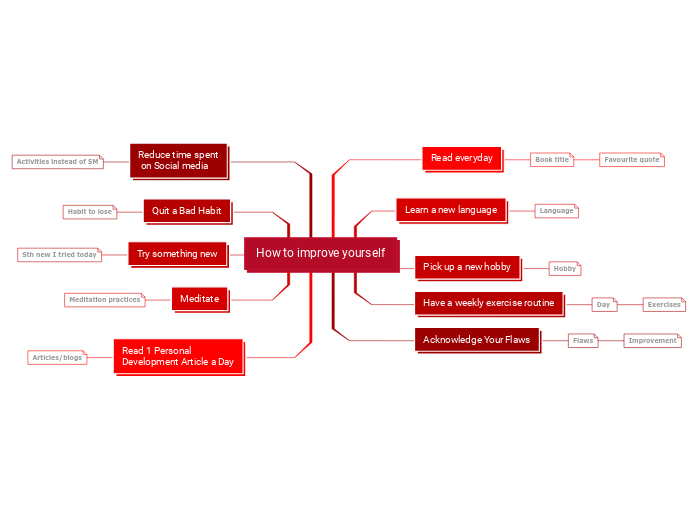
Personal development planning
Put the whole picture of who you want to become on one surface: values at the center, growth areas, and the habits branching out beneath them. Easier to see what's actually connected than a list of New Year's resolutions.
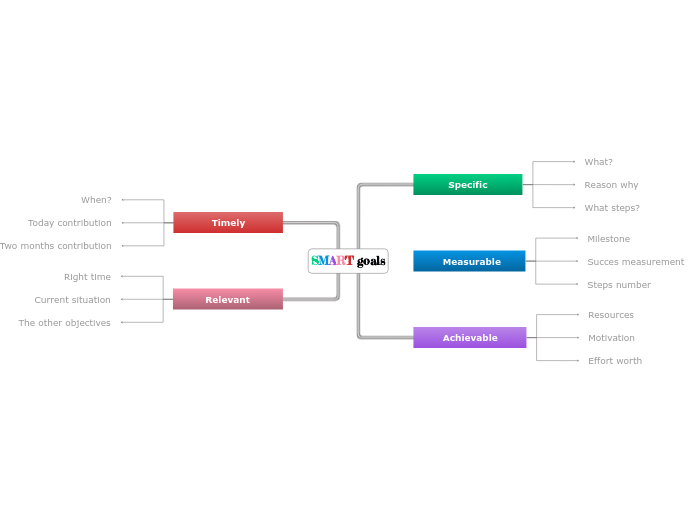
Setting SMART goals
Turn a vague ambition into something specific, measurable, achievable, relevant, and time-bound. Break the goal into actions beneath it, and see straight away which parts are still fuzzy.
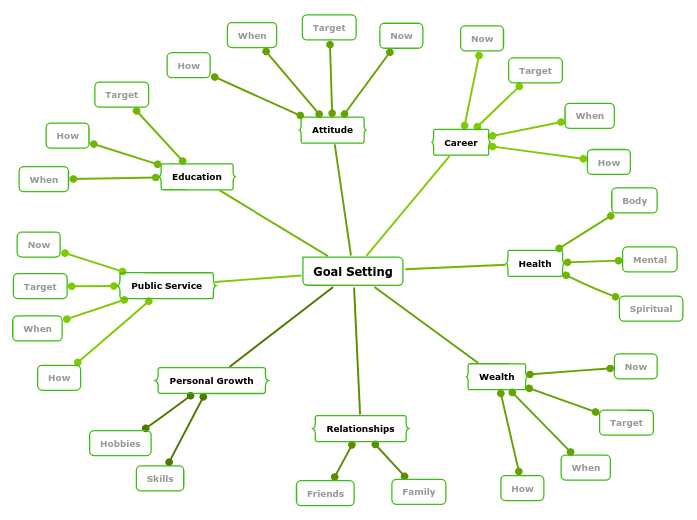
Goal setting and tracking
Map short- and long-term goals side by side, attach a deadline and a way to measure progress to each, then check them off as you go instead of losing track in a notes app.
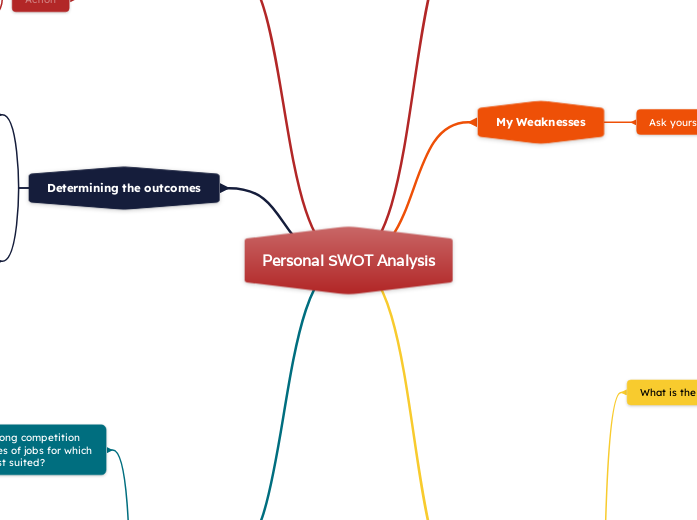
Personal SWOT
Map your strengths, weaknesses, opportunities, and threats before you commit to a career move, a course, or a big decision. Seeing all four at once beats guessing from memory.
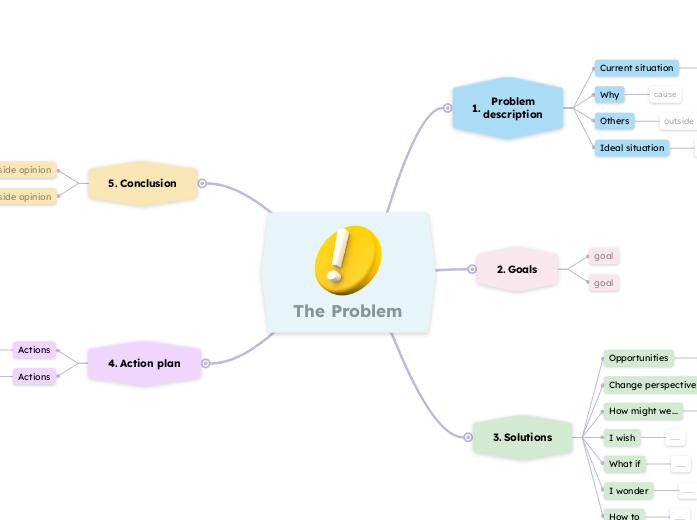
Solving a personal problem
Break a decision or a recurring problem into an issue tree: the question at the center, mutually exclusive branches beneath it, evidence attached to each—an alternative to circling the same three thoughts.
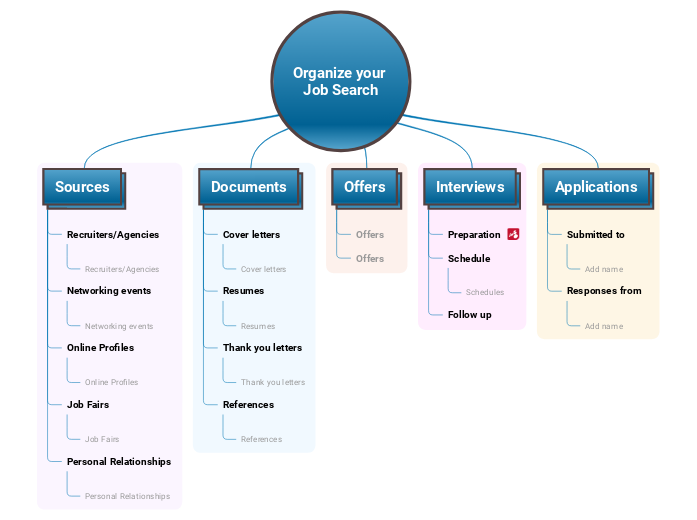
Job search and career moves
Track job applications, interviews, and follow-ups as branches instead of scattered spreadsheet rows, with the status and next step for each one visible at a glance.
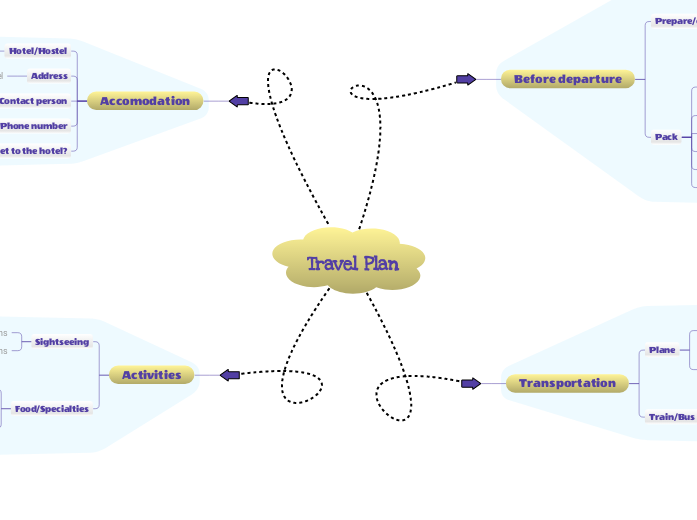
Travel and event planning
Lay out a trip as a branch per phase - research, bookings, packing, day-of - with dates attached to each, so nothing gets forgotten in the week before you leave.
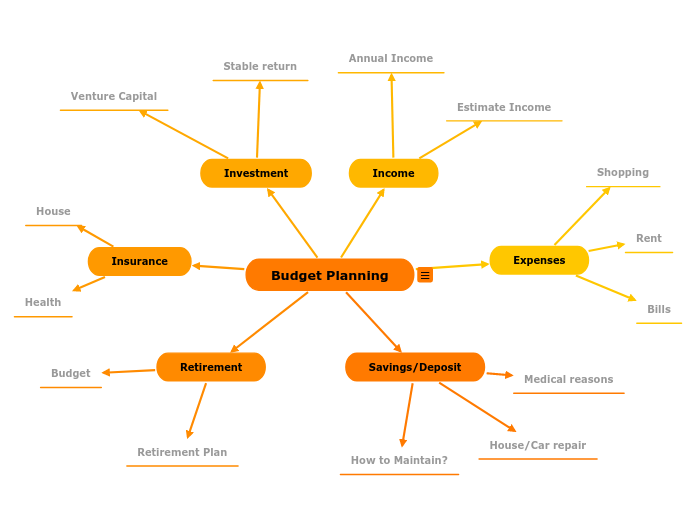
Budgeting and financial planning
Map income, expenses, and savings goals on one surface, then switch to outline view to read it like a statement instead of a diagram.
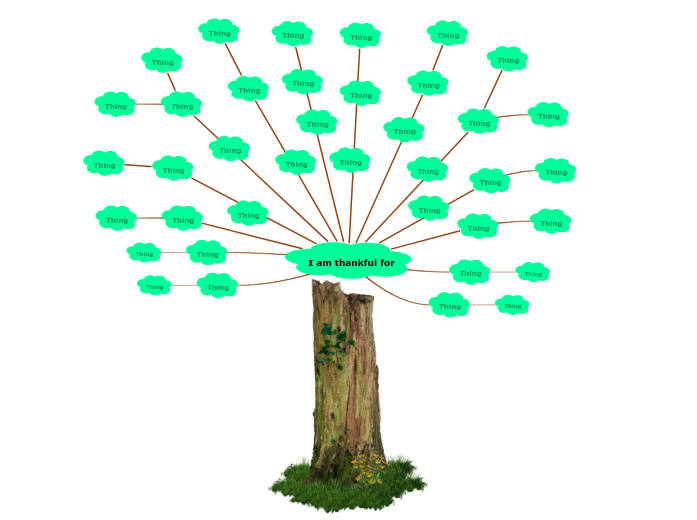
Gratitude and reflection
Keep a running gratitude tree or reading list instead of a blank page - a small, low-effort habit that's easy to keep because it's just adding one more branch.
Start smaller than you think
A personal development map doesn't need to hold someone's entire life. One useful question is enough.
You can always add branches later. The point is to make the next decision clearer, not to map your whole life in one sitting.
A personal development map isn't meant to stay finished
Plans change once real life gets involved. A course turns out not to be useful. A goal stops mattering. Something you thought would take a month takes three. That's normal - the map is there to be edited, not framed.
Sometimes progress means adding a branch. Sometimes it means deleting one.
- Does this still matter?
- What's actually moved?
- What's been sitting here untouched?
- Is the next step still the right one?
- Is there anything I can remove?
The same map is also an outline and a Gantt chart
Most planners make you pick a format up front and rebuild when you need a different one. Mindomo doesn't. A mind map, an outline and a Gantt chart are three views of one document - switch between them in a click and the content follows.
That matters in practice. You brainstorm as a map because branching thinking suits reflection. You switch to outline view when the plan needs to read like something you can actually follow. You switch to Gantt when it needs dates and a sense of what's next.
Nothing gets copied across, nothing falls out of sync, and there's no moment where you have to retype your plan into a separate habit app.
Let AI do the first draft - and the edits

Start from a prompt
Give Mindomo AI a goal, a feeling, or a topic and get back a structured diagram. Purpose-built generators cover brainstorming, pros and cons, and SWOT analysis - so a career decision or a New Year's plan starts half-built instead of blank.

Expand any branch
Select a topic and extend it: more ideas, more sub-topics, questions to pressure-test it, explanatory notes, a pros-and-cons breakdown, or a full SWOT on that one branch. Translate the finished map into any of 30+ languages.
Grow with support
Share your plan with a coach, mentor, therapist, or accountability partner. Changes appear live, comments attach to individual goals, and you can assign small tasks to each other. Shared team folders mean anything you move into them is instantly editable by the people you trust; no sharing step required.
No account needed for coaches or partners
Share a map with a guest and they can edit it. Useful for a coaching session or a check-in that shouldn't be gated behind a signup.
Maps are private until you share them. Set each person to edit, view, or view and copy, and put a password on any public link.
What people say
I was fortunate to be introduced to Mindomo mind mapping and have really surprised myself how easy and powerful it has been to use.

I enjoyed Mindomo in college and now that I'm taking a break from there I still enjoy using it. I have ADHD so it helps me organize my thoughts and focus on what I need to do. No panic attacks!
I tested mind mapping applications and I chose Mindomo for its set of features and its power in formatting text and blocks.


Questions people ask before they start
Can ChatGPT create mind maps?
Yes. Connect Mindomo to ChatGPT, and it can build maps, edit existing ones, and create templates directly in your Mindomo account. You get a working diagram you can keep editing, share with a coach, or switch to a Gantt view - not a text outline you'd have to rebuild by hand.
Can a mind map replace a journal or a planner app?
It replaces the drafting process, not always the daily habit. Map the plan first so the structure holds up, then switch to outline view to write it out properly and export to Word or PDF. Same file throughout.
Can I turn a goal into a schedule with dates?
Yes - Gantt is a view of the same document, not a separate file. Add dates and durations to your tasks and switch views. Dependencies and automatic rescheduling come with it.
Can a coach or accountability partner edit my map without an account?
Yes. Guest users can edit a map you've shared with them without signing up, which makes it practical for coaching sessions and check-ins where the other person shouldn't have to create an account first.
How do I build a personal development mind map?
Start with the outcome or the value at the center, not the first task. Branch out into the areas of life it touches, then break each into specific actions. Attach a date to anything that has to happen by a certain point. Switch to Gantt view to check that the plan is realistic. Then share it with someone who can help you stay on track.
Is this different from Mindomo for teams or work projects?
Same app, same features - this page is just about using it for yourself. If you're planning with a team or running work projects, see mind maps for business.
Put your next goal on a map
Start free and build your first personal growth map in a few minutes. For journaling and habit tracking on your own, or for sharing folders with a coach and a few accountability partners, see Premium, Professional and Team plans.