Every firm has run this engagement before. Almost nobody can find how.
A new project lands, and it rhymes with three you've already delivered. The discovery agenda, the assumptions log, the deliverable structure, and the way you framed the recommendation. It all exists somewhere. The senior who built it is on another engagement. The deck is in a client folder named by date. The reasoning lived in a Slack thread that scrolled away in May. So the junior opens a blank canvas and rebuilds, slightly worse, what the firm already knew.
Where the reusable work hides
-
Shared drives
Filed by client and date, not by the work
-
Old proposals & decks
Reusable, buried in a folder nobody reopens
-
Chats & email
Where the reasoning lived, then scrolled away
-
People's memory
The senior knows, until they're on another project
Every firm has assets. What it lacks is a way to retrieve them by how the work actually unfolds.
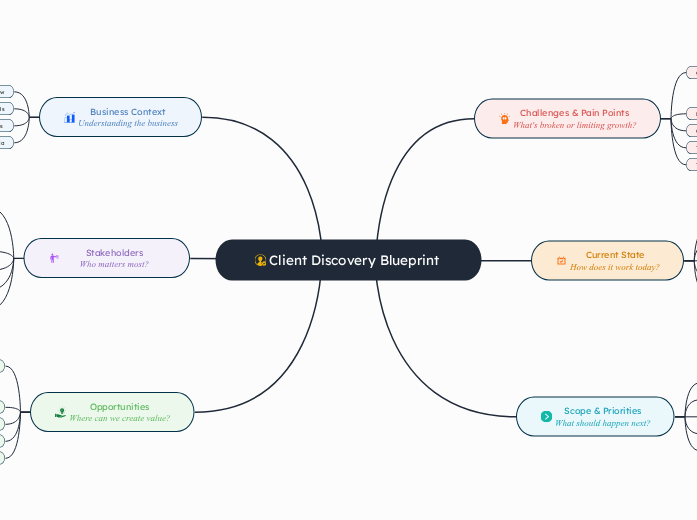
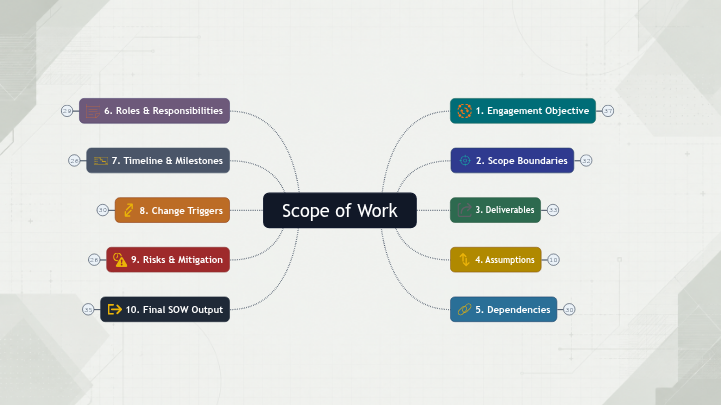
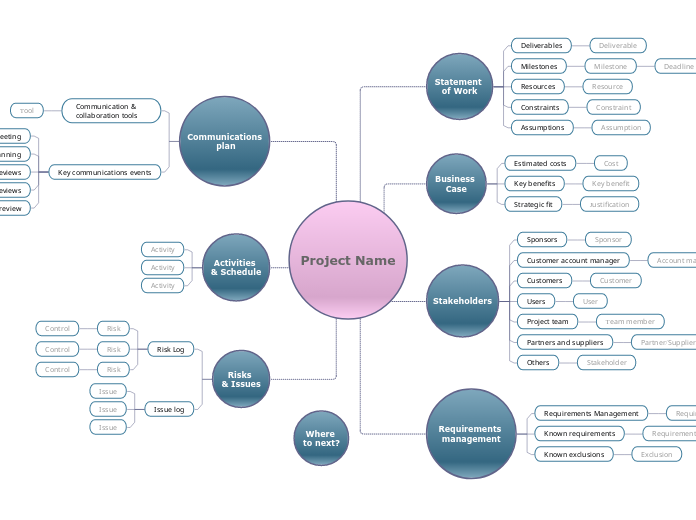
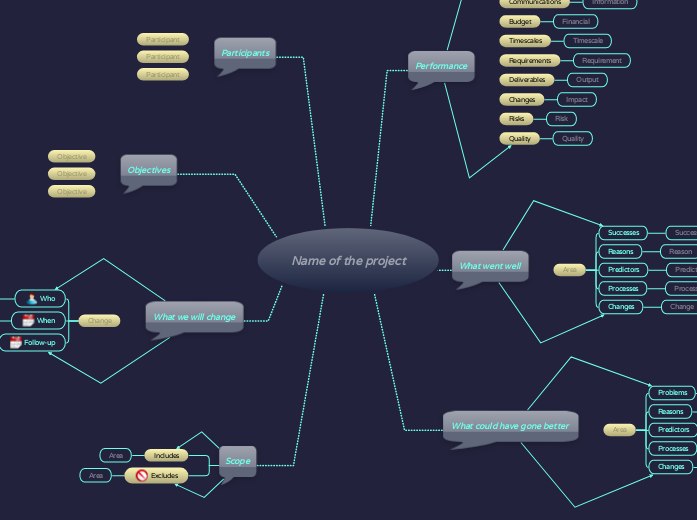
The fix is to put the firm's proven work on a single shared canvas, organized around the shape of an engagement, not the shape of a file system, so frameworks, deliverables, assumptions, and lessons learned stay connected, and the next project starts from the closest match.
We call this an engagement library. Not "a folder of old files everyone is afraid to reuse." It's the firm's operating memory, something the team builds together and keeps alive across projects.
Start your firm's engagement library
Map an engagement once. Reuse it on every project after.
The first engagement takes as long as it always takes. The second one starts from the shape of the first. By the fifth, the firm has a library that compounds instead of a drive full of one-off decks.
Shared team folders (canonical engagements, frameworks, and templates instantly accessible for the entire team)
are included with the Team and Business plans.