
Why Karim Youssef uses Mindomo
Mindomo helped me excel in my teaching because it helps while preparing the lecture and it helps while presenting the lecture.
Assistant Professor of Architecture

How he found Mindomo
Karim discovered Mindomo through a web search for mind mapping tools. He tried several options and found Mindomo to be the best fit for his needs.
He values the interface for being easy to learn, with practical controls for text size on nodes, links, and map layout. In his view, the tool balances rich formatting with maps that stay readable for students.
How he uses Mindomo in teaching
Karim works primarily in Mindomo online (from the browser) every week for two core activities:
➡️ Presenting lectures, moving through a topic point by point so students always know where the class discussion stands (read more about how to make presentations starting from a mind map in our dedicated guide).
➡️ Setting assignments, sharing structured tasks that students complete individually or in groups.
Impact on teaching
Mindomo in the classroom
📌 Assignments and collaboration
Mindomo simplifies assignments for Karim's students. The platform allows students to collaborate in real time on the same map. He sends out an assignment with a code; students log in, form groups, and work collaboratively on the same map. He can define requirements, leave comments as students work, and review progress afterward to see what each student contributed.
📌 Student comprehension
Students largely appreciated that ideas are organized so that when the class moves from point to point, they always know where the discussion stands. A small number were more accustomed to slide decks and found the map format less familiar at first. Overall, the structured visual approach helped the majority follow lectures more clearly. Read more about how to learn with mind maps in our dedicated guide.
📌 Project collaboration
Each student can contribute to the mind map at the same time and leave comments for each other to continue the work later, whether in class or asynchronously.
What sets Mindomo apart
Compared with other mind mapping tools Karim tried, Mindomo stood out for:
⭐ its clear interface
⭐ simplicity of use
⭐ flexibility
⭐ reliable performance on the web
He recommends Mindomo for its user-friendly interface, versatility, and customizability. He regularly links to files on Google Drive, websites, images and videos such as YouTube, which has helped him enrich lectures and prepare course material more efficiently.
Advice for educators
Karim suggests that Mindomo will appeal to anyone who uses mind maps to organize ideas, sketch concept maps, or build other types of diagrams.
At the same time, he advises educators to clarify what purposes they need software to serve, and whether it delivers in a way they can use day to day. For lecture structure, assignments, and collaboration, Mindomo has fit his workflow well.
Quote to remember
“It helps me to present a topic as a hierarchy of ideas, from the main idea to secondary ideas to details of each idea. So it helps with structuring the lecture."
More About Karim Youssef
Karim Youssef, Ph.D., is an Assistant Professor of Architecture. His research explores the links between form and urban morphology and the physical, social, cultural, and spiritual dimensions of the built environment.
His teaching focuses on those relationships at architectural and urban scales, including courses he developed such as Place and Sacred Architecture and cross-cultural studies in the Urban Fabric of Cities. He has taught at the University of Calgary and Mount Royal University in Canada, guest lectured at the University of Economics and Business in Poznan, Poland, and assisted faculty at the Architectural Department, Faculty of Engineering, University of Tanta in Egypt.
Nominated for the Governor General Gold Medal in 2015, he is the author of The Monadic Space of Suburban Canada. For a full list of publications, see Karim W. F. Youssef on ResearchGate.
Get started with Mindomo
More customer stories
View all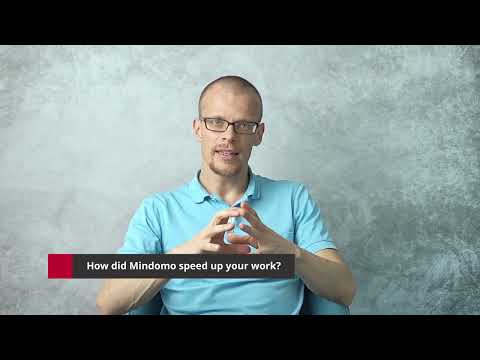
Knowledge management
Scaling educational content for 11,000 doctors
How Matthias Behrends and Emotion Coaching use Mindomo to deliver mind map-based training to more than 11,000 doctors.

Matthias Behrends
Founder & CEO, Emotion Coaching
Team collaboration
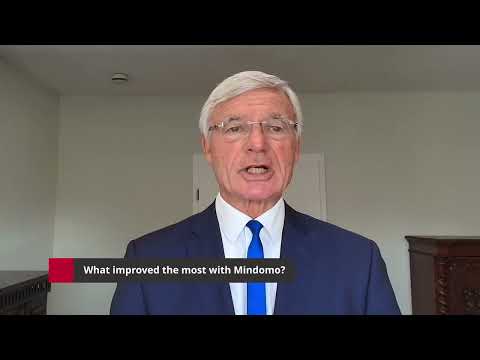
Team workflow: from trial to indispensable in two months
Wilfried Berg introduced Mindomo to his team at the bbw Group. Within two months, it became an indispensable part of their daily work.

Wilfried Berg
Member of the Executive Board & Head of Digitalization, bbw Group