Products
Mind Mapping Software
Outlining Software
Gantt Charts Software
Uses
Mind Maps for Education
Mind maps for Business
Mind Maps for Personal Development
Mind Mapping Benefits
Resources
Features
Education
Personal & Work
Desktop
Video Tutorials
Watch tips and tricks about using Mindomo.
Help Center
Detailed help guide on configuring and using Mindomo.
Articles
What is a Mind Map?
How to Mind Map?
How to Take Notes with Mind Maps?
How to Prioritize Tasks with Mind Maps?
What is a Concept Map?
Top 29 Mind Map Examples
Pricing
Log in
Sign Up
Products
Mind Mapping Software
Outlining Software
Gantt Charts Software
Uses
Mind Maps for Education
Mind maps for Business
Mind Maps for Personal Development
Mind Mapping Benefits
Articles
What is a Mind Map?
How to Mind Map?
How to Take Notes with Mind Maps?
How to Prioritize Tasks with Mind Maps?
What is a Concept Map?
Top 29 Mind Map Examples
Features
Education
Personal & Work
Desktop
Help
Video Tutorials
Help Center
Pricing
Sign Up
Log in
Categories:
All
-
bonding
-
isotopes
-
molecules
-
elements
by
munyra arsad
18 years ago
1624
Molecules & Ions
Open
More like this
Ionic Compounds
by Hernan Scott
Ionic Compounds
by Hernan Scott
Molecules and Ions
by teo bernice
Minerals
by Anjel Berry
Molecules & Ions
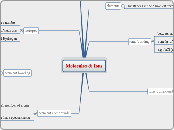
covalent compounds
certain compounds have special names
e.g ammonia
e.g water
prefix added to distinguish number of atoms.
e.g carbon monoxide (CO)
ionic compounds
exist polyatomic ions with special names
e.g Iron (II) Nitrate
e.g Ammonium Chloride
negative ions are ANIONS
positive ions are CATIONS
covalent bonding
e.g HCl [Hydrogen Chloride], NO [Nitrogen Oxide]
arises as 2 non-metals both need to gain electrons in order to achieve noble gas sturtures
Subtopic
electron clouds of atoms overlaping, resulting in electrons sharing
between atoms of non-metals
ionic bonding
e.g NaCl [sodium chloride]
transfer of electrons from the metal to the non-metal atom
between atoms of 1 non-metal and metal
elements
substances in their simplest form
e.g Carbon
e.g Hydrogen
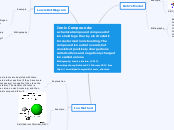
isotopes
e.g Isotopes of Hydrogen
contain different number of neutrons
atoms with identical atomic number but different mass number.
atoms
contain 3 basic particles
electrons
neutrons
protons
smallest particles of the element which still retain the chemical properties of an element