по Stefani Sarmiento 2 лет назад
149
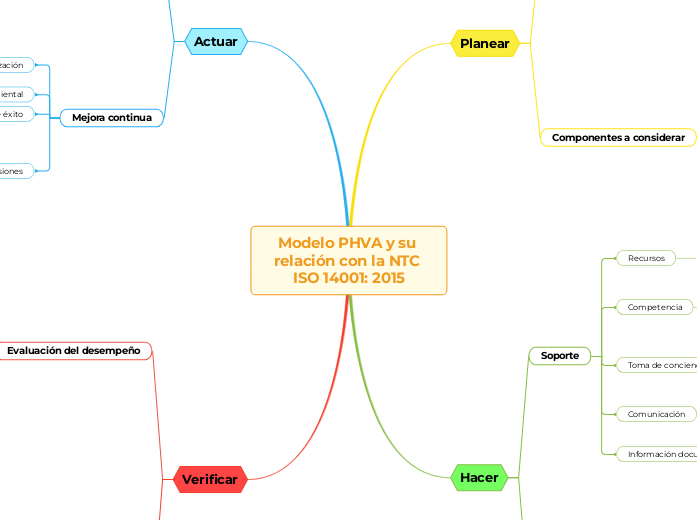
Modelo PHVA y su relación con la NTC ISO 14001: 2015
по Stefani Sarmiento 2 лет назад
149
Больше похоже на это
Rivers have always been essential for human life and settlement. A source for drinking, the source of food, and a way to transfer goods from one place to another. They are essential in the environment of rainforest and wetlands.
The Yangtze holds the title of Asia’s longest river. The Yangtze has a momentous place in China’s history and culture, providing some of the country’s most fertile land as well as some of its most artistically inspiring scenery.
Where the Mekong river runs, the land is incredibly verdant shaping one of the richest areas of biodiversity on the planet. Thousands of species call its shores and waters home. Long an essential trade route the Mekong passes through, or close to, some of the region’s most important cities, including Vientiane, Phnom Penh and Saigon.
The Mekong is a trans-boundary river in Southeast Asia. Its estimated length is 4,350 km.
From the Tibetan Plateau, the river runs through China's Yunnan Province, Myanmar, Laos, Thailand, Cambodia, and Vietnam.
The Mekong rises as the Za Qu and soon becomes known as the Lancang (Lantsang) in the 'Three Rivers Source Area' on the Tibetan Plateau in the Sanjiangyuan National Nature Reserve. It approaches and empties into the sea through the Mekong Delta. Tributaries: Nam Khan, Tha, Nam Ou, Mun, Tonle Sap, Kok, Ruak.
Mekong River has many tributaries. Type in at least 3 of its affluents.
debe incluir consideraciones sobre
Cambios
Riesgos y oportunidades
Aspectos ambientales significativos
Cuestiones externas
Cuestiones internas
Necesidades y expectativas
Where is the place where Mekong drains into a larger body of water ? Type in the answer.
se deben informar a la
Dirección pertinente
Where is the original point from which Mekong flows? Type in the answer.
que incluya(n)
Elaboración de informes
Requisitos de planificación
Responsabilidades
Métodos
Frecuencia
Requisitos de la norma nternacional
Requisitos de la organización
Mekong River flows through 6 countries. Type them in.
debe llevar a cabo
Auditorías internas a intervalos planificados
The Yangtze or Yangzi is the longest river in Asia and the longest in the world to flow entirely within one country (Qinghai, Tibet, Yunnan, Sichuan, Chongqing, Hubei, Hunan, Jiangxi, Anhui, Jiangsu, Shanghai provinces). It rises in the northern part of the Tibetan Plateau and flows 6,300 km in a generally easterly direction to the East China Sea.
Tributaries: Yalong, Min, Tuo, Jialing, Han, Wu, Yuan, Zi, Xiang, Gan, Huangpu.
In mid-2014, the Chinese government announced it was building a multi-tier transport network, comprising railways, roads, and airports, to create a new economic belt alongside the river.
The Yangtze River has over 700 tributaries. Type in some of its major affluents.
Emprender acciones oportunas
Mantener el conocimiento
Comprender el estado de cumplimiento
Where is the place where Yangtze drains into a larger body of water ? Type in the answer.
se debe conservar
Información documentada
Evidencias
deben incluir
Eficacia continua del sistema
Adecuación del sistema
Conclusiones de la convivencia
Oportunidades de mejora
Where is the original point from which Yangtze flows? Type in the answer.
se debe evaluar
En base al sistema de gestión ambiental
debe determinar
¿Qué métodos de análisis utilizar?
¿Cuándo se debe llevar a cabo la medición?
Criterios de evaluación e indicadores
¿Qué necesita seguimiento y medición?
Yangtze River flows through 9 provinces in China. Type at least 5 of them.
Dempeño ambiental
Acciones correctivas
The Volga is the longest river in Europe. The waters of the Volga are used to irrigate the steppe regions of southern Russia. Because of its importance in the country, the Volga has mythological status in Russia, and many iconic sites are found along its banks
The Danube is the second-longest river in Europe. Travelers can experience many of the river's sights by embarking on a cruise along its waterways. Danube River Cruises, which are offered by Viking Cruises, typically stop in Cologne, Budapest, Nuremberg, Belgrade and Krems. Following the river is a way to experience several Eastern European cities in one trip. Famous monuments, such as the Hungarian Parliament, have been erected on its coast.
The Danube is located in Central and Eastern Europe.
The Danube flows through 10 countries, more than any other river in the world. Originating in the Black Forest in Germany, the Danube flows southeast for 2,850 km, passing through or bordering Austria, Slovakia, Hungary, Croatia, Serbia, Romania, Bulgaria, Moldova and Ukraine before draining into the Black Sea. The mouth of the Danube is the Danube Delta. The greater part of the Danube Delta lies in Romania, with a small part in Ukraine (Odessa Oblast).
Tributaries :Iller, Lech, Altmühl, Naab, Regen, Isar, Inn, Ilz, Enns, Morava, Rába, Váh, Hron, Ipeľ, Sió, Dráva, Vuka, Tisza, Sava, Tamiš, Great Morava, Mlava, Karaş, Jiu, Iskar, Olt, Osam, Argeș, Ialomița, Siret, Prut.
This is the place where Danube drains into a larger body of water . Type in the answer.
que conduzcan a la
Implementación de mejoras
Productos
Servicios
Sistema
Remember that this is the original point from which the river flows. Type in the answer.
a partir del análisis de los
Logros obtenidos
debe ser el
Pincipal objetivo alcanzado
Danube River flows through 9 countries in Europe. Type them in.
debe conservar
como evidencia de
Naturaleza de las no conformidades
Resultados de cualquier acción correctiva
The Volga is the longest river in Europe with a catchment area of 1,350,000 square km.
Eleven of the twenty largest cities of Russia, including the capital, Moscow, are located in the Volga's drainage basin. Rising in the Valdai Hills 225 meters above sea level northwest of Moscow and about 320 km southeast of Saint Petersburg, the Volga heads east past Lake Sterzh, Tver, Dubna, Rybinsk, Yaroslavl, Nizhny Novgorod, and Kazan. From there it turns south, flows past Ulyanovsk, Tolyatti, Samara, Saratov, and Volgograd, and discharges into the Caspian Sea.
Tributaries: Kama, Oka, Vetluga, and Sura. The Volga Delta has a length of about 160 kilometers and includes as many as 500 channels and smaller rivers.
This is the place where it drains into a larger body of water - another river, a lake, the sea or the ocean.
en el
Sistema de gestión
The source of a river, also called headwaters, is the original point from which the river flows. Type in Volga's source.
la eficacia de
Acciones correctivas tomadas
apropiadas a
Efectos adversos
Mitigación de impactos
Hacer frente a las consecuencias
Controlarlas y corregirlas
Determinar las causas
Volga flows through 11 out of the 20 most important cities in Russia. Type in a couple of these cities.
para lograr
Resultados previstos
There are four major rivers in Africa: the Nile, the Zambezi, the Congo, and the Niger. The Nile is one of the longest rivers in the world.
The Zambezi's most noted feature is Victoria Falls. Other notable falls include the Chavuma Falls at the border between Zambia and Angola, and Ngonye Falls, near Sioma in Western Zambia.
The Zambezi is the fourth-longest river in Africa and the largest flowing into the Indian Ocean from Africa. The area of its basin is 1,390,000 square km.
The 2,574-km-long river rises in Zambia and flows through eastern Angola, along the north-eastern border of Namibia and the northern border of Botswana, then along the border between Zambia and Zimbabwe to Mozambique, where it crosses the country to empty into the Indian Ocean.
Major tributaries: Chifumage River, Luena River, Kabompo River, Lungwebungu River, Luanginga River, Gwayi River, Sengwa River, Sanyati River, Kafue River, Luangwa River, Panhane River, Luia River.
Where is the original point from which Zambezi flows? Type in the answer.
Evaluar y revisar periódicamente los procesos
Toma de acciones para prevenir situaciones
orientados a
Mitigar efectos adversos
Controlar cambios planificados
Examinar consecuencias
Zambezi River flows through 6 countries and 1 republic from Africa. Type them in.
la organización debe
Suministrar información impactos
Disposición final
Tratamiento
Uso
Entrega
Mantener controles en el proceso
Desarrollo
Diseño
The Nile, which is about 6,650 km long, covers eleven countries: Tanzania, Uganda, Rwanda, Burundi, the Democratic Republic of the Congo, Kenya, Ethiopia, Eritrea, South Sudan, Republic of the Sudan and Egypt.
It has two major tributaries, the White Nile and the Blue Nile. The White Nile is the headwaters and primary stream of the Nile. The White Nile is longer and rises in the Great Lakes region of central Africa, with the most distant source still undetermined but located in either Rwanda or Burundi. The two rivers meet just north of the Sudanese capital of Khartoum.
The northern section of the river flows north almost entirely through the Sudanese desert to Egypt, then ends in a large delta and flows into the Mediterranean Sea.
The Nile has only 2 tributaries. Type them in.
se debe
Controlar, conservar y disponer
Creación, revisión y actualización
This is the place where it drains into a larger body of water - another river, a lake, the sea or the ocean.
Where is the mouth of the Nile River?
se deben implementar
Procesos
Comunicaciones externas
Comunicaciones internas
Remember that the source of a river is the original point from which the river flows. There are different types of sources: lake, marsh, spring or glacier.
Type in the Nile's source.
se debe asegurar en
Implicaciones de no satisfacer requisitos
Eficacia del sistema de gestión ambiental
se debe determinar la
Necesidad de aprendizaje
Capacidad para cumplir requisitos
Formación, educación y experiencia
The Nile flows through 7 countries and 3 republics from Africa. Type them in.
se deben proporcionar los
Insumos
Medios
North America
In the 18th century, the river was the primary western boundary of the young United States, and since the country's expansion westward, the Mississippi River has been widely considered a convenient dividing line between the Eastern, Southern, Midwestern United States, and the Western United States.
South America
Amazon River, the greatest river of South America and the largest drainage system in the world in terms of the volume of its flow and the area of its basin.
Main tributaries - Marañón, Napo, Japurá/Caquetá, Rio Negro/Guainía, Putumayo, Trombetas, Ucayali, Javary, Juruá, Purús, Madeira, Tapajós, Xingu.
The Amazon and its tributaries flow through the countries of Peru, Bolivia, Venezuela, Colombia, Ecuador, and Brazil before emptying into the Atlantic Ocean 6, 437 km (4,000 miles) from the Amazon's headwaters high in the Andes mountains of Peru.
The Amazon has an impressive number of tributaries - over 1000. Remember that a tributary is a stream or river that flows into and joins the main river.
Type in the names of some of Amazon's tributaries.
Efectos potenciales beneficiosos
Efectos potenciales adversos
Amenazas
The mouth refers to the place where it drains into a larger body of water . Type in the answer.
¿Cuándo finalizará?
¿Quién estará a cargo?
¿Qué recursos se utilizarán?
¿Qué se va hacer?
Remember that this is the original point from which the river flows.
Objetivos ambientales
coherentes con la
Prevención de la contaminación
The Amazon flows through 6 countries from South America. Type them in.
a partir de
Condiciones ambientales
Aspectos ambientales
Its source is Lake Itasca in northern Minnesota and it flows generally south for 2,320 miles (3,730 km) to the Mississippi River Delta in the Gulf of Mexico.
The main stem is entirely within the United States. Tributaries - St. Croix River, Wisconsin River, Rock River, Illinois River, Kaskaskia River, Ohio River, Minnesota River, Des Moines River, Missouri River, White River, Arkansas River.
The river either borders or passes through the states of Minnesota, Wisconsin, Iowa, Illinois, Missouri, Kentucky, Tennessee, Arkansas, Mississippi, and Louisiana.
A tributary, also called an affluent, is a stream or river that flows into and joins a main river. The place where the tributary and the main river meet is called a confluence.
Name as much tributaries as you can.
Política ambiental
The mouth of a river refers to the end of a river, the place where it drains into a larger body of water - another river, a lake, the sea or the ocean.
Oportunidades
Riesgos
The source of a river, also called headwaters, is the original point from which the river flows. There are different types of sources: lake, marsh, spring or glacier.
Otros requisitos
Requisitos legales
Try to state the length either in miles or in kilometers.
Impactos ambientales
Aspectos ambientales
Mississippi flows through 10 different states, forming the largest delta in North America.
Type in some of these states.
interrelacionar los elementos de una
Entorno
Partes interesadas
Organización